
Title
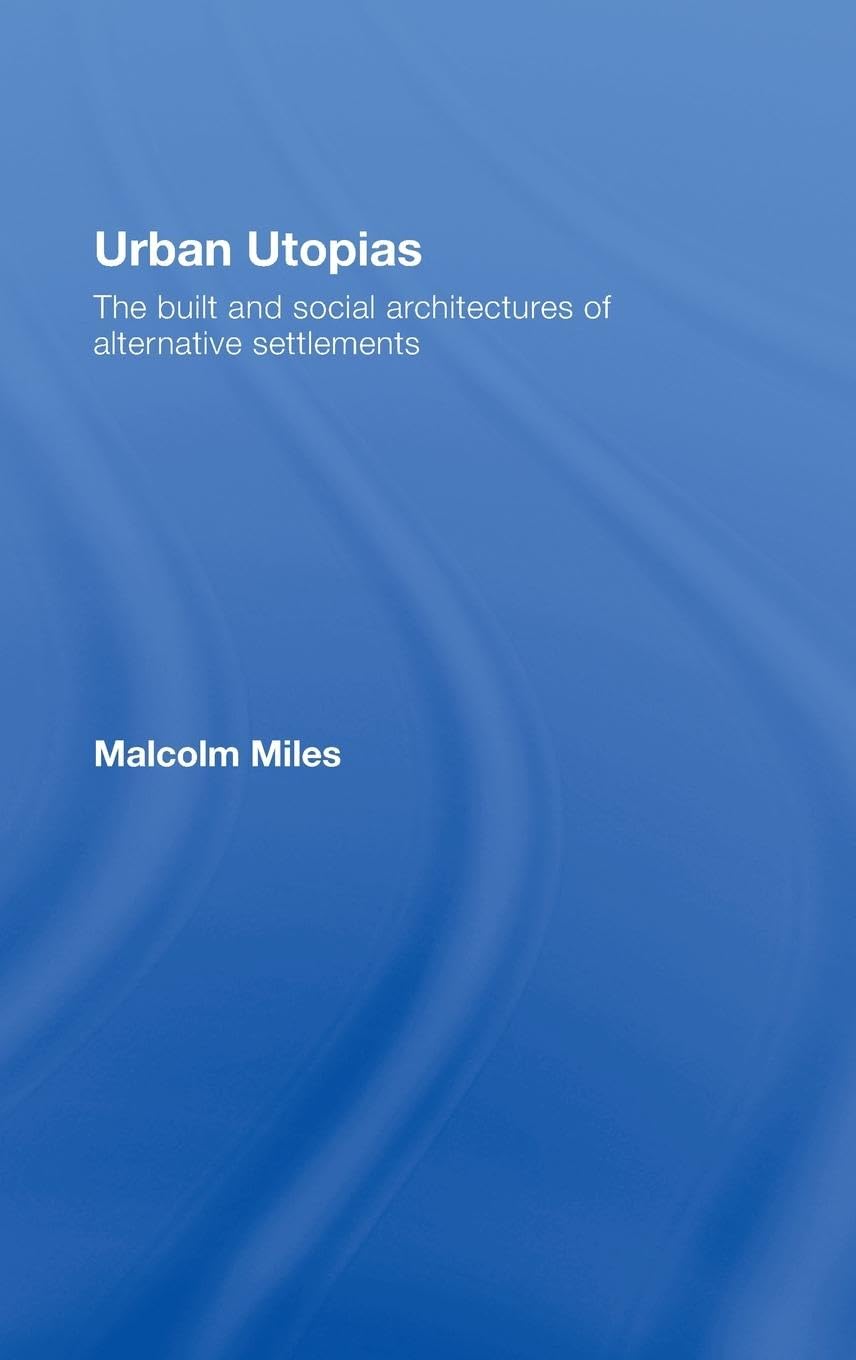
Urban Utopias: The Built and Social Architectures of Alternative Settlements,New
Sold by Ergodebooks, an authorized reseller.
Returns accepted within 30 days | support@ergodebooks.com
Shipping Information
- Free Standard Shipping — United States only
- Processing Time: 3–5 business days
- Estimated Delivery: 6–10 business days after dispatch
- Double-boxed, fully insured & discreetly packaged
- Tracking number sent via email once dispatched
Returns & Refund
Returns accepted within 30 days of delivery.
Damaged or Defective Item
Free return shipping + replacement or full refund
Wrong Item Received
Free return shipping + replacement or full refund
Change of Mind
Return shipping at customer's expense · 25% restocking fee applies
Payment Option

Utopia tends to generate a bad press regarded as impracticable, perhaps nostalgic, or contradictory when visions of a perfect world cannot accommodate the change that is necessary to a free and selforganizing society. But people from diverse backgrounds are currently building a new society within the old, balancing literal and metaphorical utopianism, and demonstrating plural possibilities for alternative futures and types of settlement. Thousands of such places exist around the world, including intentional communities, ecovillages, permaculture plots, religious and secular retreats, cohousing projects, selfbuild schemes, projects for lowimpact housing, and activist squats in urban and rural sites. This experience suggests, however, that when planning and design are not integral to alternative social formations, the modern dream to engineer a new society cannot be realized.The book is structured in four parts. In part one, literary and theoretical utopias from the early modern period to the nineteenthcentury are reconsidered. Part two investigates twentiethcentury urban utopianism and contemporary alternative settlements focusing on social and environmental issues, activism and ecovillage living. Part three looks to wider horizons in recent practices in the nonaffluent world, and Part four reviews a range of cases from the authors visits to specific sites. This is followed by a short conclusion in which a discussion of key issues is resumed.This book brings together insights from literary, theoretical and practical utopias, drawing out the characteristics of groups and places that are part of a new society. It links todays utopian experiments to historical and literary utopias, and to theoretical problems in utopian thought.
⚠️ WARNING (California Proposition 65):
This product may contain chemicals known to the State of California to cause cancer, birth defects, or other reproductive harm.
For more information, please visit www.P65Warnings.ca.gov.