If you have any questions, you are always welcome to contact us. We'll get back to you as soon as possible, withing 24 hours on weekdays.
Customer service
All questions about your order, return and delivery must be sent to our customer service team by e-mail at yourstore@yourdomain.com
Sale & Press
If you are interested in selling our products, need more information about our brand or wish to make a collaboration, please contact us at press@yourdomain.com
Help
If you have any questions, you are always welcome to contact us. We'll get back to you as soon as possible, withing 24 hours on weekdays.
Customer service
All questions about your order, return and delivery must be sent to our customer service team by e-mail at yourstore@yourdomain.com
Sale & Press
If you are interested in selling our products, need more information about our brand or wish to make a collaboration, please contact us at press@yourdomain.com
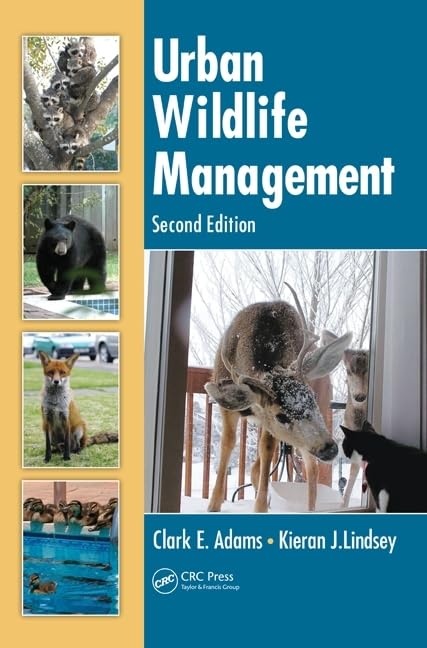
When the first edition of Urban Wildlife Management was published two years ago, it provided conservationists, ecologists, and wildlife professionals with a welcome shift in the way that interactions between humans and wildlife were viewed and managed. Instead of focusing on ways to evict or eradicate wildlife encroached on by urban development, this unique work took a holistic, ecosystems approach. Gathering information from more than five hundred academic sources and the popular media, this book educated us on the complete nature of the problem.See what's new in the Second Edition: New information garnered from secondary data sets Added contributions from an extended list of leading wildlife specialists Original research conducted by the authors and their students New chapters on urban soils, urban waters, and zoonotic diseases More perspective essays and case studies Single species profiles in each chapter that focus on management issues Numerous tables examining trends by species and by regionThrough discussions of past and present approaches in the United States, the bookexplores the changing landscape of wildlife management and future approaches. Urban habitats and hazards are defined in terms of green and gray spaces. Sociopolitical issues are discussed in terms of wildlife management, stakeholder responsibilities, and legal considerations. And wildlife are viewed as adaptive inhabitants of an evolving ecosystem rather than as interlopers in a humans only world.The author maintains a blog exploring wildlife in our own backyard.
⚠️ WARNING (California Proposition 65):
This product may contain chemicals known to the State of California to cause cancer,
birth defects, or other reproductive harm.
For MAP (Minimum Advertised Price) violations and Intellectual Property (IP) or Trademark concerns, please contact:
support@ergodebooks.com
⚠️ California Proposition 65 Warning: Some products sold on this website may expose you to chemicals known to the State of California to cause cancer, birth defects, or other reproductive harm. For more information, visit www.P65Warnings.ca.gov.