If you have any questions, you are always welcome to contact us. We'll get back to you as soon as possible, withing 24 hours on weekdays.
Customer service
All questions about your order, return and delivery must be sent to our customer service team by e-mail at yourstore@yourdomain.com
Sale & Press
If you are interested in selling our products, need more information about our brand or wish to make a collaboration, please contact us at press@yourdomain.com
Help
If you have any questions, you are always welcome to contact us. We'll get back to you as soon as possible, withing 24 hours on weekdays.
Customer service
All questions about your order, return and delivery must be sent to our customer service team by e-mail at yourstore@yourdomain.com
Sale & Press
If you are interested in selling our products, need more information about our brand or wish to make a collaboration, please contact us at press@yourdomain.com
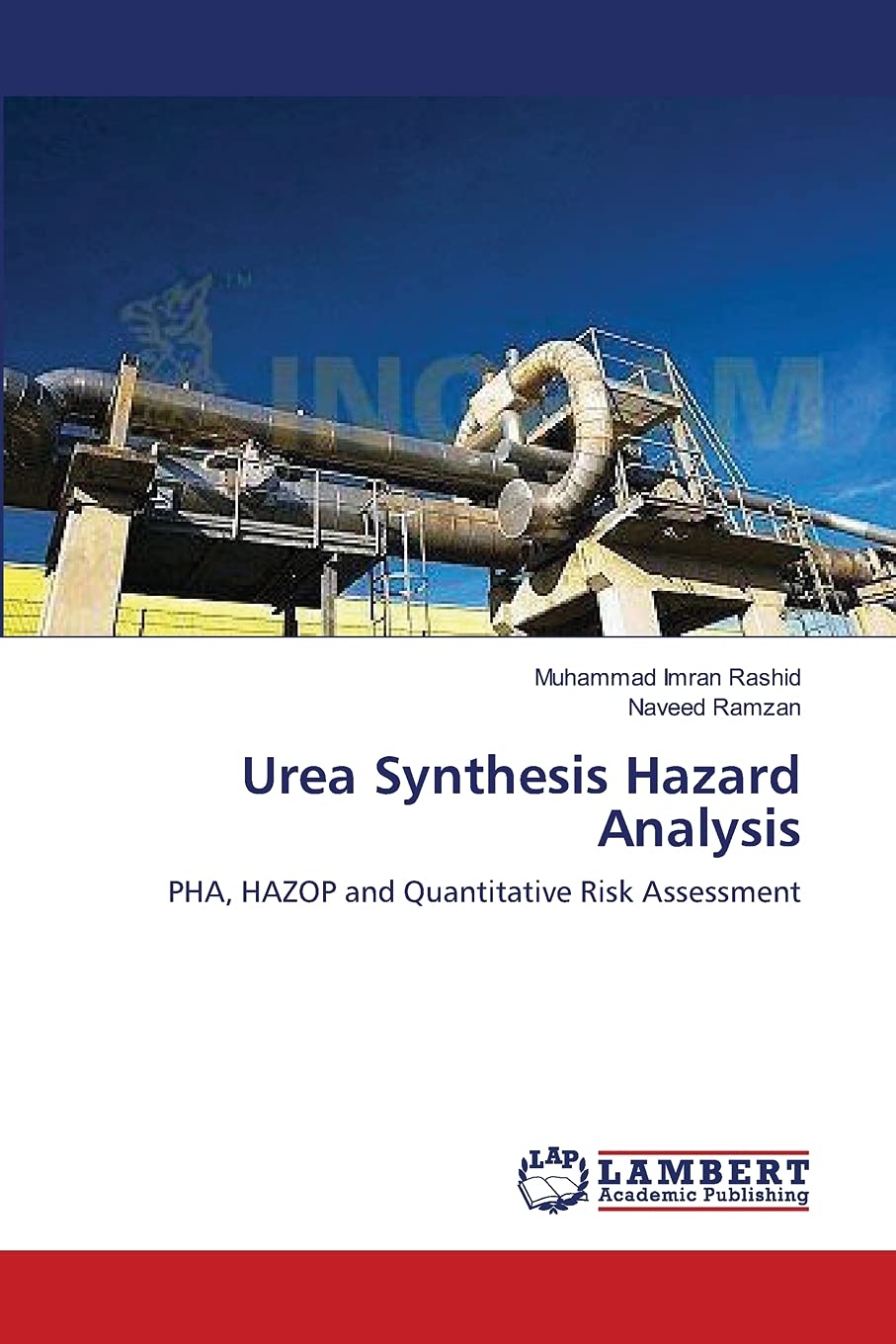
The Chemical plants, particularly those manufacturing urea are amongst the most complex plants in the chemical process industry. The severe operating conditions affect the safety of equipment, personnel involved and the environment. Different occurred accidents such as Port Neal Nitrogen Fertilizer (Dec 1994), Toulouse Fertilizer complex (Sept 2001) and Coffeyville Fertilizer Plant (Oct 2010) stresses to conduct hazard studies in fertilizer plants. Urea manufacturing process is described for understanding before conducting HAZOP studies. PHA is discussed including its basics, requirements, and procedures along with techniques (HAZOP, WHATIF, Check List, and FMEA). The objective of this book is the identification of major malfunctions in urea synthesis section, development of systematic procedure for risk potential assessment, to identify the weak points for process improvement, to rank the potential risk scenarios and to estimate the Quantitative Risk for the worst case scenario using ALOHA software. The book will be useful for students and professionals for understanding hazard analysis techniques and its real implementation in chemical process industries.
⚠️ WARNING (California Proposition 65):
This product may contain chemicals known to the State of California to cause cancer,
birth defects, or other reproductive harm.
For MAP (Minimum Advertised Price) violations and Intellectual Property (IP) or Trademark concerns, please contact:
support@ergodebooks.com
⚠️ California Proposition 65 Warning: Some products sold on this website may expose you to chemicals known to the State of California to cause cancer, birth defects, or other reproductive harm. For more information, visit www.P65Warnings.ca.gov.