
Title
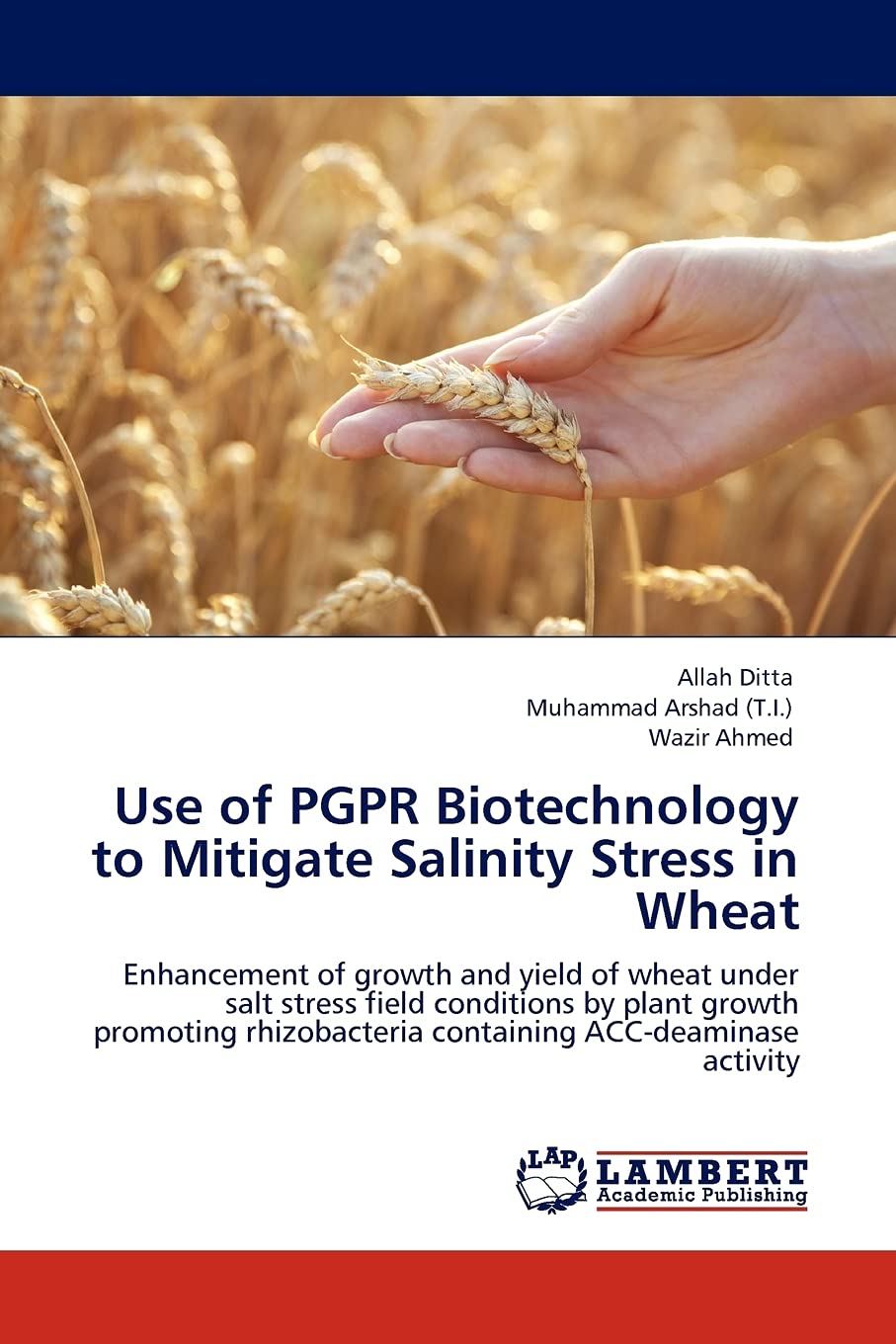
Use of PGPR Biotechnology to Mitigate Salinity Stress in Wheat,Used
Sold by Ergodebooks, an authorized reseller.
Returns accepted within 30 days | support@ergodebooks.com
Shipping Information
- Free Standard Shipping — United States only
- Processing Time: 3–5 business days
- Estimated Delivery: 6–10 business days after dispatch
- Double-boxed, fully insured & discreetly packaged
- Tracking number sent via email once dispatched
Returns & Refund
Returns accepted within 30 days of delivery.
Damaged or Defective Item
Free return shipping + replacement or full refund
Wrong Item Received
Free return shipping + replacement or full refund
Change of Mind
Return shipping at customer's expense · 25% restocking fee applies
Payment Option

Salinity is one of the major constraints, whichhamper agricultural production. The higherconcentration of salts in root zone may stimulateendogenous ethylene biosynthesis in roots, whichconsequently inhibits its growth. One of the majormechanism utilized by plant growth promotingrhizobacteria (PGPR) to facilitate plant growth anddevelopment is the lowering of ethylene levels in theplant roots by deamination of1aminocyclopropane1carboxylic acid (ACC), theimmediate precursor of ethylene in plants. In thegiven study, three preisolated bacterial strainshaving ACC deaminase activity were used forinoculation of wheat seeds. Inoculated seeds weresown in salt affected field, fertilized with NPK@12010060 kg ha1, respectively. Data regardingvarious growth parameters and yield parameters wasrecorded at the time of harvesting and statisticallyanalyzed. From data it was concluded that plantgrowth promoting rhizobacteria containingACCdeaminase activity can enhance the growth andyield of wheat under salinity stress field conditionsand the strain ACC10 performs the best.
⚠️ WARNING (California Proposition 65):
This product may contain chemicals known to the State of California to cause cancer, birth defects, or other reproductive harm.
For more information, please visit www.P65Warnings.ca.gov.