
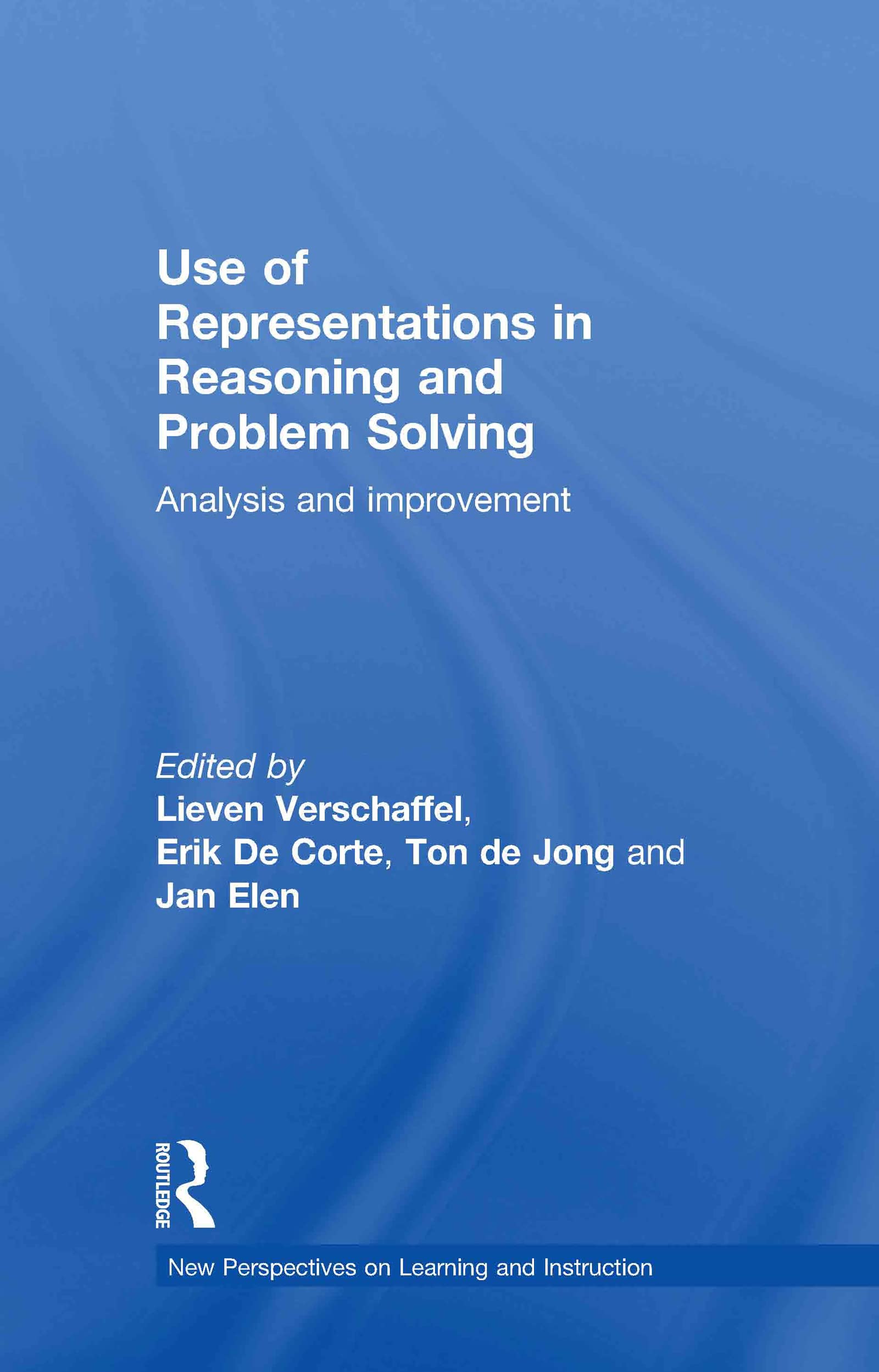
Title
Use Of Representations In Reasoning And Problem Solving: Analysis And Improvement (New Perspectives On Learning And Instruction),New
Sold by Ergodebooks, an authorized reseller.
Returns accepted within 30 days | support@ergodebooks.com
Shipping Information
- Free Standard Shipping — United States only
- Processing Time: 3–5 business days
- Estimated Delivery: 6–10 business days after dispatch
- Double-boxed, fully insured & discreetly packaged
- Tracking number sent via email once dispatched
Returns & Refund
Returns accepted within 30 days of delivery.
Damaged or Defective Item
Free return shipping + replacement or full refund
Wrong Item Received
Free return shipping + replacement or full refund
Change of Mind
Return shipping at customer's expense · 25% restocking fee applies
Payment Option

Within an increasingly multimedia focused society, the use of external representations in learning, teaching and communication has increased dramatically. Whether in the classroom, university or workplace, there is a growing requirement to use and interpret a large variety of external representational forms and tools for knowledge acquisition, problem solving, and to communicate with others.Use of Representations in Reasoning and Problem Solving brings together contributions from some of the worlds leading researchers in educational and instructional psychology, instructional design, and mathematics and science education to document the role which external representations play in our understanding, learning and communication. Traditional research has focused on the distinction between verbal and nonverbal representations, and the way they are processed, encoded and stored by different cognitive systems. The contributions here challenge these research findings and address the ambiguity about how these two cognitive systems interact, arguing that the classical distinction between textual and pictorial representations has become less prominent. The contributions in this book explore: how we can theorise the relationship between processing internal and external representations what perceptual and cognitive restraints can affect the use of external representations how individual differences affect the use of external representations how we can combine external representations to maximise their impact how we can adapt representational tools for individual differences.Using empirical research findings to take a fresh look at the processes which take place when learning via external representations, this book is essential reading for all those undertaking postgraduate study and research in the fields of educational and instructional psychology, instructional design and mathematics and science education.
⚠️ WARNING (California Proposition 65):
This product may contain chemicals known to the State of California to cause cancer, birth defects, or other reproductive harm.
For more information, please visit www.P65Warnings.ca.gov.