
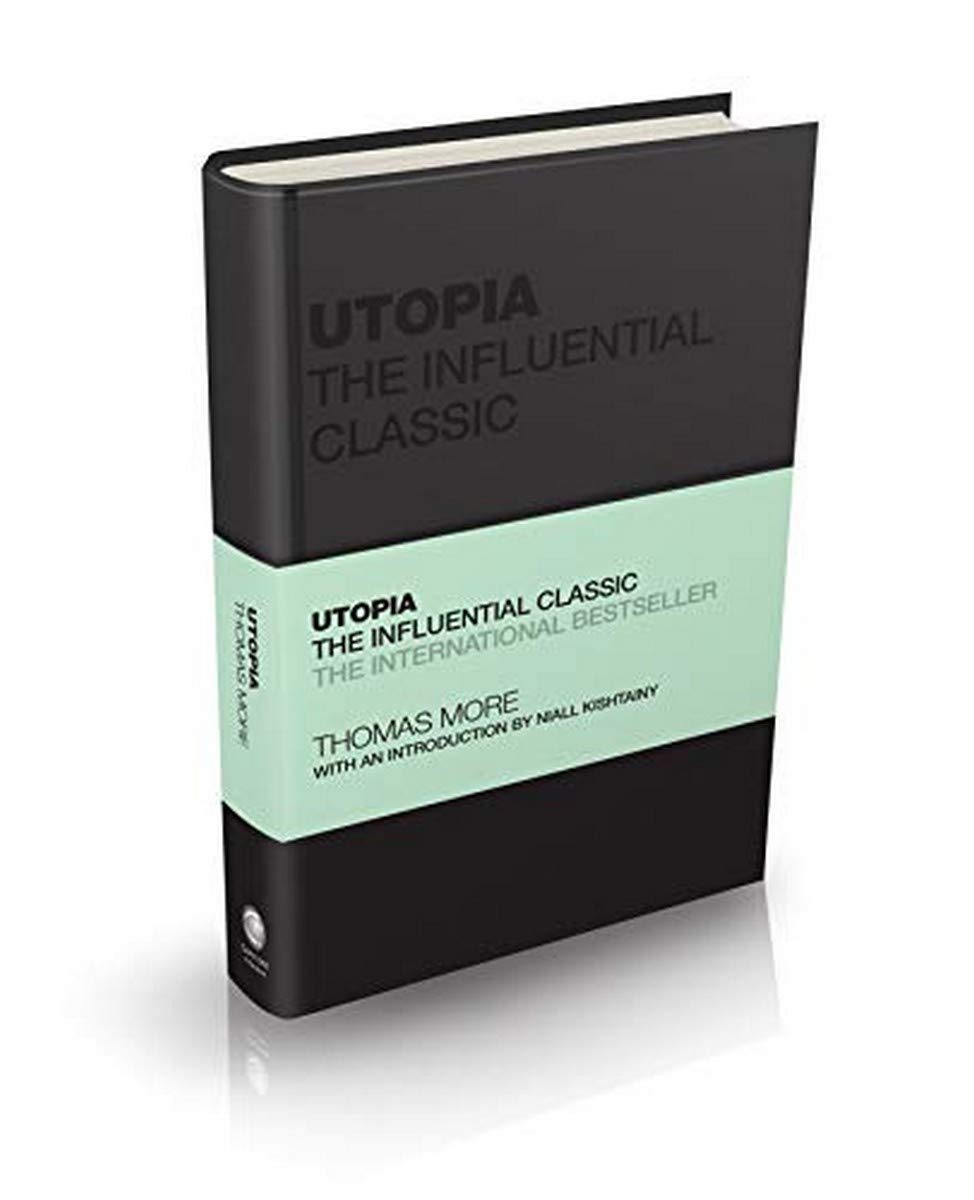
Title
Utopia: The Influential Classic (Capstone Classics),Used
Sold by Ergodebooks, an authorized reseller.
Returns accepted within 30 days | support@ergodebooks.com
Shipping Information
- Free Standard Shipping — United States only
- Processing Time: 3–5 business days
- Estimated Delivery: 6–10 business days after dispatch
- Double-boxed, fully insured & discreetly packaged
- Tracking number sent via email once dispatched
Returns & Refund
Returns accepted within 30 days of delivery.
Damaged or Defective Item
Free return shipping + replacement or full refund
Wrong Item Received
Free return shipping + replacement or full refund
Change of Mind
Return shipping at customer's expense · 25% restocking fee applies
Payment Option

What we can learn from a Renaissance nowhereIn 1516, a book was published in Latin with the enigmatic Greekderived word as its title. Utopiawhich could mean either "goodplace" or "noplace"gives a traveler's account of a newly discovered island somewhere in the New World where the inhabitants enjoy a social order based purely on natural reason and justice. As the traveler describes the harmony, prosperity, and equality found there, a dramatic contrast is drawn between the ideal community he portrays and the poverty, crime, and often frightening political conditions of 16th century Europe. Written by Sir Thomas More (14771535)then a rising intellectual star of the Renaissance and ultimately the advisor and friend of Henry VIII who was executed for his devoutly Catholic opposition to the kingUtopia is as complex as its author.In the form of a Platonic dialogue, Utopia explores topics such as money, property, crime, education, religious tolerance, euthanasia, and feminism. Claimed as a paean to communism (Lenin had More's name inscribed on a statue in Moscow) as often as it has been seen as a defense of traditional medieval values, Utopia began the lineage of utopian thinkers who use storytelling to explore new possibilities for human societyand remains as relevant today as when it was written in Antwerp 500 years ago. Explore the issues like feminism, euthanasia, and equality through Renaissance eyes Early communist tract or a defense of medieval values? You decide. Peer inside the enigmatic mind of the man who dared stand up to Henry VIII Appreciate the postmodern possibilities of Platonic dialoguePart of the bestselling Capstone Classics series edited by Tom ButlerBowdon, this edition features an introduction from writer, economist, and historian Niall Kishtainy.
⚠️ WARNING (California Proposition 65):
This product may contain chemicals known to the State of California to cause cancer, birth defects, or other reproductive harm.
For more information, please visit www.P65Warnings.ca.gov.