
Title
Utopias (Whitechapel: Documents of Contemporary Art),Used
Sold by Ergodebooks, an authorized reseller.
Returns accepted within 30 days | support@ergodebooks.com
Shipping Information
- Free Standard Shipping — United States only
- Processing Time: 3–5 business days
- Estimated Delivery: 6–10 business days after dispatch
- Double-boxed, fully insured & discreetly packaged
- Tracking number sent via email once dispatched
Returns & Refund
Returns accepted within 30 days of delivery.
Damaged or Defective Item
Free return shipping + replacement or full refund
Wrong Item Received
Free return shipping + replacement or full refund
Change of Mind
Return shipping at customer's expense · 25% restocking fee applies
Payment Option

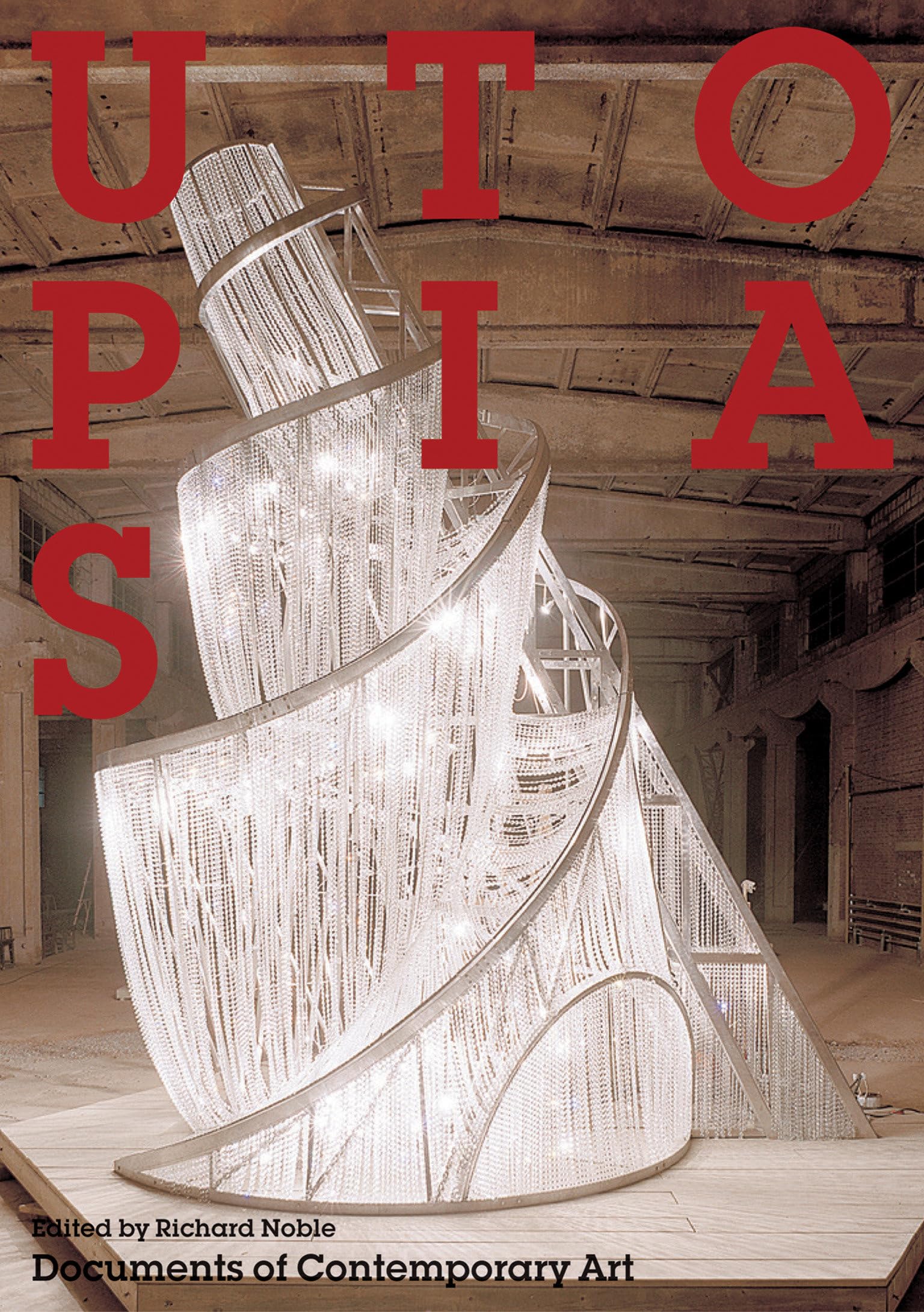
Utopian strategies in contemporary art seen in the context of the histories of utopian thinking and avantgarde art.Throughout its diverse manifestations, the utopian entails two related but contradictory elements: the aspiration to a better world, and the acknowledgement that its form may only ever live in our imaginations. Furthermore, we are as haunted by the failures of utopian enterprise as we are inspired by the desire to repair the failed and build the new. Contemporary art reflects this general ambivalence. The utopian impulse informs politically activist and relational art, practices that fuse elements of art, design, and architecture, and collaborative projects aspiring to progressive social or political change. Two other tendencies have emerged in recent art: a looking backward to investigate the utopian elements of previous eras, and the imaginative modeling of alternative worlds as intimations of possibility. This anthology contextualizes these utopian currents in relation to political thought, viewing the utopian as a key term in the artistic lineage of modernity. It illuminates how the exploration of utopian themes in art today contributes to our understanding of contemporary cultures, and the possibilities for shaping their futures.Artistis surveyed includeJoseph Beuys, Paul Chan, Guy Debord, Jeremy Deller, Liam Gillick, Antony Gormley, Dan Graham, Thomas Hirschhorn, Ilya and Emilia Kabakov, Bodys Isek Kingelez, Paul McCarthy, Constant A. Nieuwenheuys, Paul Noble, Nils Norman, Philippe Parreno, Pil and Galia Kollectiv, Superflex, Rirkrit Tiravanija, Mark Titchner, Atelier van Lieshout, Jeff Wall, Andy Warhol, Wochenklauser, Carey Young.Writers includeTheodor Adorno, Jennifer Allen, Catherine Bernard, Ernst Bloch, YveAlain Bois, Nicolas Bourriaud, Benjamin H.D. Buchloh, Alex Farquharson, Hal Foster, Michel Foucault, Alison Green, Fredric Jameson, Rosalind Krauss, Hari Kunzru, Donald Kuspit, Dermis P. Leon, Karl Marx, Jeremy Millar, Thomas More, William Morris, Molly Nesbit, Hans Ulrich Obrist, George Orwell, Jacques Rancire, Stephanie Rosenthal, Beatrix Ru.
⚠️ WARNING (California Proposition 65):
This product may contain chemicals known to the State of California to cause cancer, birth defects, or other reproductive harm.
For more information, please visit www.P65Warnings.ca.gov.
- Q: What is the size of the book? A: The book measures eight point two seven inches in length, six point zero four inches in width, and zero point eight seven inches in height.
- Q: How many pages does the book have? A: The book contains two hundred thirty-eight pages, providing an in-depth exploration of utopian themes in contemporary art.
- Q: What type of binding does the book have? A: The book is available in paperback binding, making it lightweight and easy to handle.
- Q: What is the main theme of the book? A: The main theme explores utopian strategies in contemporary art and their historical context, reflecting on the aspiration for a better world.
- Q: Who is the author of this book? A: The author of the book is Richard Noble, who examines various artists and writers related to utopian concepts.
- Q: Is this book suitable for art students? A: Yes, this book is suitable for art students, as it delves into contemporary art practices and utopian thinking.
- Q: Can I use this book for academic research? A: Yes, this book can be used for academic research, as it includes insights from notable writers and artists in the field of criticism.
- Q: What types of art does the book discuss? A: The book discusses various types of art, including politically activist art, relational art, and collaborative projects.
- Q: Does the book include contributions from famous artists? A: Yes, the book features contributions from famous artists such as Joseph Beuys, Andy Warhol, and Paul Chan.
- Q: Is the book appropriate for younger readers? A: No, the book is primarily aimed at an adult audience due to its complex themes and discussions.
- Q: How should I store the book to keep it in good condition? A: Store the book in a cool, dry place and keep it upright on a shelf to prevent bending or damage.
- Q: What is the recommended way to clean the book? A: To clean the book, gently wipe the cover with a dry cloth to remove dust without damaging the material.
- Q: What if the book arrives damaged? A: If the book arrives damaged, contact the seller to inquire about return policies or exchanges.
- Q: How can I find similar books on contemporary art? A: You can search for books in the 'Criticism' category or look for titles by the same publisher, MIT Press.
- Q: Does the book provide a historical perspective on utopian thinking? A: Yes, the book provides a historical perspective on utopian thinking, linking contemporary practices with past utopian ideals.
- Q: How can I use this book for my art project? A: You can use this book to gain insights and inspiration for your art project, particularly in exploring themes of utopia and social change.