
Title
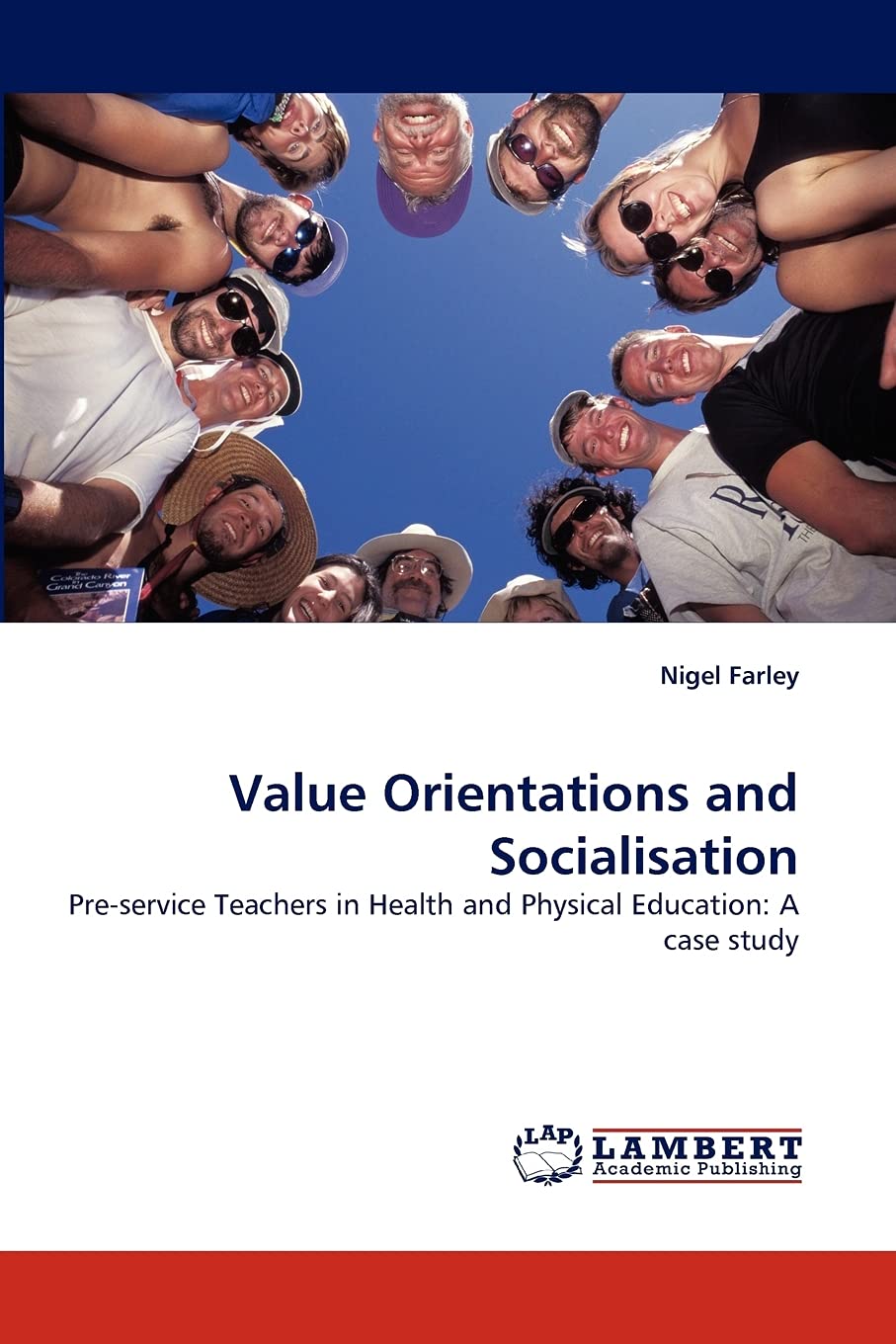
Value Orientations and Socialisation: Preservice Teachers in Health and Physical Education: A case study,Used
Sold by Ergodebooks, an authorized reseller.
Returns accepted within 30 days | support@ergodebooks.com
Shipping Information
- Free Standard Shipping — United States only
- Processing Time: 3–5 business days
- Estimated Delivery: 6–10 business days after dispatch
- Double-boxed, fully insured & discreetly packaged
- Tracking number sent via email once dispatched
Returns & Refund
Returns accepted within 30 days of delivery.
Damaged or Defective Item
Free return shipping + replacement or full refund
Wrong Item Received
Free return shipping + replacement or full refund
Change of Mind
Return shipping at customer's expense · 25% restocking fee applies
Payment Option

The purpose of this case study was to determine the value orientations of health and physical education students (HPE) in an Australian physical education teacher education (PETE) program. Additionally, I was interested in the sympathy or otherwise in the relationship between the explicit Queensland HPE curriculum values and the value profiles of a cohort of preservice teachers. Values were measured with the Value Orientation Inventory2 (VOI2) developed by Ennis and Chen, (1993). The culture and the curriculum goals of HPE and health and physical education teacher education (HPETE), contribute to the socialisation and construction of value orientations (Solmon & Ashy, 1995). Descriptive statistics were compiled for all fivevalue orientations, along with ttests and ANOVA?s. Participants (N=33) were recruited from the 3rd year HPE cohort at a large Australian University and were tested pre and post semester 2, 2007.
⚠️ WARNING (California Proposition 65):
This product may contain chemicals known to the State of California to cause cancer, birth defects, or other reproductive harm.
For more information, please visit www.P65Warnings.ca.gov.