
Title
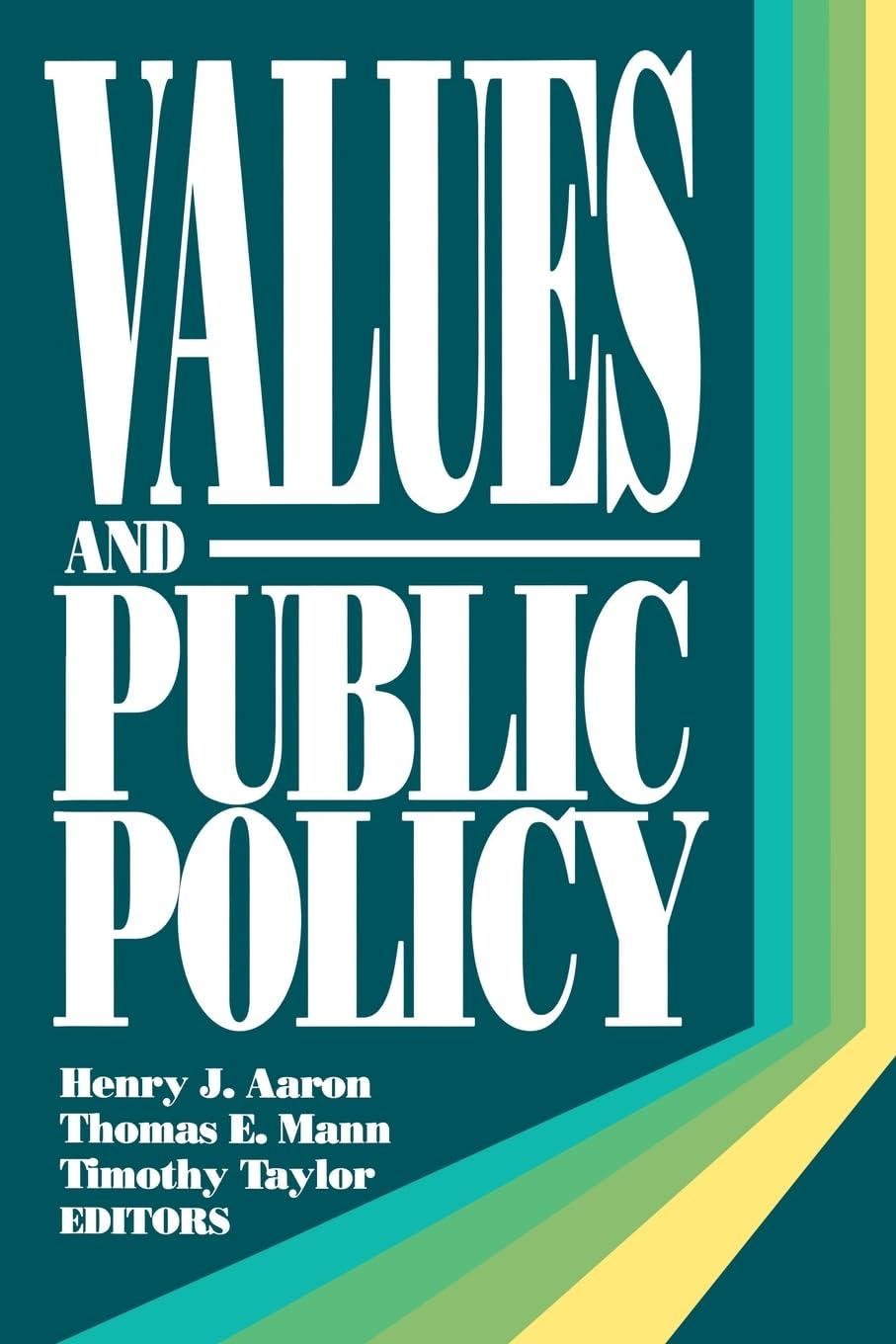
Values And Public Policy,Used
Sold by Ergodebooks, an authorized reseller.
Returns accepted within 30 days | support@ergodebooks.com
Shipping Information
- Free Standard Shipping — United States only
- Processing Time: 3–5 business days
- Estimated Delivery: 6–10 business days after dispatch
- Double-boxed, fully insured & discreetly packaged
- Tracking number sent via email once dispatched
Returns & Refund
Returns accepted within 30 days of delivery.
Damaged or Defective Item
Free return shipping + replacement or full refund
Wrong Item Received
Free return shipping + replacement or full refund
Change of Mind
Return shipping at customer's expense · 25% restocking fee applies
Payment Option

It is not uncommon to hear that poor school performance, welfare dependancy, youth unemployment, and criminal activity result more from shortcomings in the personal makeup of individuals than from societal forces beyond their control. Are American values declining as so many suggest? And are those values at the root of many social problems today? Shaped by experience and public policies, people's values and social norms do change. What role can or should a democratic government play in shaping values? And how do these values conditon the efficacy of public policy? In this book, six distinguished social scientists identify trends in America's values and their consequences, and consider public policy tools with which some of those values might be changed. Daniel Yankelovich begins with a discussion of how American values have shifted in the last halfcentury, and argues that affluence is the driving force behind these changes in values. James Q. Wilson argues that destructive habits which can lead to social pathologies, like crime and drug use, are set early in life; he examines how public policy might intervene when children are young to promote better values. David Popenoe maintains that America has veered too far towards industrialist values, and explores the resulting decline of families and many attendant social ills. Nathan Glazer describes the history and present status of the dispute over multicultural education. Jane Mansbridge examines the process of building cooperation, consensus, and public spirit. And George Akerlof and Janet L. Yellen discuss the problem of gang criminality. Inthe past, social scientists have often sidestepped questions about values as undefinable, unquantifiable, and somehow unscientific. The essays in this volume address these questions at last. Henry J. Aaron, director of the Economic Studies program at Brookings, is the authorof numerous books, including most recently Serious and Unstable Condition: Financing America's Health Care (1991), and coeditor of Setting Domestic Priorities (1992). Thomas E. Mann is director of the Brookings Governmental Studies program, coeditor of Media Polls in American Politics (1992), and coauthor of the Renewing Congress series (1993). Timothy Taylor is managing editor of the Journal of Economic Perspectives at Stanford University.'
⚠️ WARNING (California Proposition 65):
This product may contain chemicals known to the State of California to cause cancer, birth defects, or other reproductive harm.
For more information, please visit www.P65Warnings.ca.gov.