
Title
Valuing Clean Air: The EPA and the Economics of Environmental Protection,Used
Sold by Ergodebooks, an authorized reseller.
Returns accepted within 30 days | support@ergodebooks.com
Shipping Information
- Free Standard Shipping — United States only
- Processing Time: 3–5 business days
- Estimated Delivery: 6–10 business days after dispatch
- Double-boxed, fully insured & discreetly packaged
- Tracking number sent via email once dispatched
Returns & Refund
Returns accepted within 30 days of delivery.
Damaged or Defective Item
Free return shipping + replacement or full refund
Wrong Item Received
Free return shipping + replacement or full refund
Change of Mind
Return shipping at customer's expense · 25% restocking fee applies
Payment Option

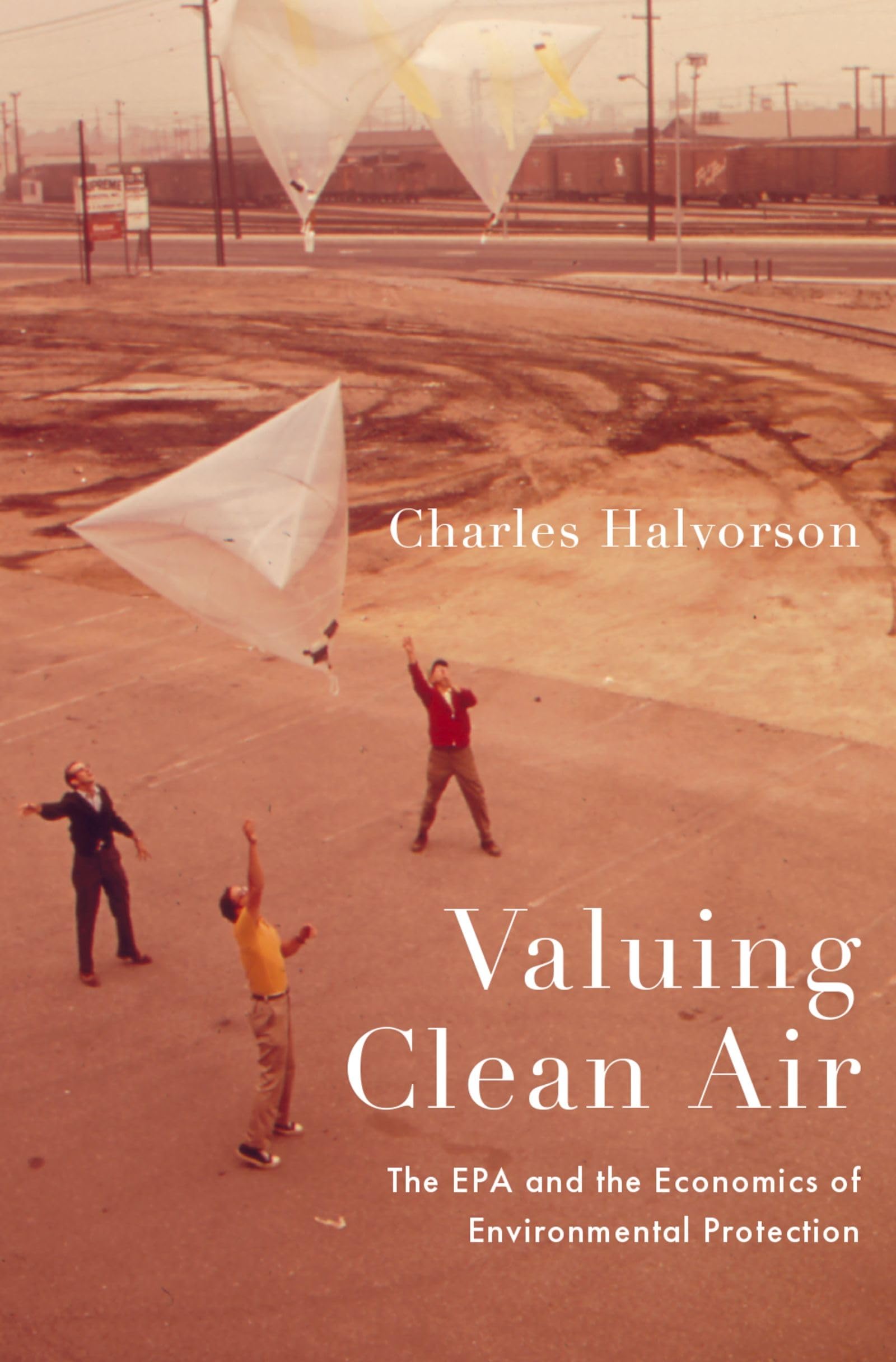
The passage of the Clean Air Act and the creation of the Environmental Protection Agency (EPA) in 1970 marked a sweeping transformation in American politics. In a few short years, the environmental movement pushed Republican and Democratic elected officials to articulate a right to clean air as part of a bevy of new federal guarantees. Charged with delivering on those promises, the EPA represented a bold assertion that the federal government had a responsibility to protect the environment, the authority to command private business to reduce their pollution, and the capacity to dictate how they did so.In Valuing Clean Air, Charles Halvorson examines how the environmental concern that propelled the Clean Air Act and the EPA coincided with economic convulsions that shook the liberal state to its core. Business groups, public interest organizations, think tanks, and a host of other actors, including Ralph Nader, wasted little time after the EPAs creation in identifying and trying to pull the new levers of power. As powerful businesses pressed to roll back regulations, elected officials from both political parties questioned whether the nation could keep its environmental promises. In response, the EPAs staff and leadership practiced a politics of the possible, adopting a monetized approach to environmental value that shielded the agencys rulemaking but sat at odds with environmentalist notions of natural rights and contributed to the elevation of economics as the language and logic of policy. As Halvorson demonstrates, environmental protection came to serve as a central battleground in larger debates over markets, government, and public welfare.For anyone who has wondered where cap and trade came from and how environmental activists came to discuss wetlands protection, air pollution, and fracking in the language of costbenefit analysis, Valuing Clean Air provides an insightful look at a halfcentury of the making of US environmental policy.
⚠️ WARNING (California Proposition 65):
This product may contain chemicals known to the State of California to cause cancer, birth defects, or other reproductive harm.
For more information, please visit www.P65Warnings.ca.gov.
- Q: How many pages does the book 'Valuing Clean Air' have? A: The book has three hundred twelve pages. This length allows for an in-depth exploration of environmental economics and policy.
- Q: What is the binding type of 'Valuing Clean Air'? A: The book is hardcover. This type of binding provides durability and makes it suitable for frequent use.
- Q: What are the dimensions of 'Valuing Clean Air'? A: The book measures nine point three inches in length, one inch in width, and six point one inches in height. These dimensions make it a manageable size for reading and storage.
- Q: Who is the author of 'Valuing Clean Air'? A: The author is Charles Halvorson. He provides insights into environmental policy and economics.
- Q: What is the main focus of 'Valuing Clean Air'? A: The book examines the intersection of environmental protection and economics. It explores how the Clean Air Act shaped U.S. environmental policy.
- Q: Is 'Valuing Clean Air' suitable for beginners in environmental economics? A: Yes, the book is accessible to beginners. It provides foundational knowledge of environmental policies and their economic implications.
- Q: How can I apply the insights from 'Valuing Clean Air'? A: You can use the insights to understand current environmental policies and debates. The book discusses the evolution of economic considerations in environmental protection.
- Q: Is 'Valuing Clean Air' appropriate for academic use? A: Yes, it is suitable for academic use. The book offers a thorough analysis that can support research and coursework in environmental studies.
- Q: What topics are covered in 'Valuing Clean Air'? A: The book covers topics like the Clean Air Act, the role of the EPA, and the economic analysis of environmental policies. It provides a comprehensive view of U.S. environmental economics.
- Q: How should I care for my copy of 'Valuing Clean Air'? A: To keep your copy in good condition, store it upright on a shelf. Avoid exposure to direct sunlight and moisture to prevent damage.
- Q: What if my copy of 'Valuing Clean Air' arrives damaged? A: If your copy arrives damaged, contact the seller for a return or replacement. Most sellers have policies in place for damaged items.
- Q: Can I return 'Valuing Clean Air' if I change my mind? A: Yes, returns are typically accepted within a specified period. Check the seller’s return policy for details on how to proceed.
- Q: Is there a warranty for 'Valuing Clean Air'? A: No, books generally do not come with a warranty. However, you can return a damaged or defective copy.
- Q: What makes 'Valuing Clean Air' a valuable resource? A: It offers a unique perspective on the economic aspects of environmental policy. The insights can enhance understanding of how environmental regulations are formulated.
- Q: Is 'Valuing Clean Air' suitable for professionals in environmental policy? A: Yes, professionals will find it insightful. The book discusses the complexities of environmental economics that are relevant to policy-making.