
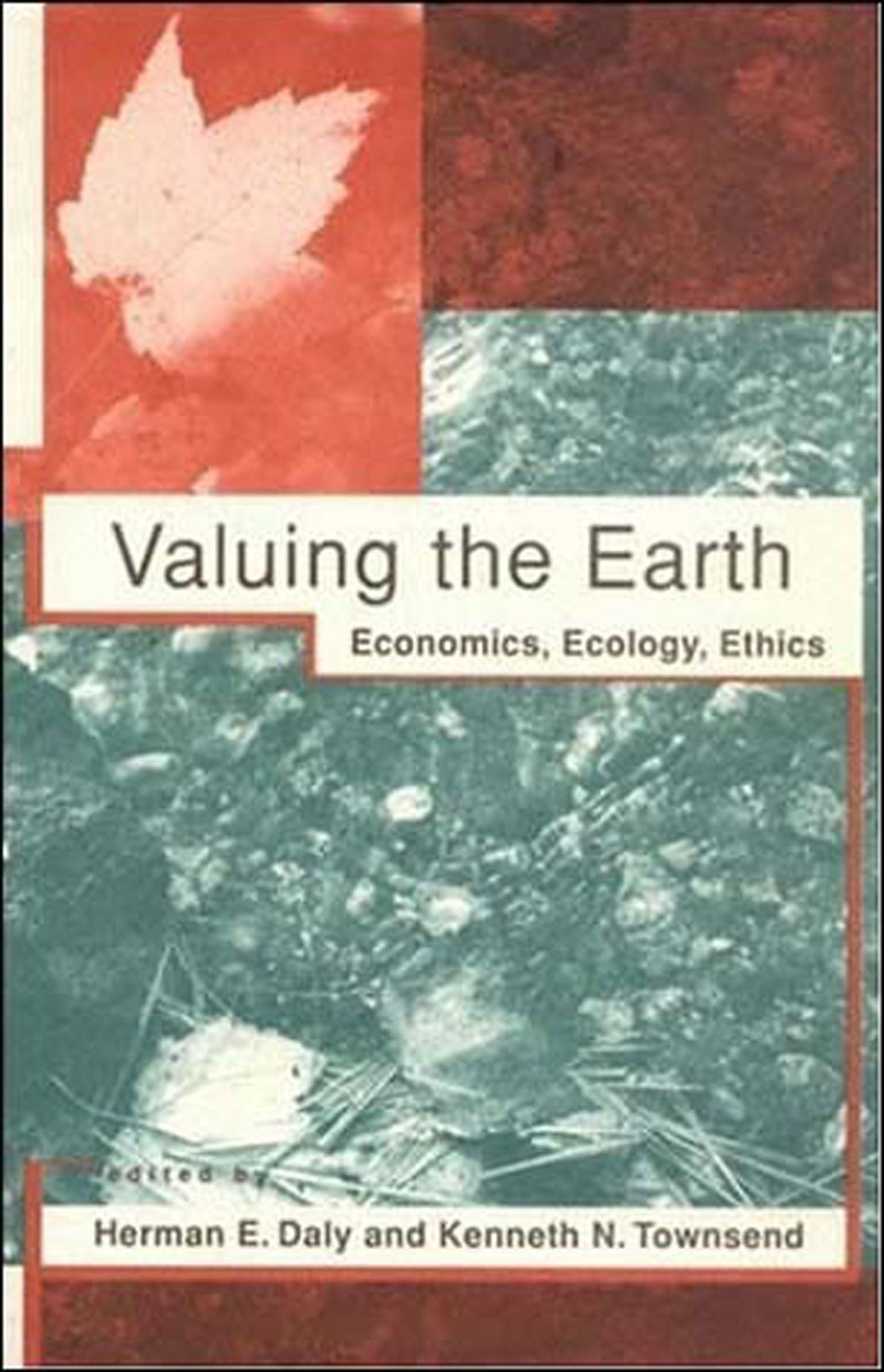
Title
Valuing the Earth: Economics, Ecology, Ethics,New
Sold by Ergodebooks, an authorized reseller.
Returns accepted within 30 days | support@ergodebooks.com
Shipping Information
- Free Standard Shipping — United States only
- Processing Time: 3–5 business days
- Estimated Delivery: 6–10 business days after dispatch
- Double-boxed, fully insured & discreetly packaged
- Tracking number sent via email once dispatched
Returns & Refund
Returns accepted within 30 days of delivery.
Damaged or Defective Item
Free return shipping + replacement or full refund
Wrong Item Received
Free return shipping + replacement or full refund
Change of Mind
Return shipping at customer's expense · 25% restocking fee applies
Payment Option

Valuing the Earth collects more than twenty classic and recent essays that broaden economic thinking by setting the economy in its proper ecological and ethical context. They vividly demonstrate that, contrary to current macroeconomic preoccupations, continued growth on a planet of finite resources cannot be physically or economically sustained and is morally undesirable.Among the issues addressed are population growth, resource use, pollution, theology (east and west), energy, and economic growth. Their common theme is the notion, popular with classical economists from Malthus to Mill, that an economic stationary state is more healthful to life on earth than unlimited growth. A number of essays in the first edition have become classics and have been retained for this edition, which adds six new essays.ContributorsKenneth E. Boulding, John Cobb, Herman E. Daly, Anne H. Ehrlich, Paul R. Ehrlich, Nicholas GeorgescuRoegen, Garrett Hardin, John P. Holdren, M. King Hubbert, C. S. Lewis, E. F. Schumacher, Gerald Alonzo Smith, T. H. Tietenberg, Kenneth N. Townsend
⚠️ WARNING (California Proposition 65):
This product may contain chemicals known to the State of California to cause cancer, birth defects, or other reproductive harm.
For more information, please visit www.P65Warnings.ca.gov.
- Q: How many pages does the book have? A: The book has three hundred ninety-nine pages. It's a comprehensive collection of essays addressing economic and ecological themes.
- Q: What is the binding type of the book? A: The book is paperback bound. This makes it lightweight and easy to handle for reading.
- Q: What are the dimensions of the book? A: The book measures one inch in length, six inches in width, and nine inches in height. These dimensions make it a suitable size for most bookshelves.
- Q: Who is the author of this book? A: The author is Herman E. Daly. He is known for his contributions to ecological economics.
- Q: What is the main subject of the book? A: The main subject is environmental economics. It explores the relationship between economic practices and ecological sustainability.
- Q: Is this book suitable for beginners in economics? A: Yes, this book is suitable for beginners. It presents complex ideas in an accessible manner through essays.
- Q: How do I read this book effectively? A: You can read this book by focusing on one essay at a time. Each essay offers unique insights into economic and ecological topics.
- Q: Is this book appropriate for academic use? A: Yes, this book is appropriate for academic use. It includes classic and contemporary essays that can serve as valuable resources for students.
- Q: How should I store this book? A: You should store this book in a cool, dry place away from direct sunlight. This will help preserve its condition over time.
- Q: Can I clean the book if it gets dirty? A: Yes, you can clean the book gently with a soft, dry cloth. Avoid using water or cleaning solutions that may damage the cover.
- Q: What if the book arrives damaged? A: If the book arrives damaged, you should contact the seller for a return or exchange. They typically provide assistance for such issues.
- Q: What are the key themes discussed in the book? A: Key themes include population growth, resource use, and the ethical implications of economic growth. These discussions are central to the book's message.
- Q: Are there any classic essays included in the book? A: Yes, several classic essays are included, alongside six new additions. This blend enhances the depth of the discussions.
- Q: Is this book suitable for children? A: No, this book is not specifically suitable for children. It addresses complex economic and ecological concepts that may not be easily understood.
- Q: Who are some contributors to the essays in this book? A: Contributors include Kenneth E. Boulding, John Cobb, and Garrett Hardin among others. Their expertise enriches the content significantly.
- Q: What is the publisher of this book? A: The book is published by MIT Press. They are known for their academic and scholarly publications.