
Title
Van Goghs Progress: Utopia, Modernity, and LateNineteenthCentury Art,Used
Sold by Ergodebooks, an authorized reseller.
Returns accepted within 30 days | support@ergodebooks.com
Shipping Information
- Free Standard Shipping — United States only
- Processing Time: 3–5 business days
- Estimated Delivery: 6–10 business days after dispatch
- Double-boxed, fully insured & discreetly packaged
- Tracking number sent via email once dispatched
Returns & Refund
Returns accepted within 30 days of delivery.
Damaged or Defective Item
Free return shipping + replacement or full refund
Wrong Item Received
Free return shipping + replacement or full refund
Change of Mind
Return shipping at customer's expense · 25% restocking fee applies
Payment Option

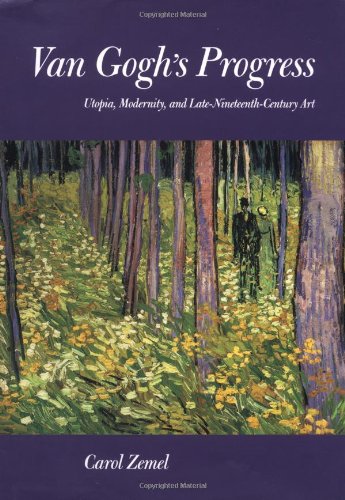
In Carol Zemels insightful reinterpretation of Van Goghs work and career, the artist is seen as a determined modern professional instead of the tortured romantic hero that legend has given us. Zemels fresh approach emphasizes the utopian idealism that infused both Van Goghs life and his pictures. She looks at the artists career from 1882 to 1890 through six utopian projects or professional schemes, each embodying a specific societal crisis for Van Goghs generation: women and sexuality, the rural artisan, republican citizenry, professional identity, the burgeoning art market, and the construction of a modern rural ideal. Zemel reveals how each endeavor, as Van Gogh treated it, offered a vision of utopian possibility. She also analyzes broader historical problems encountered by all avantgarde artists of the late nineteenth century.Zemel carefully examines Van Goghs letters and work and also draws from municipal archives, local histories, nineteenthcentury literature, and contemporaneous criticism. Her handsomely illustrated book, essential reading for art historians and scholars of latenineteenthcentury history and French studies, will also captivate anyone interested in Vincent van Gogh.
⚠️ WARNING (California Proposition 65):
This product may contain chemicals known to the State of California to cause cancer, birth defects, or other reproductive harm.
For more information, please visit www.P65Warnings.ca.gov.
- Q: What are the dimensions of the book? A: The book measures seven point five two inches in length, one point two six inches in width, and ten point seven five inches in height.
- Q: How many pages does the book have? A: The book contains three hundred twenty pages, providing a comprehensive exploration of Van Gogh's work and career.
- Q: What type of binding does this book have? A: This book features hardcover binding, ensuring durability and longevity for readers and collectors.
- Q: How do I read and understand this book? A: To fully appreciate this book, read it sequentially as it analyzes Van Gogh's career through various utopian projects and societal crises.
- Q: Is this book suitable for art history students? A: Yes, this book is an essential read for art historians, students, and anyone interested in late-nineteenth-century art and Van Gogh.
- Q: What themes are explored in this book? A: The book explores themes of modernity, utopian idealism, and the societal challenges faced by Van Gogh's generation.
- Q: How should I care for this book? A: To keep this book in good condition, store it upright in a cool, dry place and avoid exposure to direct sunlight.
- Q: Can this book be cleaned? A: Yes, you can dust the book's cover with a soft, dry cloth to maintain its appearance and remove any dirt.
- Q: What should I do if the book arrives damaged? A: If the book arrives damaged, contact the retailer for a return or exchange according to their return policy.
- Q: Is there a warranty for this book? A: Books typically do not come with a warranty, but check the retailer's policy for any guarantees on quality.
- Q: How does this book compare to other Van Gogh biographies? A: This book offers a unique perspective by focusing on Van Gogh's utopian ideals and professional ambitions, differing from traditional biographies.
- Q: Is this book appropriate for casual readers? A: Yes, casual readers will find the insights and illustrations captivating, even if they are not art history experts.
- Q: Does this book include illustrations? A: Yes, the book is handsomely illustrated, enhancing the reading experience with visual references to Van Gogh's work.
- Q: What makes this book different from others about Van Gogh? A: This book stands out for its focus on Van Gogh's professional identity and societal issues, rather than just his personal struggles.
- Q: Is this book suitable for young readers? A: While it may be interesting, the book is more suited for adult readers and those studying art history.