
Title
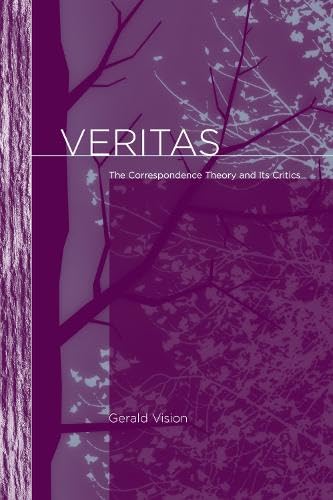
Veritas: The Correspondence Theory and Its Critics (Bradford Books),Used
Sold by Ergodebooks, an authorized reseller.
Returns accepted within 30 days | support@ergodebooks.com
Shipping Information
- Free Standard Shipping — United States only
- Processing Time: 3–5 business days
- Estimated Delivery: 6–10 business days after dispatch
- Double-boxed, fully insured & discreetly packaged
- Tracking number sent via email once dispatched
Returns & Refund
Returns accepted within 30 days of delivery.
Damaged or Defective Item
Free return shipping + replacement or full refund
Wrong Item Received
Free return shipping + replacement or full refund
Change of Mind
Return shipping at customer's expense · 25% restocking fee applies
Payment Option

A restatement of the correspondence theory of truth together with a defense against objections and alternative theories, including deflationism, minimalism, and pluralism.In Veritas, Gerald Vision defends the correspondence theory of truththe theory that truth has a direct relationship to realityagainst recent attacks, and critically examines its most influential alternatives. The correspondence theory, if successful, explains one way in which we are cognitively connected to the world; thus, it is claimed, truthwhile relevant to semantics, epistemology, and other studiesalso has significant metaphysical consequences. Although the correspondence theory is widely held today, Vision points to an emerging orthodoxy in philosophy that claims that truth as such carries no significant weight in philosophical explanations. He devotes much of the book to a criticism of that outlook and to a less vulnerable formulation of the correspondence theory.Vision defends the correspondence theory by both presenting evidence for correspondence and examining the claims made by such alternative theories as deflationism, minimalism, and pluralism. The techniques of the argument are thoroughly analytic, but the problem confronted is broadly humanistic. The question examinedhow we, as thinking beings, are connected to and manage to cope in a world that was not designed for our comfort or convenienceis more likely to be raised by continentalists, but is approached here with the tools of clarity and precision more highly prized in analytic philosophy. The book seeks to avoid both the obscurantism that infects much continental thought and the overly technical concerns and methodology that limit the interest of much work in analytic philosophy. It thus provides a rigorous but largely nontechnical treatment of the topic that will be of interest not only to readers familiar with philosophy but also to those with a background in literary theory and linguistics.
⚠️ WARNING (California Proposition 65):
This product may contain chemicals known to the State of California to cause cancer, birth defects, or other reproductive harm.
For more information, please visit www.P65Warnings.ca.gov.