If you have any questions, you are always welcome to contact us. We'll get back to you as soon as possible, withing 24 hours on weekdays.
Customer service
All questions about your order, return and delivery must be sent to our customer service team by e-mail at yourstore@yourdomain.com
Sale & Press
If you are interested in selling our products, need more information about our brand or wish to make a collaboration, please contact us at press@yourdomain.com
Help
If you have any questions, you are always welcome to contact us. We'll get back to you as soon as possible, withing 24 hours on weekdays.
Customer service
All questions about your order, return and delivery must be sent to our customer service team by e-mail at yourstore@yourdomain.com
Sale & Press
If you are interested in selling our products, need more information about our brand or wish to make a collaboration, please contact us at press@yourdomain.com
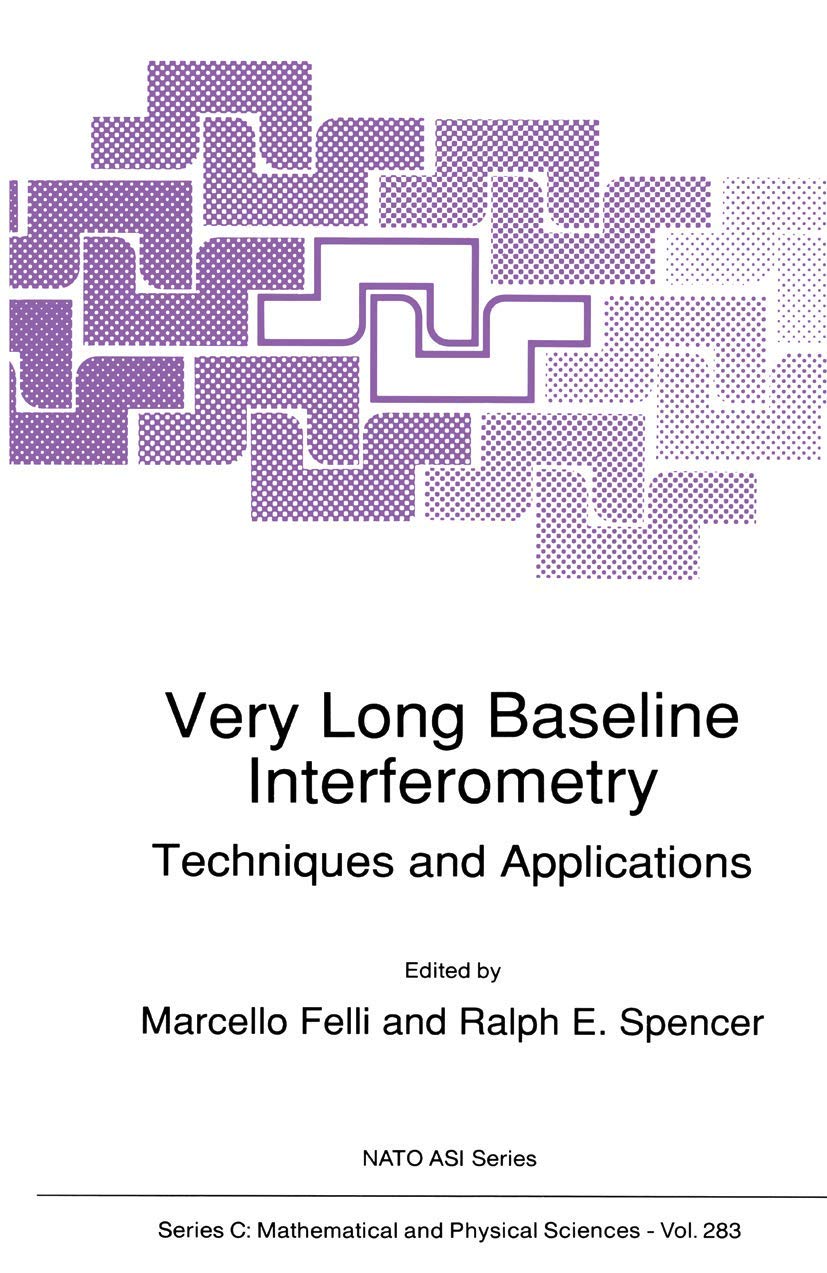
The quest for high resolution has preoccupied radio astronomers ever since radio waves were first detected from space fifty years ago. This venture was par ticularly stimulated by the discovery of quasars, and led to the development of interferometer techniques using baselines of transglobal dimensions. These meth ods have become known as Very Long Baseline Interferometry (VLBI). Arrays of radio telescopes situated all over the Earth (or even in space) are regularly used for researches in radio astronomy, reaching resolutions as small as a fraction of a milli arcsecond. The technique also allows the measurement of the positions of the radio telescopes to a few millimeters and so VLBI has become a major tool in geodesy and the study of the rotation of the Earth. VLBI has now passed the pioneer stage and is becoming a standard facility available to astronomers and geodesists, requiring the coordination of the operations of indpendently owned radio telescopes around the world. In Europe observatories from England, Federal Republic of Germany, France, Italy, Poland, Sweden and The Netherlands are coordinated in their VLBI activity by the European VLBI Network Consortium (EVN). The Programme Committee of the EVN allocates time to scientific projects on a routine basis three times a year. The Unites States has a similar arrangement of a network of independent radio observatories, and joint experiments using 'Global Network' are often made.
⚠️ WARNING (California Proposition 65):
This product may contain chemicals known to the State of California to cause cancer,
birth defects, or other reproductive harm.
For MAP (Minimum Advertised Price) violations and Intellectual Property (IP) or Trademark concerns, please contact:
support@ergodebooks.com
⚠️ California Proposition 65 Warning: Some products sold on this website may expose you to chemicals known to the State of California to cause cancer, birth defects, or other reproductive harm. For more information, visit www.P65Warnings.ca.gov.