
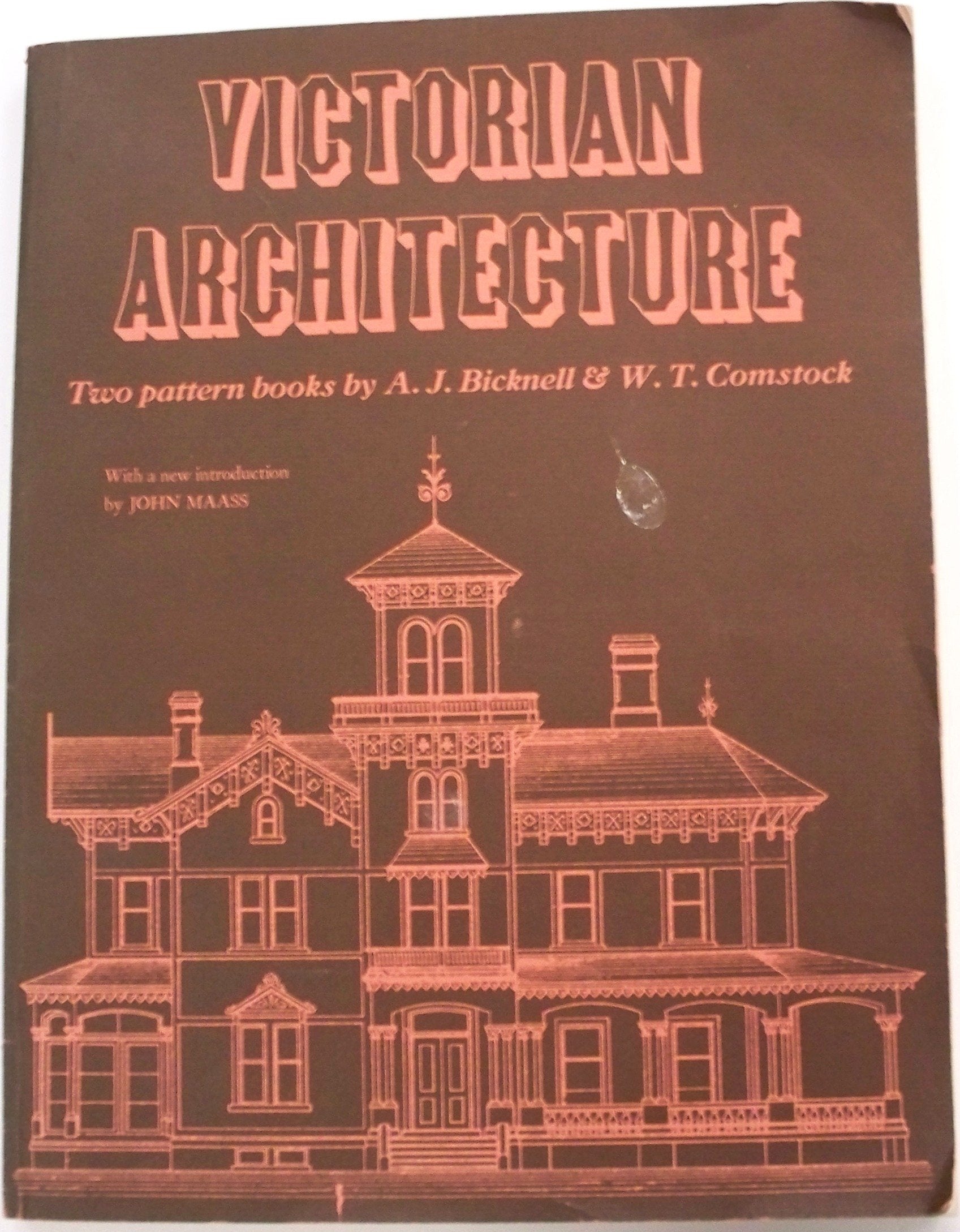
Title
Victorian Architecture: Two Pattern Books,Used
Sold by Ergodebooks, an authorized reseller.
Returns accepted within 30 days | support@ergodebooks.com
Shipping Information
- Free Standard Shipping — United States only
- Processing Time: 3–5 business days
- Estimated Delivery: 6–10 business days after dispatch
- Double-boxed, fully insured & discreetly packaged
- Tracking number sent via email once dispatched
Returns & Refund
Returns accepted within 30 days of delivery.
Damaged or Defective Item
Free return shipping + replacement or full refund
Wrong Item Received
Free return shipping + replacement or full refund
Change of Mind
Return shipping at customer's expense · 25% restocking fee applies
Payment Option

On the surface, the subject of the two pattern books reproduced here is architecture. On a deeper sense, the topic is social status. The house is a person's most important acquisition; it places him or her on the social scale, it presents an image of his or her character in the world. In the 19th Century, it was taken for granted that the home reflected the personality of the owner. Architectural styles were not a mere matter of 'aesthetics' or 'taste. Each style carried a distinct 'message.' A Gothic Revival house usually signified that the owner was proud to be of old English stock. An Italian villa meant that the owner belonged to 'a cultured and artistic household.' A French style house proclaimed 'This is a stylish and fashionable home.'The socalled architectural pattern books offered guidance in these matters. A number of Victorian pattern books were produced by men of some prominence: Downing was a noted author, Calvert Vaux and Samuel Sloan were successful architects. Amos Jackson Bicknell and William Thompkins Comstock are known to History only as the compilers and publishers of some architectural books and periodicals. The two volumes here reprinted had no text but they had three unusual features: 1) They were published in an imposing folio format while most pattern books were in the smaller quarto size. 2) They presented hundreds of exterior and interior details drawn to a usefully large scale. Most pattern books provided only ground plans and elevations of the whole house. 3) They included some design for nonresidential buildings. Most pattern books contained only houses. These books were aimed at architects, experienced builders, and their potential clients. It is significant that these books deal mainly with style and outward show the social side of architecture. There are no avantgarde masterpieces; Bicknell and Comstock's books show the average standards of their times which makes them all the more valuable historical documents.
⚠️ WARNING (California Proposition 65):
This product may contain chemicals known to the State of California to cause cancer, birth defects, or other reproductive harm.
For more information, please visit www.P65Warnings.ca.gov.
- Q: What is the main focus of 'Victorian Architecture: Two Pattern Books'? A: The main focus of 'Victorian Architecture: Two Pattern Books' is the relationship between architectural styles and social status during the 19th century. It explores how different styles reflected the personality and social standing of their owners.
- Q: Who are the authors of this book? A: The authors of the book are A. J. Bicknell and William T. Comstock, both of whom contributed significantly to architectural literature in the Victorian era.
- Q: What unique features does this book offer compared to other pattern books? A: This book features an imposing folio format, hundreds of detailed illustrations drawn to a large scale, and includes designs for non-residential buildings, unlike most pattern books that focus solely on houses.
- Q: Is this book suitable for beginners in architecture? A: While the book is aimed at architects and experienced builders, beginners may also find it valuable for understanding Victorian architectural styles and their social implications.
- Q: How many pages does this book have? A: The book contains a total of 80 pages.
- Q: What is the condition of the book? A: The book is listed as 'Used Book in Good Condition,' indicating that it has been previously owned but remains in good condition for reading and reference.
- Q: When was 'Victorian Architecture: Two Pattern Books' published? A: The book was published on January 1, 1976, and is a 3rd printing that has been revised and expanded.
- Q: What type of binding does this book have? A: The book is available in paperback binding, making it more flexible and easier to handle.
- Q: Does this book include text or commentary? A: The two volumes reproduced in this book do not include any text; they focus solely on architectural illustrations.
- Q: What is the target audience for this book? A: The target audience includes architects, builders, and their potential clients, as well as anyone interested in the historical and social aspects of Victorian architecture.