
Title
Victorian Glassworlds: Glass Culture and the Imagination 18301880,Used
Sold by Ergodebooks, an authorized reseller.
Returns accepted within 30 days | support@ergodebooks.com
Shipping Information
- Free Standard Shipping — United States only
- Processing Time: 3–5 business days
- Estimated Delivery: 6–10 business days after dispatch
- Double-boxed, fully insured & discreetly packaged
- Tracking number sent via email once dispatched
Returns & Refund
Returns accepted within 30 days of delivery.
Damaged or Defective Item
Free return shipping + replacement or full refund
Wrong Item Received
Free return shipping + replacement or full refund
Change of Mind
Return shipping at customer's expense · 25% restocking fee applies
Payment Option

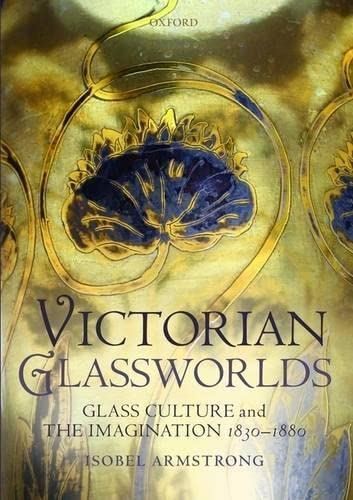
Isobel Armstrong's startlingly original and beautifully illustrated book tells the stories that spring from the massproduction of glass in nineteenthcentury England. Moving across technology, industry, local history, architecture, literature, print culture, the visual arts, optics, and philosophy, it will transform our understanding of the Victorian period.The mass production of glass in the nineteenth century transformed an ancient material into a modern one, at the same time transforming the environment and the nineteenthcentury imagination. It created a new glass culture hitherto inconceivable. Glass culture constituted Victorian modernity. It was made from infinite variations of the prefabricated glass panel, and the lens. The mirror and the window became its formative elements, both the texts and constituents of glass culture. The glassworlds of the century are heterogeneous. They manifest themselves in the technologies of the factory furnace, in the myths of Cinderella and her glass slipper circulated in print media, in the ideologies of the conservatory as building type, in the fantasia of the shopfront, in the production of chandeliers, in the Crystal Palace, and the lensmade images of the magic lantern and microscope. But they were nevertheless governed by two inescapable conditions.First, to look through glass was to look through the residues of the breath of an unknown artisan, because glass was mass produced by incorporating glassblowing into the division of labour. Second, literally a new medium, glass brought the ambiguity of transparency and the problems of mediation into the everyday. It intervened between seer and seen, incorporating a modern philosophical problem into bodily experience. Thus for poets and novelists glass took on material and ontological, political, and aesthetic meanings.Reading glass forwards into Bauhaus modernism, Walter Benjamin overlooked an early phase of glass culture where the languages of glass are different. The book charts this phase in three parts. Factory archives, trade union records, and periodicals document the individual manufacturers and artisans who founded glass culture, the industrial tourists who described it, and the systematic politics of windowbreaking. Part Two, culminating in glass under glass at the Crystal Palace, reads the glassing of the environment, including the mirror, the window, and controversy round the conservatory, and their inscription in poems and novels. Part Three explores the lens, from optical toys to 'philosophical' instruments as the telescope and microscope were known.A meditation on its history and phenomenology, Victorian Glassworlds is a poetics of glass for nineteenthcentury modernity.
⚠️ WARNING (California Proposition 65):
This product may contain chemicals known to the State of California to cause cancer, birth defects, or other reproductive harm.
For more information, please visit www.P65Warnings.ca.gov.