
Title
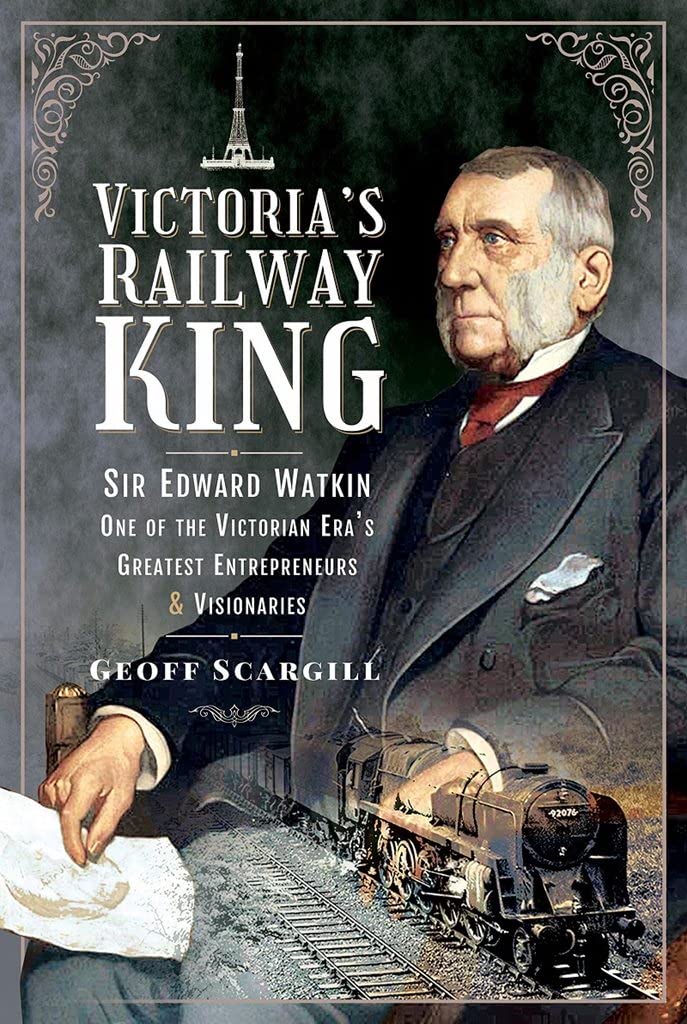
Victoria's Railway King: Sir Edward Watkin, One of the Victorian Eras Greatest Entrepreneurs and Visionaries,Used
Sold by Ergodebooks, an authorized reseller.
Returns accepted within 30 days | support@ergodebooks.com
Shipping Information
- Free Standard Shipping — United States only
- Processing Time: 3–5 business days
- Estimated Delivery: 6–10 business days after dispatch
- Double-boxed, fully insured & discreetly packaged
- Tracking number sent via email once dispatched
Returns & Refund
Returns accepted within 30 days of delivery.
Damaged or Defective Item
Free return shipping + replacement or full refund
Wrong Item Received
Free return shipping + replacement or full refund
Change of Mind
Return shipping at customer's expense · 25% restocking fee applies
Payment Option

The accomplishments and initiatives, both social and economic, of Edward Watkin are almost too many to relate. Though generally known for his largescale railway projects, becoming chairman of nine different British railway companies as well as developing railways in Canada, the USA, Greece, India and the Belgian Congo, he was also responsible for a stream of remarkable projects in the nineteenth century which helped shape peoples lives inside and outside Britain.As well as holding senior positions with the London and North Western Railway, the Worcester and Hereford Railway and the Manchester, Sheffield & Lincolnshire Railway, Watkin became president of the Grand Trunk Railway of Canada. He was also director of the New York, Lake Erie and Western Railways, as well as the AthensPiraeus Railway.Watkin was also the driving force in the creation of the Manchester, Sheffield and Lincolnshire Railways London Extension the Great Central Main Line down to Marylebone in London. This, though, was only one part of his great ambition to have a highspeed rail link from Manchester to Paris and ultimately to India. This, of course, involved the construction of a Channel tunnel. Work on this began on both sides of the Channel in 1880 but had to be abandoned due to the fear of invasion from the Continent.He also purchased an area of Wembley Park, serviced by an extension of his Metropolitan Railway. He developed the park into a pleasure and events destination for urban Londoners, which later became the site of Wembley Stadium. It was also the site of another of Watkins enterprises, the Great Tower in London which was designed to be higher than the Eiffel Tower but was never completed.Little, though, is known about Watkins personal life, which is explored here through the surviving diaries he kept. The author, who is the chair of The Watkin Society, which aims to promote Watkins life and achievements, has delved into the mind of one of the nineteenth centurys outstanding individuals.
⚠️ WARNING (California Proposition 65):
This product may contain chemicals known to the State of California to cause cancer, birth defects, or other reproductive harm.
For more information, please visit www.P65Warnings.ca.gov.