
Title
Vigilant Things: On Thieves, Yoruba AntiAesthetics, and The Strange Fates of Ordinary Objects in Nigeria,Used
Sold by Ergodebooks, an authorized reseller.
Returns accepted within 30 days | support@ergodebooks.com
Shipping Information
- Free Standard Shipping — United States only
- Processing Time: 3–5 business days
- Estimated Delivery: 6–10 business days after dispatch
- Double-boxed, fully insured & discreetly packaged
- Tracking number sent via email once dispatched
Returns & Refund
Returns accepted within 30 days of delivery.
Damaged or Defective Item
Free return shipping + replacement or full refund
Wrong Item Received
Free return shipping + replacement or full refund
Change of Mind
Return shipping at customer's expense · 25% restocking fee applies
Payment Option

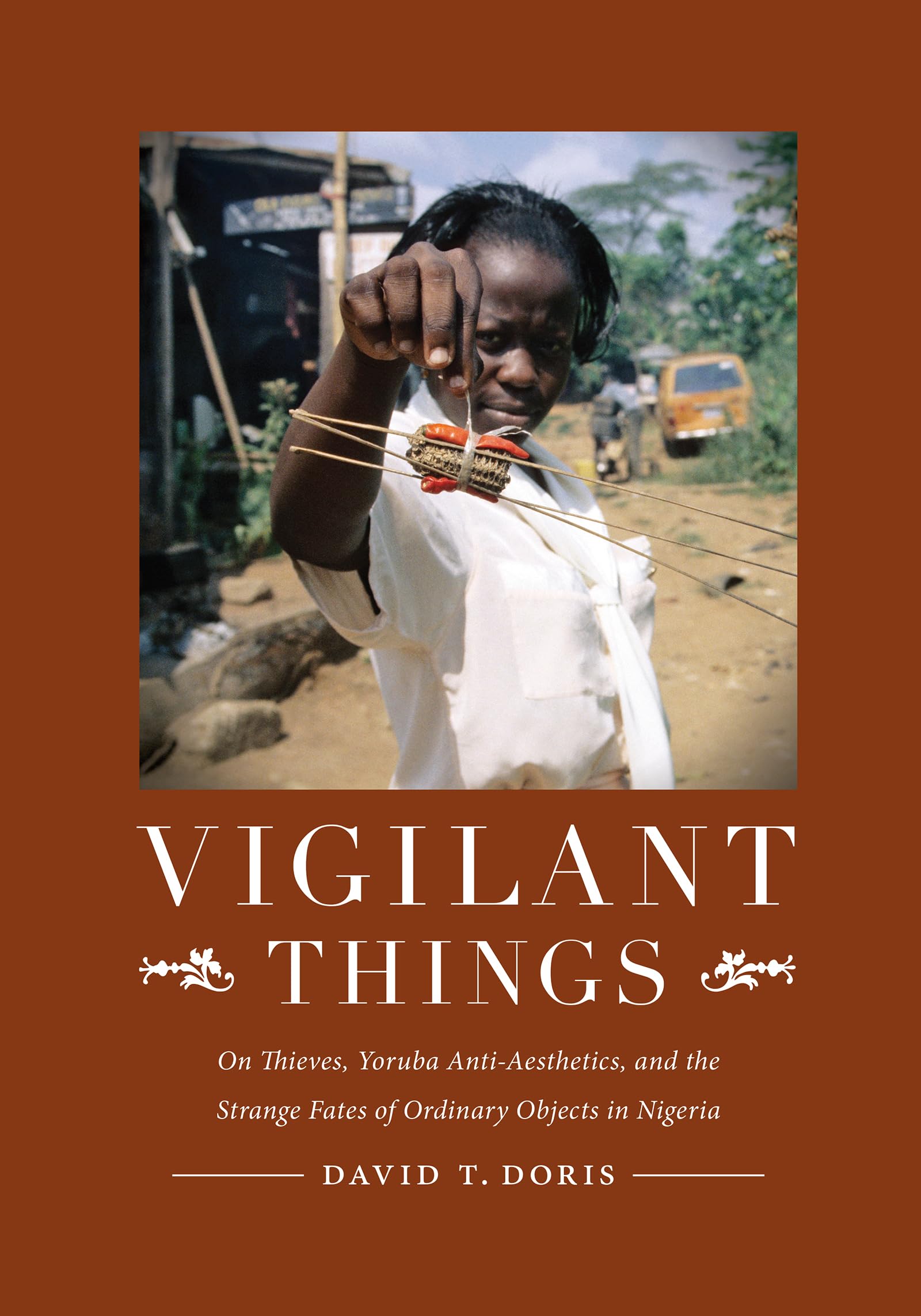
Winner of the 2012 Melville J. Herskovits award (African Studies Association)Throughout southwestern Nigeria, Yoruba men and women create objects called aale to protect their propertiesfarms, gardens, market goods, firewoodfrom the ravages of thieves. Aale are objects of such unassuming appearance that a nonYoruba viewer might not register their important presence in the Yoruba visual landscape: a dried seedpod tied with palm fronds to the trunk of a fruit tree, a burnt corncob suspended on a wire, an old shoe tied with a rag to a wornout broom and broken comb, a ripe red pepper pierced with a single broom straw and set atop a pile of eggs. Consequently, aale have rarely been discussed in print, and then only as peripheral elements in studies devoted to other issues. Yet aale are in no way peripheral to Yoruba culture or aesthetics.In Vigilant Things, David T. Doris argues that aale are keys to understanding how images function in Yoruba social and cultural life. The humble, often degraded objects that comprise aale reveal as eloquently as any canonical artwork the channels of power that underlie the surfaces of the visible. Aale are warnings, intended to trigger the work of conscience. Aale objects symbolically threaten suffering as the consequence of transgressionthe suffering of disease, loss, barrenness, paralysis, accident, madness, fruitless labor, or deathand as such are often the useless residues of things that were once positively valued: empty snail shells, shards of pottery, fragments of rusted iron, and the like. If these objects share suffering and uselessness as constitutive elements, it is because they already have been made to suffer and become useless. Aale offer wouldbe thieves an opportunity to recognize themselves in advance of their actions and to avoid the thievery that would make the 'useless' people.
⚠️ WARNING (California Proposition 65):
This product may contain chemicals known to the State of California to cause cancer, birth defects, or other reproductive harm.
For more information, please visit www.P65Warnings.ca.gov.