
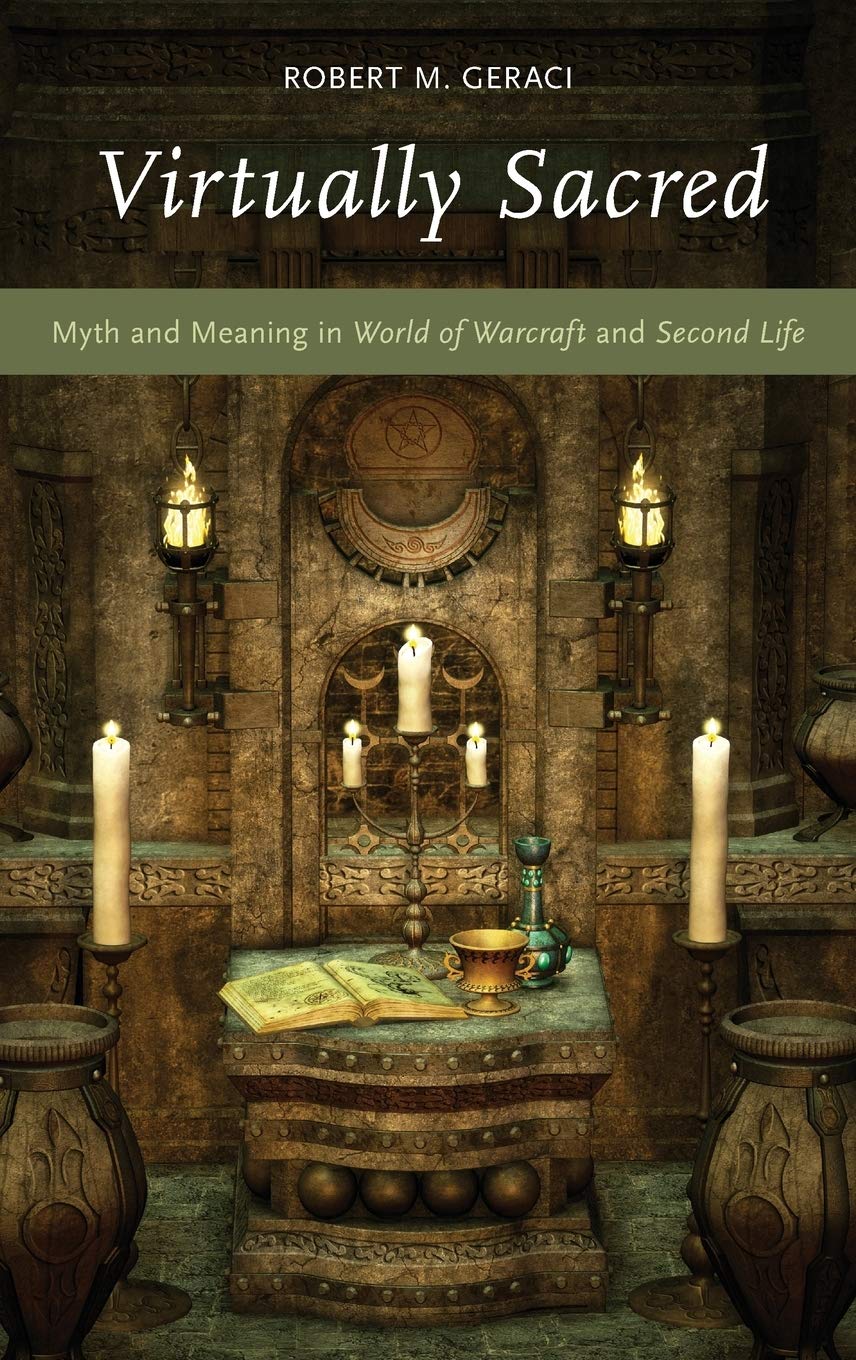
Title
Virtually Sacred: Myth and Meaning in World of Warcraft and Second Life,New
Sold by Ergodebooks, an authorized reseller.
Returns accepted within 30 days | support@ergodebooks.com
Shipping Information
- Free Standard Shipping — United States only
- Processing Time: 3–5 business days
- Estimated Delivery: 6–10 business days after dispatch
- Double-boxed, fully insured & discreetly packaged
- Tracking number sent via email once dispatched
Returns & Refund
Returns accepted within 30 days of delivery.
Damaged or Defective Item
Free return shipping + replacement or full refund
Wrong Item Received
Free return shipping + replacement or full refund
Change of Mind
Return shipping at customer's expense · 25% restocking fee applies
Payment Option

Millions of users have taken up residence in virtual worlds, and in those worlds they find opportunities to revisit and rewrite their religious lives. Robert M. Geraci argues that virtual worlds and video games have become a locus for the satisfaction of religious needs, providing many users with devoted communities, opportunities for ethical reflection, a meaningful experience of history and human activity, and a sense of transcendence. Using interviews, surveys, and his own firsthand experience within the virtual worlds, Geraci shows how World of Warcraft and Second Life provide participants with the opportunity to rethink what it means to be religious in the contemporary world. Not all participants use virtual worlds for religious purposes, but many online residents use them to rearrange or replace religious practice as designers and users collaborate in the production of a new spiritual marketplace.Using World of Warcraft and Second Life as case studies, this book shows that many residents now use virtual worlds to reimagine their traditions and work to restore them to 'authentic' sanctity, or else replace religious institutions with virtual communities that provide meaning and purpose to human life. For some online residents, virtual worlds are even keys to a posthuman future where technology can help us transcend mortal life. Geraci argues that World of Warcraft and Second Life are 'virtually sacred' because they do religious work. They often do such work without regard forand frequently in conflict withtraditional religious institutions and practices; ultimately they participate in our sacred landscape as outsiders, competitors, and collaborators.
⚠️ WARNING (California Proposition 65):
This product may contain chemicals known to the State of California to cause cancer, birth defects, or other reproductive harm.
For more information, please visit www.P65Warnings.ca.gov.