
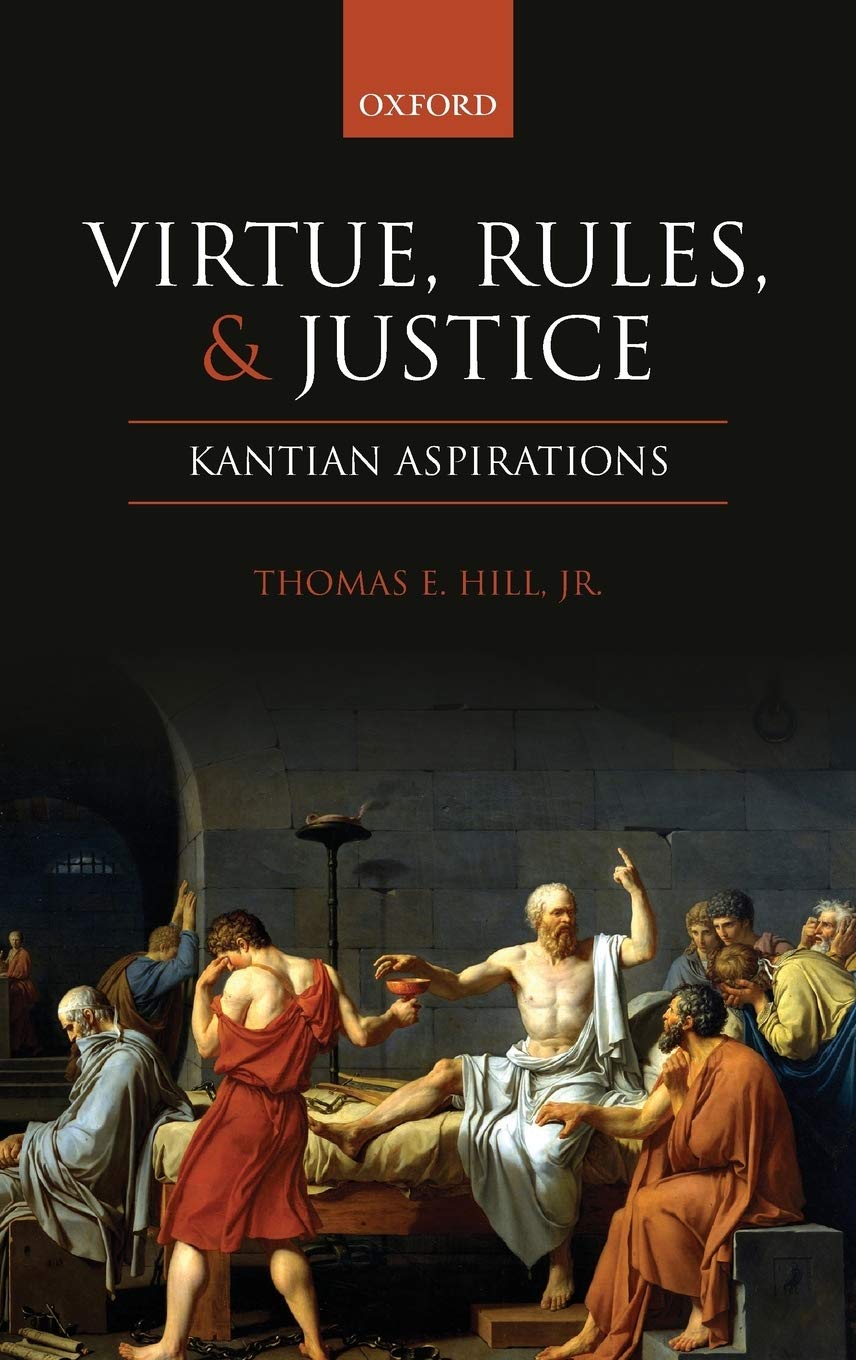
Title
Virtue, Rules, and Justice: Kantian Aspirations,Used
Sold by Ergodebooks, an authorized reseller.
Returns accepted within 30 days | support@ergodebooks.com
Shipping Information
- Free Standard Shipping — United States only
- Processing Time: 3–5 business days
- Estimated Delivery: 6–10 business days after dispatch
- Double-boxed, fully insured & discreetly packaged
- Tracking number sent via email once dispatched
Returns & Refund
Returns accepted within 30 days of delivery.
Damaged or Defective Item
Free return shipping + replacement or full refund
Wrong Item Received
Free return shipping + replacement or full refund
Change of Mind
Return shipping at customer's expense · 25% restocking fee applies
Payment Option

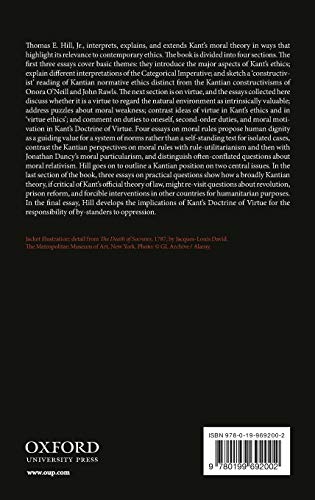
Thomas E. Hill Jr. interprets, explains, and extends Kant's moral theory in a series of essays that highlight its relevance to contemporary ethics. The book is divided into four sections. The first three essays cover basic themes: they introduce the major aspects of Kant's ethics; explain different interpretations of the Categorical Imperative; and sketch a "constructivist" reading of Kantian normative ethics distinct from the Kantian constructivisms of Onora O'Neill and John Rawls. The next section is on virtue, and the essays collected here discuss whether it is a virtue to regard the natural environment as intrinsically valuable, address puzzles about moral weakness, contrast ideas of virtue in Kant's ethics and in "virtue ethics," and comment on duties to oneself, secondorder duties, and moral motivation in Kant's Doctrine of Virtue. Four essays on moral rules propose human dignity as a guiding value for a system of norms rather than a selfstanding test for isolated cases, contrast the Kantian perspectives on moral rules with ruleutilitarianism and then with Jonathan Dancy's moral particularism, and distinguish oftenconflated questions about moral relativism. Hill goes on to outline a Kantian position on two central issues. In the last section of the book, three essays on practical questions show how a broadly Kantian theory, if critical of Kant's official theory of law, might revisit questions about revolution, prison reform, and forcible interventions in other countries for humanitarian purposes. In the final essay, Hill develops the implications of Kant's Doctrine of Virtue for the responsibility of bystanders to oppression.
⚠️ WARNING (California Proposition 65):
This product may contain chemicals known to the State of California to cause cancer, birth defects, or other reproductive harm.
For more information, please visit www.P65Warnings.ca.gov.