
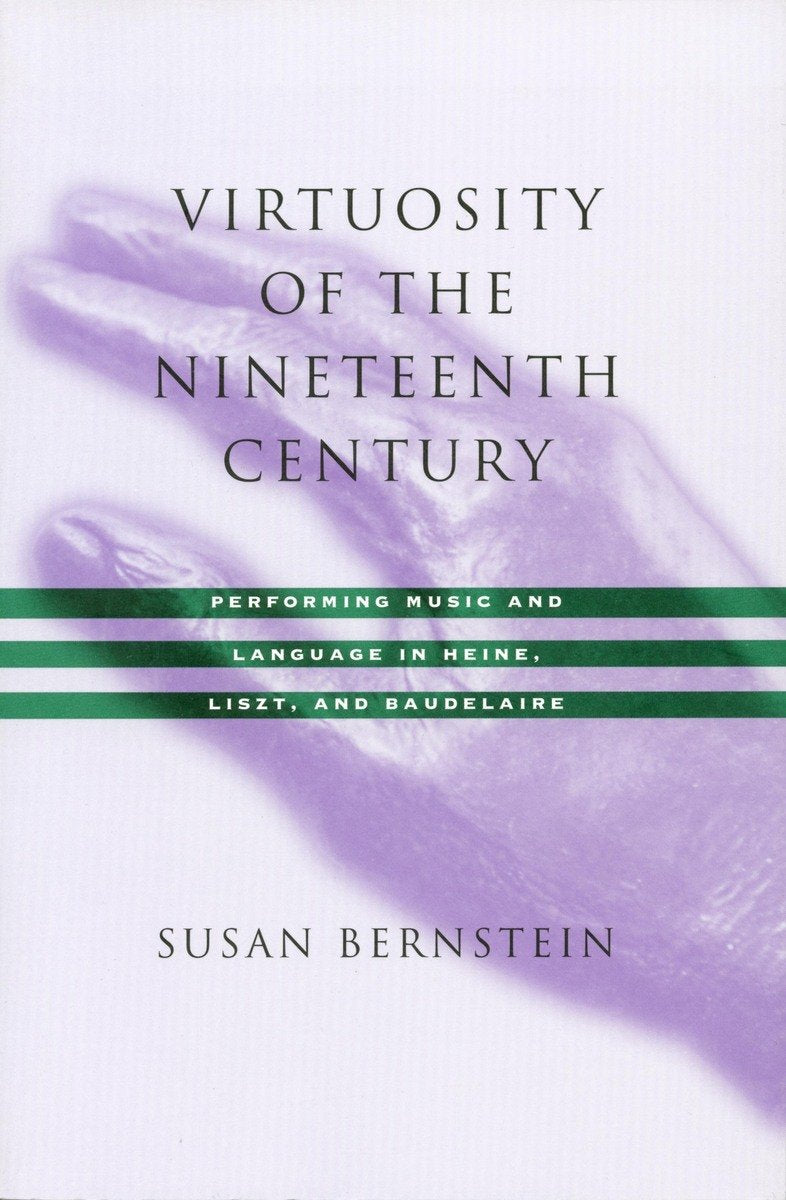
Title
Virtuosity Of The Nineteenth Century: Performing Music And Language In Heine, Liszt, And Baudelaire,Used
Sold by Ergodebooks, an authorized reseller.
Returns accepted within 30 days | support@ergodebooks.com
Shipping Information
- Free Standard Shipping — United States only
- Processing Time: 3–5 business days
- Estimated Delivery: 6–10 business days after dispatch
- Double-boxed, fully insured & discreetly packaged
- Tracking number sent via email once dispatched
Returns & Refund
Returns accepted within 30 days of delivery.
Damaged or Defective Item
Free return shipping + replacement or full refund
Wrong Item Received
Free return shipping + replacement or full refund
Change of Mind
Return shipping at customer's expense · 25% restocking fee applies
Payment Option

A study of the reflexive relationship between music and language in the nineteenth century, this book maintains a discrete historical focus while drawing upon an aesthetic going back to problems of epic delivery in ancient Greece. Reading Romantic reactions to music together with linguistic and economic conflicts brought about by the rise of journalism, the book pursues the tension around performativity that both connects and separates music and writing.Franz Liszt is the organizing figure in this detailed study of music in Heine and Baudelaire. The acclaimed virtuoso functions both as a metaphor for a musical mode of enunciation and as a historical referent. This dual status dramatizes the struggle at the heart of nineteenthcentury aesthetics between poetic selfreference and realism's efforts to report the world accurately. Debates surrounding Liszt pinpoint the conflict between the view that locates sense in the process of its production and the contrary judgment privileging a stable meaning over the exteriority of its execution. This dualism also articulates the problematic relationship of the individual to general social and linguistic structures.The book's analyses of nineteenthcentury theories of correspondence, along with the thematization of the 'other arts,' point to the limitations of analogy, the impossibility of a general theory of art, and a crisis of identitythat is, a shared nonidentitythat can be the only common property among different discourses, genres, and media. Virtuosity of the Nineteenth Century offers a fresh reading of relatively marginal texts by canonical figures, addressing questions about the relation between the arts, the possibility of critical description, and the function of performativity.
⚠️ WARNING (California Proposition 65):
This product may contain chemicals known to the State of California to cause cancer, birth defects, or other reproductive harm.
For more information, please visit www.P65Warnings.ca.gov.