
Title
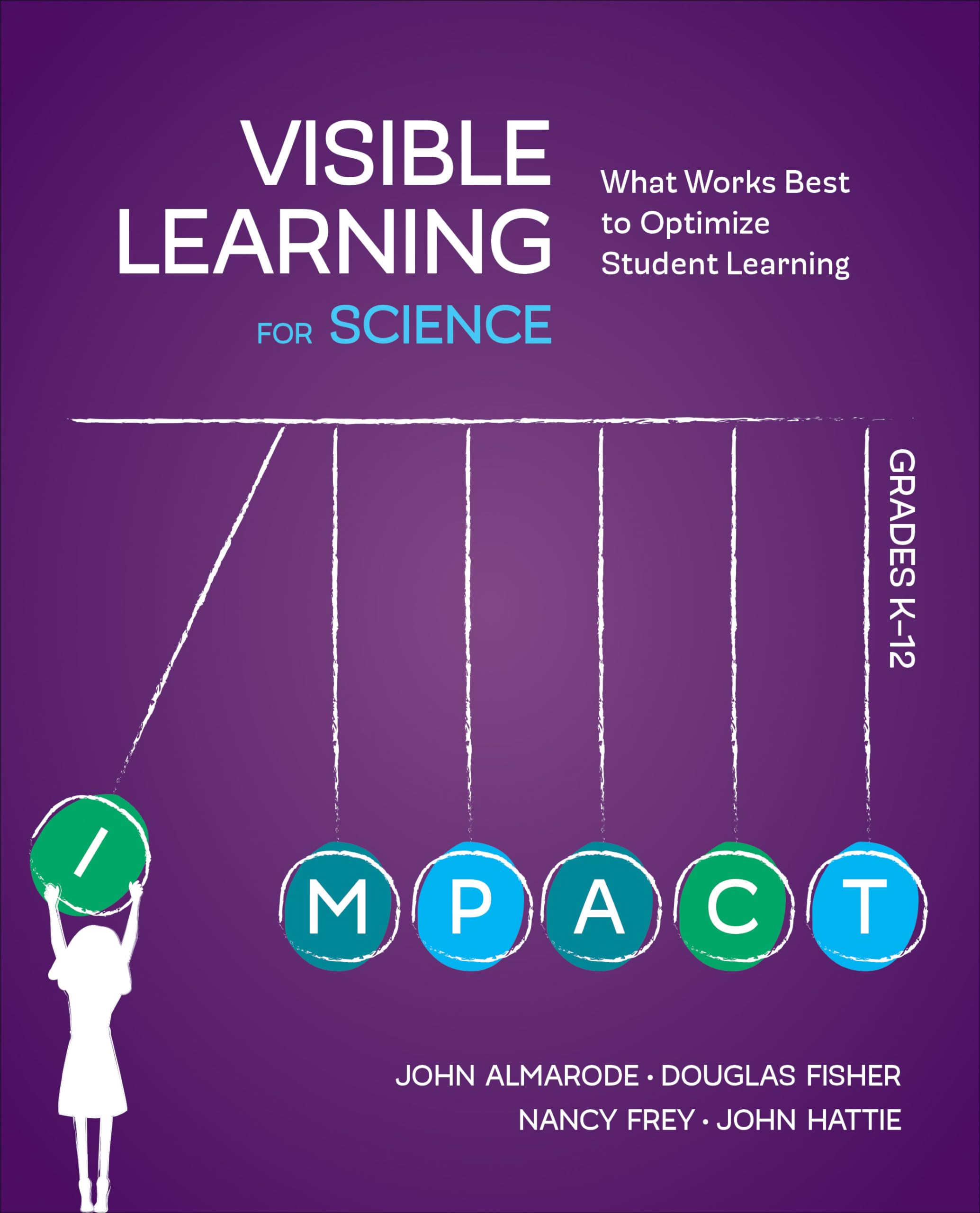
Visible Learning for Science, Grades K12: What Works Best to Optimize Student Learning,New
Sold by Ergodebooks, an authorized reseller.
Returns accepted within 30 days | support@ergodebooks.com
Shipping Information
- Free Standard Shipping — United States only
- Processing Time: 3–5 business days
- Estimated Delivery: 6–10 business days after dispatch
- Double-boxed, fully insured & discreetly packaged
- Tracking number sent via email once dispatched
Returns & Refund
Returns accepted within 30 days of delivery.
Damaged or Defective Item
Free return shipping + replacement or full refund
Wrong Item Received
Free return shipping + replacement or full refund
Change of Mind
Return shipping at customer's expense · 25% restocking fee applies
Payment Option

In the best science classrooms, teachers see learning through the eyes of their students, and students view themselves as explorers. But with so many instructional approaches to choose frominquiry, laboratory, projectbased learning, discovery learningwhich is most effective for student success?In Visible Learning for Science, the authors reveal that its not which strategy, but when, and plot a vital K12 framework for choosing the right approach at the right time, depending on where students are within the three phases of learning: surface, deep, and transfer.Synthesizing stateoftheart science instruction and assessment with over fifteen years of John Hatties cornerstone educational research, this framework for maximum learning spans the range of topics in the life and physical sciences. Employing classroom examples from all grade levels, the authors empower teachers to plan, develop, and implement highimpact instruction for each phase of the learning cycle:Surface learning: when, through precise approaches, students explore science concepts and skills that give way to a deeper exploration of scientific inquiry.Deep learning: when students engage with data and evidence to uncover relationships between conceptsstudents think metacognitively, and use knowledge to plan, investigate, and articulate generalizations about scientific connections.Transfer learning: when students apply knowledge of scientific principles, processes, and relationships to novel contexts, and are able to discern and innovate to solve complex problems.Visible Learning for Science opens the door to maximumimpact science teaching, so that students demonstrate more than a years worth of learning for a year spent in school.
⚠️ WARNING (California Proposition 65):
This product may contain chemicals known to the State of California to cause cancer, birth defects, or other reproductive harm.
For more information, please visit www.P65Warnings.ca.gov.
- Q: What is the focus of 'Visible Learning for Science, Grades K-12'? A: The book emphasizes the importance of understanding when to use different instructional strategies in science education to optimize student learning, rather than focusing solely on which strategy is best.
- Q: Who are the authors of this book? A: The book is authored by John T. Almarode, who is well-known for his contributions to science education and instructional practices.
- Q: What age group is this book designed for? A: This book is intended for educators teaching grades K-12, making it suitable for a wide range of students from young learners to high schoolers.
- Q: What are the three phases of learning discussed in the book? A: The book outlines three phases of learning: surface learning, deep learning, and transfer learning, each representing a different level of student engagement and understanding.
- Q: How many pages does the book have? A: The book contains 216 pages, providing a comprehensive overview of effective science teaching strategies.
- Q: What type of binding does this book have? A: The book is available in a paperback binding, making it lightweight and easy to handle for classroom use.
- Q: When was this book published? A: Visible Learning for Science was published on March 23, 2018.
- Q: Is this book suitable for new teachers? A: Yes, this book is a valuable resource for new teachers as it provides practical strategies and insights for effective science instruction.
- Q: Does the book include classroom examples? A: Yes, the book includes various classroom examples across all grade levels to illustrate the application of the strategies discussed.
- Q: What educational research does the book reference? A: The book synthesizes over fifteen years of John Hattie's educational research, focusing on evidence-based practices for maximizing student learning.