If you have any questions, you are always welcome to contact us. We'll get back to you as soon as possible, withing 24 hours on weekdays.
Customer service
All questions about your order, return and delivery must be sent to our customer service team by e-mail at yourstore@yourdomain.com
Sale & Press
If you are interested in selling our products, need more information about our brand or wish to make a collaboration, please contact us at press@yourdomain.com
Help
If you have any questions, you are always welcome to contact us. We'll get back to you as soon as possible, withing 24 hours on weekdays.
Customer service
All questions about your order, return and delivery must be sent to our customer service team by e-mail at yourstore@yourdomain.com
Sale & Press
If you are interested in selling our products, need more information about our brand or wish to make a collaboration, please contact us at press@yourdomain.com
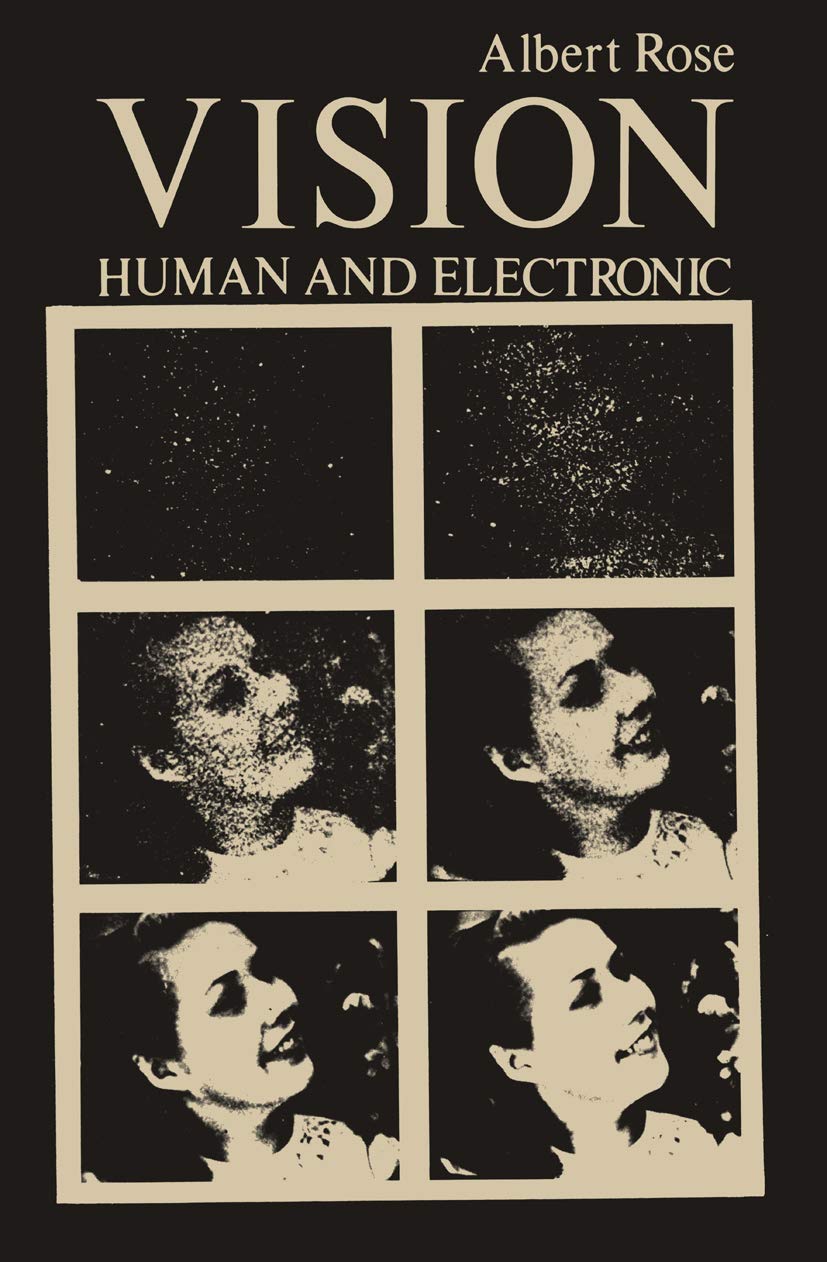
The content of this monograph stems from the writer's early involvement with the design of a series of television camera the orthicon, the image orthicon and the vidicon. These tubes and their variations, have, at different times been the "eyes" of the television system almost from its inception in 1939. It was natural, during the course of this work, to have a parallel interest in the human visual system as well as in the silver halide photographic process. The problem facing the television system was the same as that facing the human visual and the photographic systems, namely, to abstract the maximum amount of information out of a limited quantity oflight. The human eye and photographic film both repre sented advanced states of development and both surpassed, in their performance, the early efforts on television camera tubes. It was particularly true and "plain to see" that each improvement and refinement of the television camera only served to accentuate the remarkable design of the human eye. A succession of radical advances in cameratube sensitivity found the eye still operating at levels of illumination too low for the television camera tube. It is only recently that the television camera tube has finally matched and even somewhat exceeded the performance of the human eye at low light levels. It was also clear throughout the work on television camera tubes that the final goal of any visual systembiological, chemical, or electronicwas the ability to detect or count individual photons."
⚠️ WARNING (California Proposition 65):
This product may contain chemicals known to the State of California to cause cancer,
birth defects, or other reproductive harm.
For MAP (Minimum Advertised Price) violations and Intellectual Property (IP) or Trademark concerns, please contact:
support@ergodebooks.com
⚠️ California Proposition 65 Warning: Some products sold on this website may expose you to chemicals known to the State of California to cause cancer, birth defects, or other reproductive harm. For more information, visit www.P65Warnings.ca.gov.