If you have any questions, you are always welcome to contact us. We'll get back to you as soon as possible, withing 24 hours on weekdays.
Customer service
All questions about your order, return and delivery must be sent to our customer service team by e-mail at yourstore@yourdomain.com
Sale & Press
If you are interested in selling our products, need more information about our brand or wish to make a collaboration, please contact us at press@yourdomain.com
Help
If you have any questions, you are always welcome to contact us. We'll get back to you as soon as possible, withing 24 hours on weekdays.
Customer service
All questions about your order, return and delivery must be sent to our customer service team by e-mail at yourstore@yourdomain.com
Sale & Press
If you are interested in selling our products, need more information about our brand or wish to make a collaboration, please contact us at press@yourdomain.com
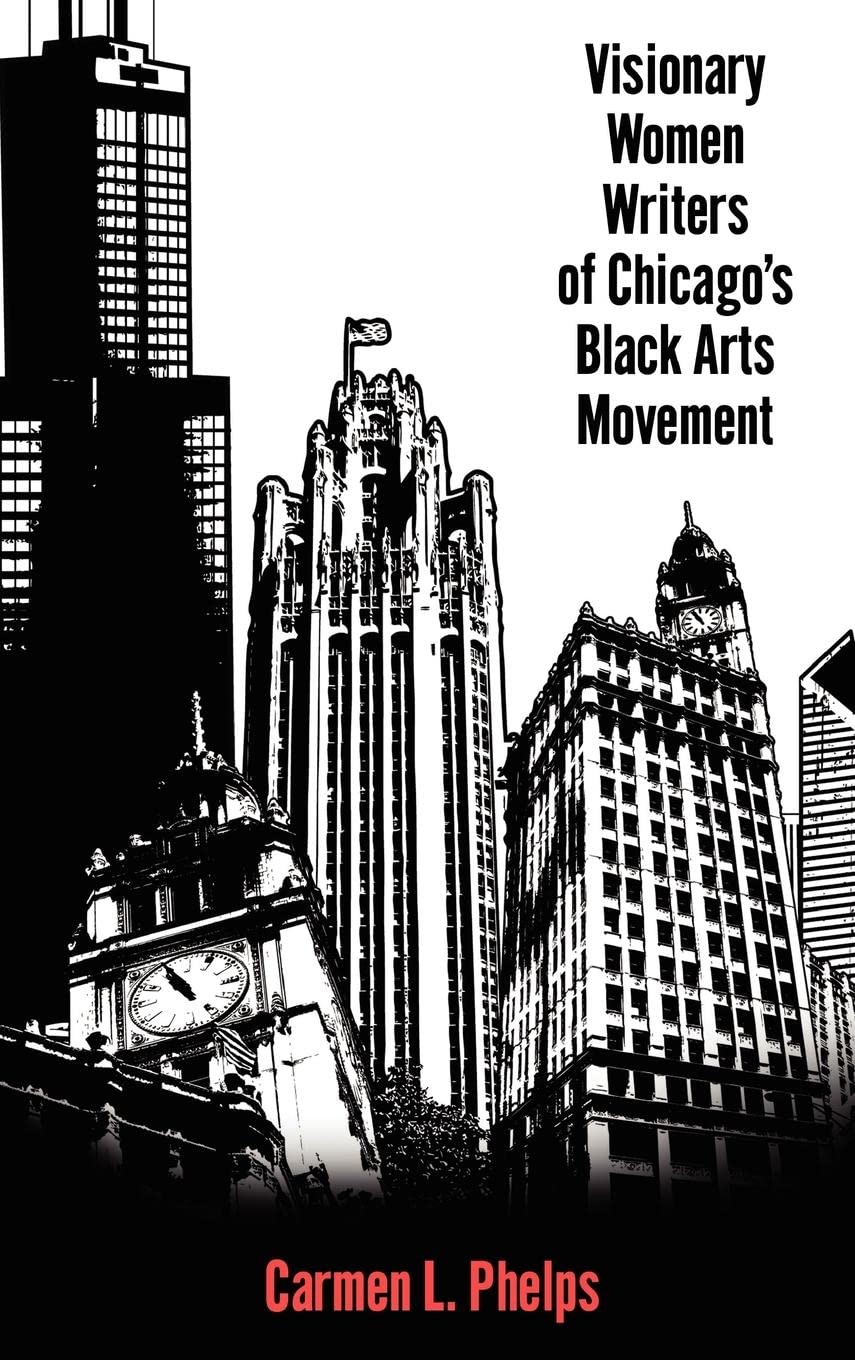
A disproportionate number of male writers, including such figures as Amiri Baraka, Larry Neal, Maulana Karenga, and Haki Madhubuti, continue to be credited for constructing the iconic and ideological foundations for what would be perpetuated as the Black Art Movement. Though there has arisen an increasing amount of scholarship that recognizes leading women artists, activists, and leaders of this period, these new perspectives have yet to recognize adequately the ways women aspired to far more than a mere dismantling of maleoriented ideals.In Visionary Women Writers of Chicago's Black Arts Movement, Carmen L. Phelps examines the work of several women artists working in Chicago, a key focal point for the energy and production of the movement. Angela Jackson, Johari Amini, and Carolyn Rodgers reflect in their writing specific cultural, local, and regional insights, and demonstrate the capaciousness of Black Art rather than its constraints. Expanding from these three writers, Phelps analyzes the breadth of women's writing in the BAM. In doing so, Phelps argues that these and other women attained advantageous and unique positions to represent the potential of the BAM aesthetic, even if their experiences and artistic perspectives were informed by both social conventions and constraints. In this book, Phelps's examination brings forward a powerful and crucial contribution to the aesthetics and history of a movement that still inspires.
⚠️ WARNING (California Proposition 65):
This product may contain chemicals known to the State of California to cause cancer,
birth defects, or other reproductive harm.
For MAP (Minimum Advertised Price) violations and Intellectual Property (IP) or Trademark concerns, please contact:
support@ergodebooks.com
⚠️ California Proposition 65 Warning: Some products sold on this website may expose you to chemicals known to the State of California to cause cancer, birth defects, or other reproductive harm. For more information, visit www.P65Warnings.ca.gov.