
Title
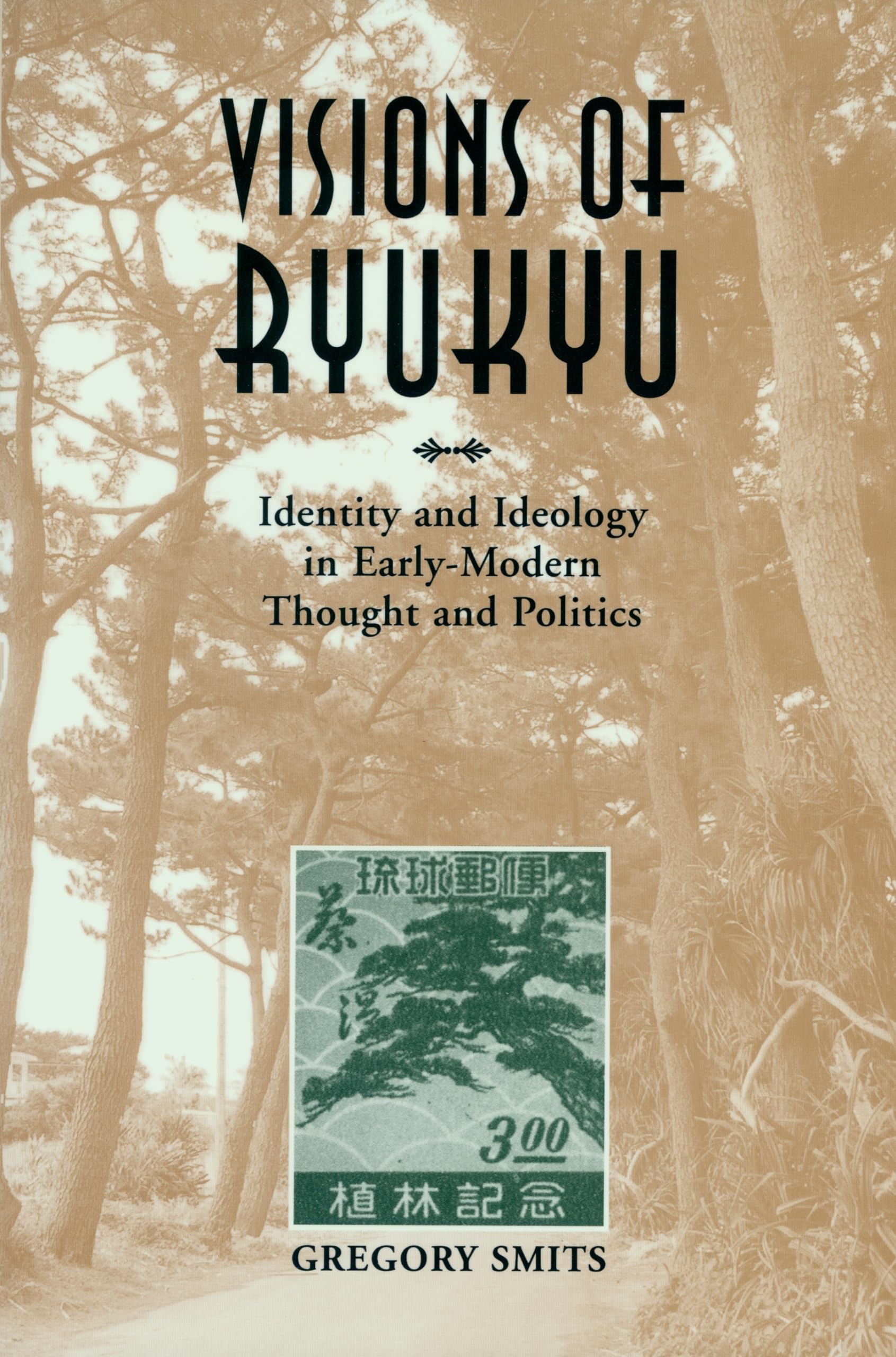
Visions of Ryukyu: Identity and Ideology in EarlyModern Thought and Politics,Used
Sold by Ergodebooks, an authorized reseller.
Returns accepted within 30 days | support@ergodebooks.com
Shipping Information
- Free Standard Shipping — United States only
- Processing Time: 3–5 business days
- Estimated Delivery: 6–10 business days after dispatch
- Double-boxed, fully insured & discreetly packaged
- Tracking number sent via email once dispatched
Returns & Refund
Returns accepted within 30 days of delivery.
Damaged or Defective Item
Free return shipping + replacement or full refund
Wrong Item Received
Free return shipping + replacement or full refund
Change of Mind
Return shipping at customer's expense · 25% restocking fee applies
Payment Option

Between 1609 and 1879, the geographical, political, and ideological status of the Kingdom of Ryukyu (modern Okinawa) was characterized by its ambiguity. It was subordinate to its larger neighbors, China and Japan, yet an integral part of neither. A Japanese invasion force from Satsuma had conquered the kingdom in 1609, resulting in its partial incorporation into Tokugawa Japans bakuhan state. Given Ryukyus longstanding ties with China and East Asian foreign relations following the rise of the Qing dynasty, however, the bakufu maintained only an indirect link with Ryukyu from the midseventeenth century onward. Thus Ryukyu was able to exist as a quasiindependent kingdom for more than two centuriesalbeit amidst a complex web of trade and diplomatic agreements involving the bakufu, Satsuma, Fujian, and Beijing. During this time, Ryukyus ambiguous position relative to China and Japan prompted its elites to fashion their own visions of Ryukyuan identity. Created in a dialogic relationship to both a Chinese and Japanese Other, these visions informed political programs intended to remake Ryukyu.In this innovative and provocative study, Gregory Smits explores early modern perceptions of Ryukyu and their effect on its political culture and institutions. He describes the major historical circumstances that informed early modern discourses of Ryukyuan identity and examines the strategies used by leading intellectual and political figures to fashion, promote, and implement their visions of Ryukyu.Early modern visions of Ryukyu were based on Confucianism, Buddhism, and other ideologies of the time. Eventually one vision prevailed, becoming the theoretical basis of the early modern state by the middle of the eighteenth century. Employing elements of Confucianism, the scholar and government official Sai On (16821761) argued that the kingdoms destiny lay primarily with Ryukyuans themselves and that moral parity with Japan and China was within its grasp. Despite Satsumas control over its diplomatic and economic affairs, Sai envisioned Ryukyu as an ideal Confucian state with government and state rituals based on the Chinese model. In examining Sais thought and political program, this volume sheds new light on Confucian praxis and, conversely, uncovers one variety of an East Asian prenational imagined political/cultural community.
⚠️ WARNING (California Proposition 65):
This product may contain chemicals known to the State of California to cause cancer, birth defects, or other reproductive harm.
For more information, please visit www.P65Warnings.ca.gov.