
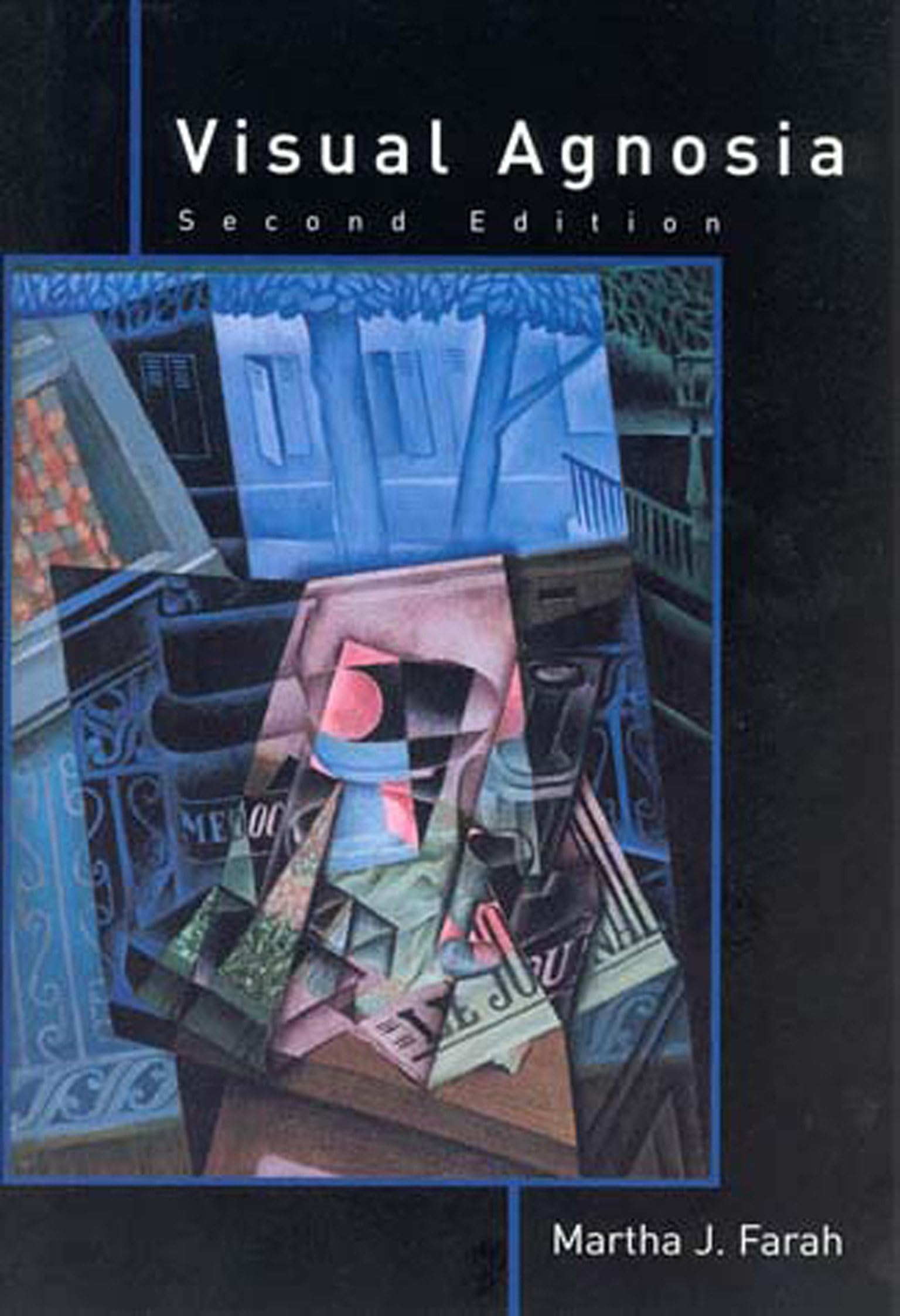
Title
Visual Agnosia, second edition (Mit Press),New
Sold by Ergodebooks, an authorized reseller.
Returns accepted within 30 days | support@ergodebooks.com
Shipping Information
- Free Standard Shipping — United States only
- Processing Time: 3–5 business days
- Estimated Delivery: 6–10 business days after dispatch
- Double-boxed, fully insured & discreetly packaged
- Tracking number sent via email once dispatched
Returns & Refund
Returns accepted within 30 days of delivery.
Damaged or Defective Item
Free return shipping + replacement or full refund
Wrong Item Received
Free return shipping + replacement or full refund
Change of Mind
Return shipping at customer's expense · 25% restocking fee applies
Payment Option

The cognitive neuroscience of human vision draws on two kinds of evidence: functional imaging of normal subjects and the study of neurological patients with visual disorders. Martha Farah's landmark 1990 book Visual Agnosia presented the first comprehensive analysis of disorders of visual recognition within the framework of cognitive neuroscience, and remains the authoritative work on the subject. This longawaited second edition provides a reorganized and updated review of the visual agnosias, incorporating the latest research on patients with insights from the functional neuroimaging literature. Visual agnosia refers to a multitude of different disorders and syndromes, fascinating in their own right and valuable for what they can tell us about normal human vision. Some patients cannot recognize faces but can still recognize other objects, while others retain only face recognition. Some see only one object at a time; others can see multiple objects but recognize only one at a time. Some do not consciously perceive the orientation of an object but nevertheless reach for it with perfected oriented grasp; others do not consciously recognize a face as familiar but nevertheless respond to it autonomically. Each disorder is illustrated with a clinical vignette, followed by a thorough review of the case report literature and a discussion of the theoretical implications of the disorder for cognitive neuroscience.The second edition extends the range of disorders covered to include disorders of topographic recognition, and both general and selective disorders of semantic memory, as well as expanded coverage of face recognition impairments. Also included are a discussion of the complementary roles of imaging and patientbased research in cognitive neuroscience, and a final integrative chapter presenting the 'big picture' of object recognition as illuminated by agnosia research.
⚠️ WARNING (California Proposition 65):
This product may contain chemicals known to the State of California to cause cancer, birth defects, or other reproductive harm.
For more information, please visit www.P65Warnings.ca.gov.