If you have any questions, you are always welcome to contact us. We'll get back to you as soon as possible, withing 24 hours on weekdays.
Customer service
All questions about your order, return and delivery must be sent to our customer service team by e-mail at yourstore@yourdomain.com
Sale & Press
If you are interested in selling our products, need more information about our brand or wish to make a collaboration, please contact us at press@yourdomain.com
Help
If you have any questions, you are always welcome to contact us. We'll get back to you as soon as possible, withing 24 hours on weekdays.
Customer service
All questions about your order, return and delivery must be sent to our customer service team by e-mail at yourstore@yourdomain.com
Sale & Press
If you are interested in selling our products, need more information about our brand or wish to make a collaboration, please contact us at press@yourdomain.com
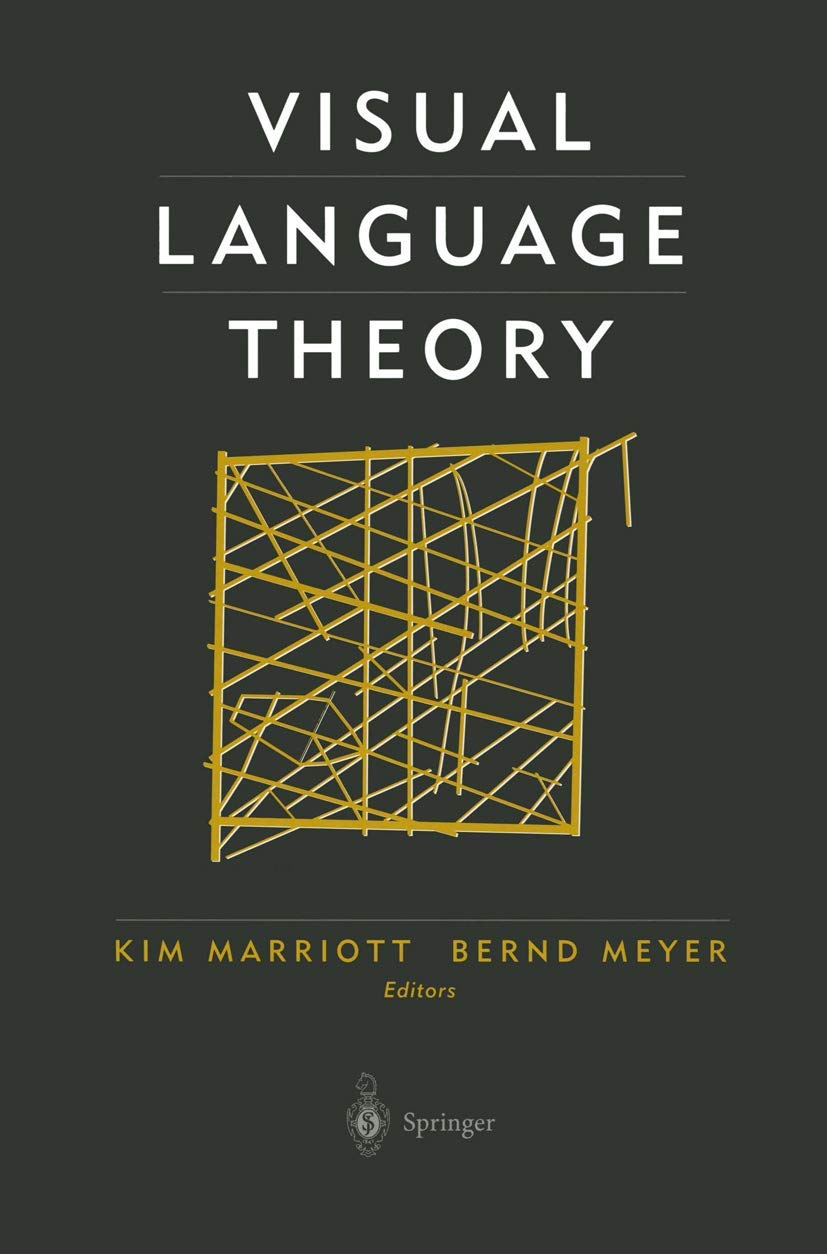
Kim Marriott Bernd Meyer Communication is one of the hallmarks of humans. When we think of hu man communication, most people first think of spoken and written lan guages. These are similar in that symbols in the language are encountered and processed sequentially, either temporally as they are spoken or as char acters are read across a page. However, not all human communication is sequential in nature. Important components of human communication are visual languages, such as maps or diagrams. In these languages the basic symbols are not encountered sequentially but rather seen together at a glance. Visual languages are ubiquitous in human cultures, ranging from tradi tional paintings of central Australian aborigines which are, in part, maps of the countryside to an architect's design of a new building. Visual languages have been employed from earliest prehistory to the present and are used in almost every human endeavor. They cover the entire spectrum of human expression ranging from fine art, such as an abstract expressionist's private language, to precise technical communication using rigorously defined no tation, such as musical notation, mathematical notation, or street maps. Some visual languages, such as sign languages used by the deaf community, substitute spoken language entirely. Indeed, sign languages, for example American Sign Language, are a particularly interesting instance of visual communication, since they use threedimensional spatial arrangements of signs in combination with their sequential temporal order to constitute meaning.
⚠️ WARNING (California Proposition 65):
This product may contain chemicals known to the State of California to cause cancer,
birth defects, or other reproductive harm.
For MAP (Minimum Advertised Price) violations and Intellectual Property (IP) or Trademark concerns, please contact:
support@ergodebooks.com
⚠️ California Proposition 65 Warning: Some products sold on this website may expose you to chemicals known to the State of California to cause cancer, birth defects, or other reproductive harm. For more information, visit www.P65Warnings.ca.gov.