
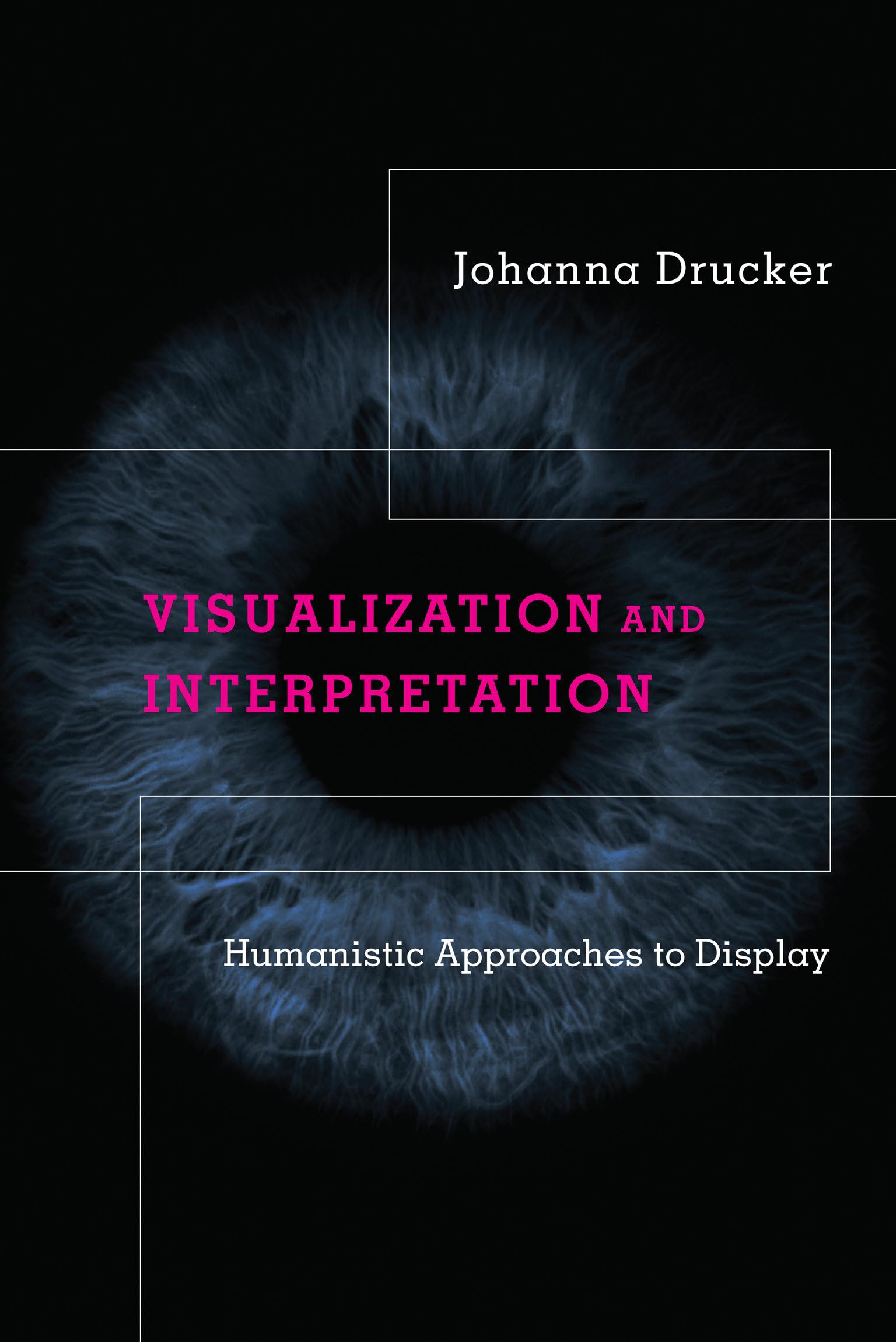
Title
Visualization and Interpretation: Humanistic Approaches to Display,Used
Sold by Ergodebooks, an authorized reseller.
Returns accepted within 30 days | support@ergodebooks.com
Shipping Information
- Free Standard Shipping — United States only
- Processing Time: 3–5 business days
- Estimated Delivery: 6–10 business days after dispatch
- Double-boxed, fully insured & discreetly packaged
- Tracking number sent via email once dispatched
Returns & Refund
Returns accepted within 30 days of delivery.
Damaged or Defective Item
Free return shipping + replacement or full refund
Wrong Item Received
Free return shipping + replacement or full refund
Change of Mind
Return shipping at customer's expense · 25% restocking fee applies
Payment Option

An analysis of visual epistemology in the digital humanities, with attention to the need for interpretive digital tools within humanities contexts.In the several decades since humanists have taken up computational tools, they have borrowed many techniques from other fields, including visualization methods to create charts, graphs, diagrams, maps, and other graphic displays of information. But are these visualizations actually adequate for the interpretive approach that distinguishes much of the work in the humanities? Information visualization, as practiced today, lacks the interpretive frameworks required for humanitiesoriented methodologies. In this book, Johanna Drucker continues her interrogation of visual epistemology in the digital humanities, reorienting the creation of digital tools within humanities contexts.Drucker examines various theoretical understandings of visual images and their relation to knowledge and how the specifics of the graphical are to be engaged directly as a primary means of knowledge production for digital humanities. She draws on work from aesthetics, critical theory, and formal study of graphical systems, addressing them within the specific framework of computational and digital activity as they apply to digital humanities. Finally, she presents a series of standard problems in visualization for the humanities (including time/temporality, space/spatial relations, and data analysis), posing the investigation in terms of innovative graphical systems informed by probabilistic critical hermeneutics. She concludes with a final brief sketch of discovery tools as an additional interface into which modeling can be worked.
⚠️ WARNING (California Proposition 65):
This product may contain chemicals known to the State of California to cause cancer, birth defects, or other reproductive harm.
For more information, please visit www.P65Warnings.ca.gov.