If you have any questions, you are always welcome to contact us. We'll get back to you as soon as possible, withing 24 hours on weekdays.
Customer service
All questions about your order, return and delivery must be sent to our customer service team by e-mail at yourstore@yourdomain.com
Sale & Press
If you are interested in selling our products, need more information about our brand or wish to make a collaboration, please contact us at press@yourdomain.com
Help
If you have any questions, you are always welcome to contact us. We'll get back to you as soon as possible, withing 24 hours on weekdays.
Customer service
All questions about your order, return and delivery must be sent to our customer service team by e-mail at yourstore@yourdomain.com
Sale & Press
If you are interested in selling our products, need more information about our brand or wish to make a collaboration, please contact us at press@yourdomain.com
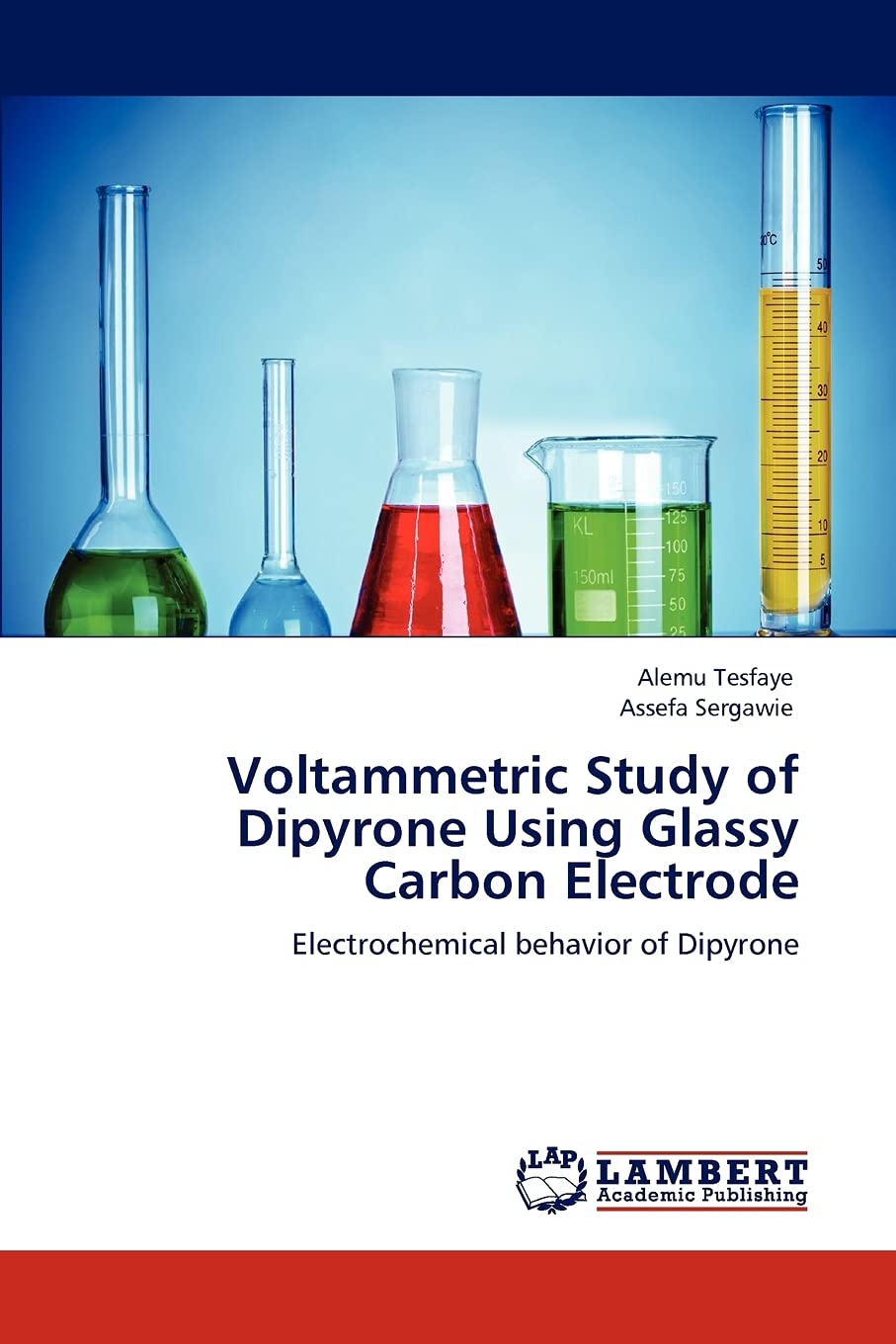
Dipyrone is a well known water soluble white crystalline powder, a nonopiate and nonsteroidal antiinflammatory analgesic drug (NSAID) which belongs to the group of pyrazolones and widely used as analgesic, antipyretic, and antispasmodic drug in many pharmaceutical dosage forms. This work was aimed to develop suitable voltammetric methods such as CV, SW, and DPV for dipyrone study using glassy carbon electrode and to study the electrochemical behavior of dipyrone in a buffer solution at different concentrations, pH, and scan rates. In cyclic voltammetry and square wave voltammetry techniques, dipyrone undergoes four consecutive irreversible oxidation reactions at different oxidation potentials. While using differential pulse voltammetry, dipyrone undergoes two consecutive irreversible oxidation reactions. The peak at 0.45 V shows consistent behavior in all the techniques used under different experimental conditions. The anodic peak current of dipyrone decreases as pH increases but at higher pH the first oxidation reaction takes place at lower potential. the effect of concentration and scan rate is the same for all techniques.
⚠️ WARNING (California Proposition 65):
This product may contain chemicals known to the State of California to cause cancer,
birth defects, or other reproductive harm.
For MAP (Minimum Advertised Price) violations and Intellectual Property (IP) or Trademark concerns, please contact:
support@ergodebooks.com
⚠️ California Proposition 65 Warning: Some products sold on this website may expose you to chemicals known to the State of California to cause cancer, birth defects, or other reproductive harm. For more information, visit www.P65Warnings.ca.gov.