If you have any questions, you are always welcome to contact us. We'll get back to you as soon as possible, withing 24 hours on weekdays.
Customer service
All questions about your order, return and delivery must be sent to our customer service team by e-mail at yourstore@yourdomain.com
Sale & Press
If you are interested in selling our products, need more information about our brand or wish to make a collaboration, please contact us at press@yourdomain.com
Help
If you have any questions, you are always welcome to contact us. We'll get back to you as soon as possible, withing 24 hours on weekdays.
Customer service
All questions about your order, return and delivery must be sent to our customer service team by e-mail at yourstore@yourdomain.com
Sale & Press
If you are interested in selling our products, need more information about our brand or wish to make a collaboration, please contact us at press@yourdomain.com
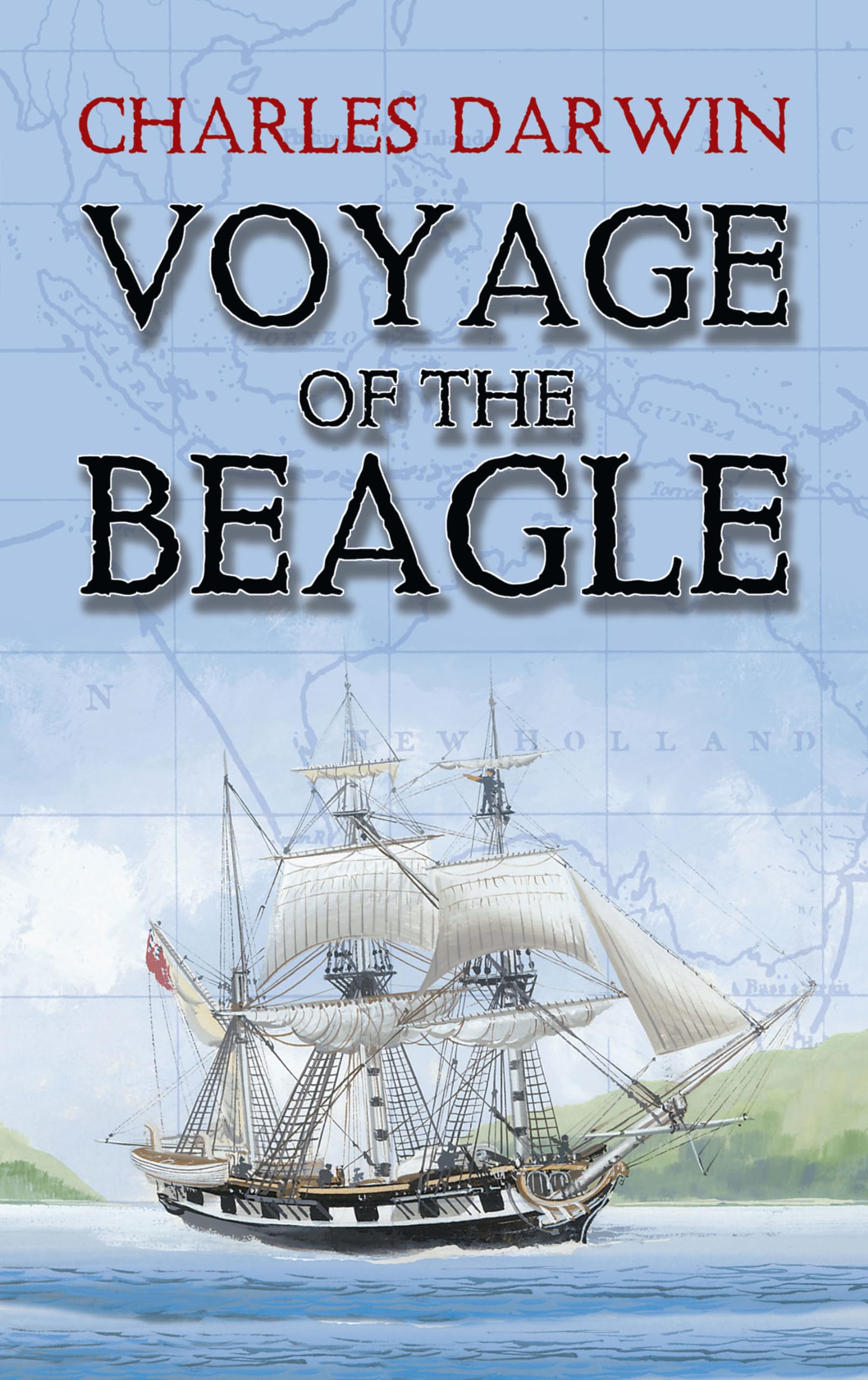
A classic of intellectual adventure and of travel literature this natural history narrative is a cornerstone in the development of evolutionary theory. The Beagle departed from England for Patagonia in 1831 on a voyage to map the coast of South America. The vessel's captain had an additional agenda: attempting to establish the literal truth of the biblical account of the earth's creation. His primary investigator was the ship's naturalist, young Charles Darwin, who began the voyage with both scientific and theological objections to the notion of evolution but concluded the journey with the publication of this work, a landmark in the concept of natural selection.As the Beagle's twoyear itinerary stretched into five years, Darwin found ample opportunity to note the constant change in the variety of creatures he observed, particularly among the unique animals of the Galpagos: marine iguanas and landdwelling iguanas; giant tortoises with shells exhibiting a diverse range of shapes and patterns; and more than 20 species of finches, each with a distinctive beak. Although obviously related to each other, many species appeared to have developed adaptations that made them better suited to their particular environment.Upon his return home in 1836, Darwin published a series of books based on the notebooks and diaries from his voyage, including this historic work essential reading for scientists, historians, and anyone with an interest in the natural world.
⚠️ WARNING (California Proposition 65):
This product may contain chemicals known to the State of California to cause cancer,
birth defects, or other reproductive harm.
For MAP (Minimum Advertised Price) violations and Intellectual Property (IP) or Trademark concerns, please contact:
support@ergodebooks.com
⚠️ California Proposition 65 Warning: Some products sold on this website may expose you to chemicals known to the State of California to cause cancer, birth defects, or other reproductive harm. For more information, visit www.P65Warnings.ca.gov.