
Title
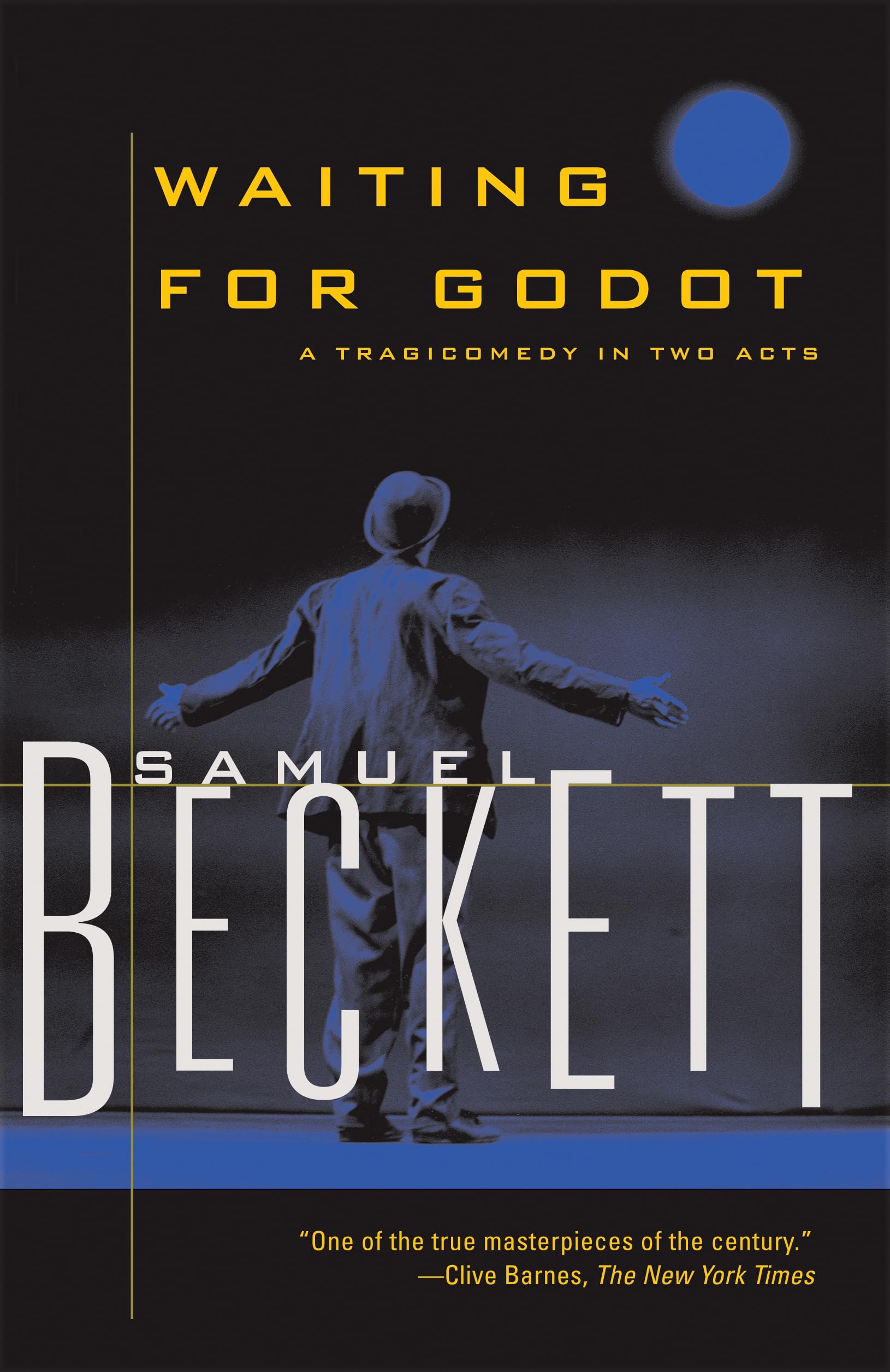
Waiting for Godot: A Tragicomedy in Two Acts (Beckett, Samuel),Used
Sold by Ergodebooks, an authorized reseller.
Returns accepted within 30 days | support@ergodebooks.com
Shipping Information
- Free Standard Shipping — United States only
- Processing Time: 3–5 business days
- Estimated Delivery: 6–10 business days after dispatch
- Double-boxed, fully insured & discreetly packaged
- Tracking number sent via email once dispatched
Returns & Refund
Returns accepted within 30 days of delivery.
Damaged or Defective Item
Free return shipping + replacement or full refund
Wrong Item Received
Free return shipping + replacement or full refund
Change of Mind
Return shipping at customer's expense · 25% restocking fee applies
Payment Option

Performed across the globe by some of the world's most iconic performers, Samuel Beckett's indelible masterpiece remains an unwavering testament of what it means to be human.From an inauspicious beginning at the tiny Left Bank Theatre de Babylone in 1953, followed by bewilderment among American and British audiences, Waiting for Godot has become of the most important and enigmatic plays of the past fifty years and a cornerstone of twentiethcentury drama. As Clive Barnes wrote, ?Time catches up with genius ? Waiting for Godot is one of the masterpieces of the century.?The story revolves around two seemingly homeless men waiting for someoneor somethingnamed Godot. Vladimir and Estragon wait near a tree, inhabiting a drama spun of their own consciousness. The result is a comical wordplay of poetry, dreamscapes, and nonsense, which has been interpreted as mankind?s inexhaustible search for meaning. Beckett?s language pioneered an expressionistic minimalism that captured the existential postWorld War II Europe. His play remains one of the most magical and beautiful allegories of our time.
⚠️ WARNING (California Proposition 65):
This product may contain chemicals known to the State of California to cause cancer, birth defects, or other reproductive harm.
For more information, please visit www.P65Warnings.ca.gov.
- Q: What is the main theme of 'Waiting for Godot'? A: 'Waiting for Godot' explores the existential themes of waiting, meaninglessness, and the human condition, presenting two characters who wait for someone named Godot, symbolizing hope and the search for purpose.
- Q: Who are the main characters in the play? A: The main characters are Vladimir and Estragon, two seemingly homeless men who engage in various conversations while waiting for Godot.
- Q: What is the significance of the tree in the play? A: The tree serves as a central symbol in the play, representing hope, life, and the passage of time, as well as the backdrop for Vladimir and Estragon's waiting.
- Q: What type of binding is available for 'Waiting for Godot'? A: 'Waiting for Godot' is available in paperback binding, making it lightweight and portable for readers.
- Q: How many pages does 'Waiting for Godot' have? A: 'Waiting for Godot' has a total of 128 pages, providing a concise reading experience.
- Q: When was 'Waiting for Godot' published? A: 'Waiting for Godot' was published on May 17, 2011, and is considered a significant work in modern literature.
- Q: What genre does 'Waiting for Godot' belong to? A: 'Waiting for Godot' is classified as a tragicomedy, blending elements of tragedy and comedy to reflect the absurdity of the human experience.
- Q: Is 'Waiting for Godot' suitable for young readers? A: 'Waiting for Godot' addresses complex themes and contains mature content, making it more suitable for older teens and adult readers.
- Q: Who is the author of 'Waiting for Godot'? A: The author of 'Waiting for Godot' is Samuel Beckett, an influential playwright known for his contributions to modern drama.
- Q: What makes 'Waiting for Godot' a significant play? A: 'Waiting for Godot' is significant due to its innovative structure, profound themes, and its impact on the theatrical landscape, marking it as a cornerstone of twentieth-century drama.