
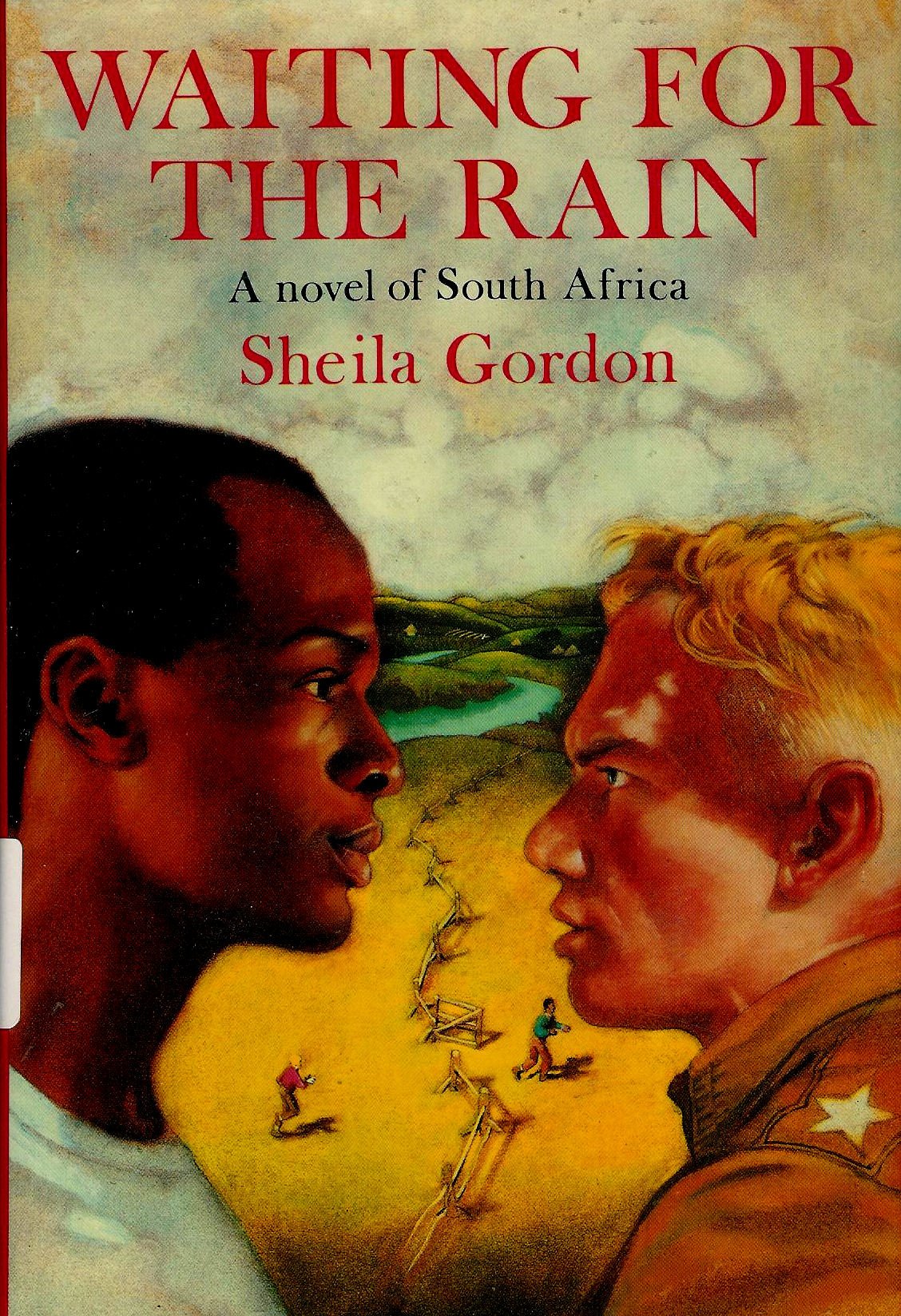
Title
Waiting for the Rain: A Novel of South Africa,Used
Sold by Ergodebooks, an authorized reseller.
Returns accepted within 30 days | support@ergodebooks.com
Shipping Information
- Free Standard Shipping — United States only
- Processing Time: 3–5 business days
- Estimated Delivery: 6–10 business days after dispatch
- Double-boxed, fully insured & discreetly packaged
- Tracking number sent via email once dispatched
Returns & Refund
Returns accepted within 30 days of delivery.
Damaged or Defective Item
Free return shipping + replacement or full refund
Wrong Item Received
Free return shipping + replacement or full refund
Change of Mind
Return shipping at customer's expense · 25% restocking fee applies
Payment Option

Product DescriptionChronicles nine years in the lives of two South African youthsone black, one whiteas their friendship ends in a violent confrontation between student and soldier.From Publishers WeeklyThis novel about life in South Africa is sure to give readers a better understanding of what lies behind the newspaper headlines and TV stories. Tengo is the 10yearold son of workers on Oom Koos's large farm in the Transvaal. He longs to go to school like his friend Frikkie, who visits his uncle's farm on holidays. But Tengo's family is too poor to pay for the education that comes free to whites. He finally gets his wish at age 14. Tengo goes to live with his cousin in a squalid township outside Johannesburg and studies furiously. After three years, he is almost ready for college, but a yearlong school boycott ruins his chances and he is drawn into the fight against apartheid. When he and Frikkie meet in a violent confrontation, Tengo realizes that he will carry on the struggle for freedom as a scholar, not a soldier. The writing here is powerful, evoking in minute detail daily life and the broad landscapes of the country. But the subtle implication throughout is that readers should resent and grow to hate the whites for not seeing what we can see through our 'enlightened' eyes: the unfair ways that blacks are viewed and treated. The reader is sometimes too aware that Gordon has manipulated the plot to make her point. But the point is well made nonetheless; this is a persuasive statement about the ongoing tragedy of South Africa. Ages 12up.Copyright 1987 Reed Business Information, Inc.From School Library JournalGrade 69 Ever since he can remember, Tengo, a young black boy whose parents are a housemaid and a bossboy on an Afrikaans farm in South Africa, has wanted to read. Ever since he can remember, Frikkie, nephew of the white owner, has loved the farm more than anything else in the world except for Tengohis dear friendand never wants his idyllic life to change. Of course, it must. As Tengo grows up, he begins to realize the inequities of a system like apartheid that keeps him shackled to ignorance and gives Frikkie, somewhat of a gentle clod, a free and fine education. Through the efforts of his aunt's liberal employers, he is at last able to leave the farm and go to school in the city. Frikkie, who cannot understand why Tengo is not happy looking forward to a future of servitude like his parents, begins his Army service at the same time that Tengo finds his educational goals threatened by increasing militance among black students. Wanting desperately to finish school rather than strike against the educational system, and knowing that his duty is also to disdain that system, Tengo's involvement is accidental and terrifying as incidents of militancy escalate and the Army arrives to quell disturbances. In a coincidental and bloody confrontation with Frikkie, the two enemies, once friends, become symbols of the tragic dilemma of South Africa. The trouble with this book is that the characters become symbols rather than people. Neither Tengo (who is too good to be true), Frikkie, nor anyone else engages readers' sympathies because each is a vehicle for the sober messages that Gordon wishes to deliver, messages that are terribly important but that make for didacticism rather than compassion. The final coincidence weakens the plot further. Still, young readers need every shred of message they can get, and if the book is disappointing as a story, it has its place as a polemic. Marjorie Lewis, Scarsdale Junior High School, N.Y.Copyright 1987 Reed Business Information, Inc.
⚠️ WARNING (California Proposition 65):
This product may contain chemicals known to the State of California to cause cancer, birth defects, or other reproductive harm.
For more information, please visit www.P65Warnings.ca.gov.