
Title

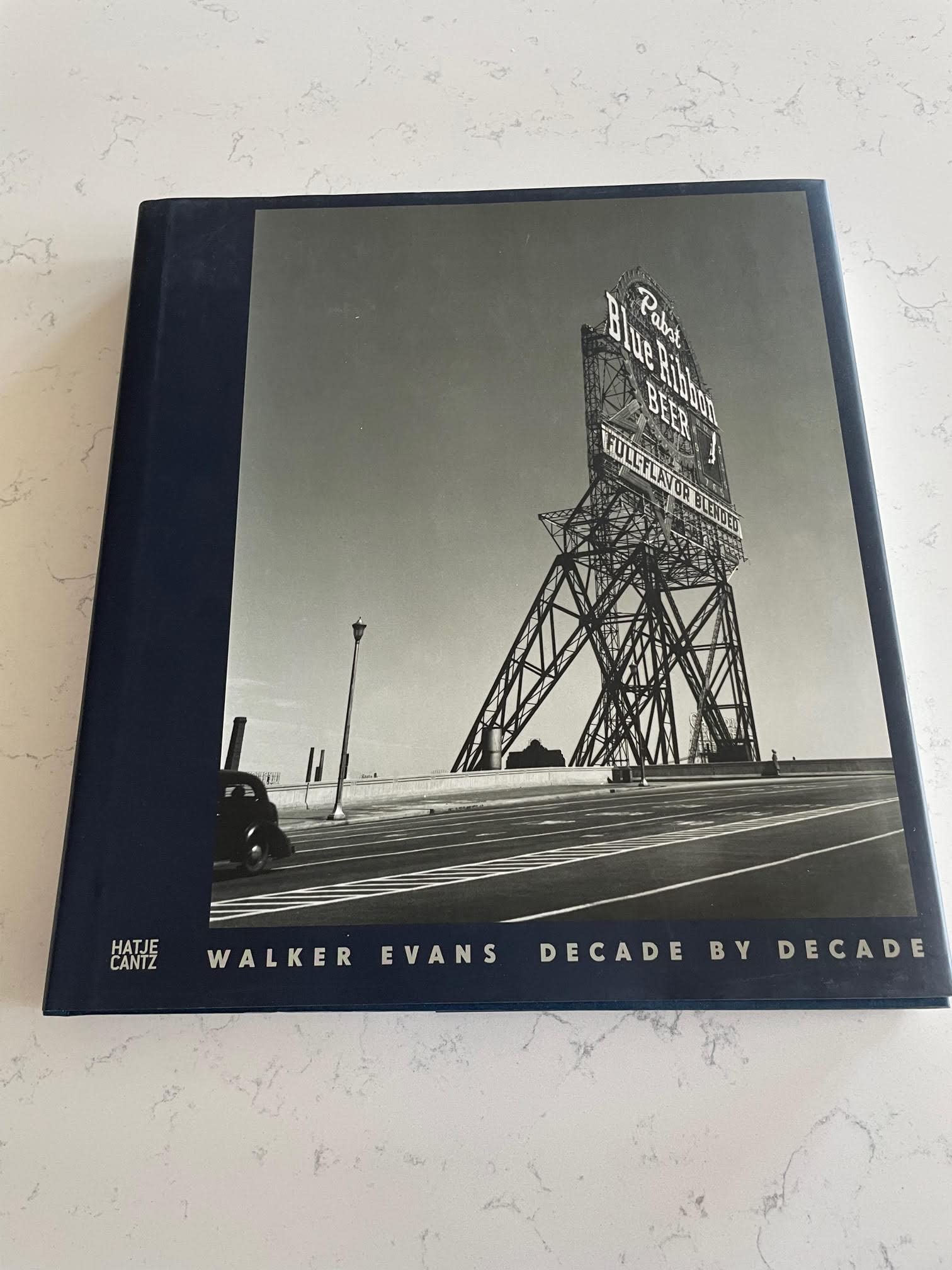
Walker Evans: Decade by Decade,Used
Sold by Ergodebooks, an authorized reseller.
Returns accepted within 30 days | support@ergodebooks.com
Shipping Information
- Free Standard Shipping — United States only
- Processing Time: 3–5 business days
- Estimated Delivery: 6–10 business days after dispatch
- Double-boxed, fully insured & discreetly packaged
- Tracking number sent via email once dispatched
Returns & Refund
Returns accepted within 30 days of delivery.
Damaged or Defective Item
Free return shipping + replacement or full refund
Wrong Item Received
Free return shipping + replacement or full refund
Change of Mind
Return shipping at customer's expense · 25% restocking fee applies
Payment Option

Walker Evans (19031975) is, without doubt, one of the most influential American photographers ever, and many of his images have become fixed in the collective memory. But while Evans' uncompromising depiction of poverty during the Great Depression of the 1930s, the subject of a series commissioned by the Farm Security Administration, has become a key chapter in the history of photography, his equally innovative images from later decades have generally commanded less attention. This exciting new monograph attempts to redress the balance by examining Evans' complete body of work, and features many rarely seen photographs, including his final works, a sequence of Polaroids shot in the early 1970s (a sequence made possible by an unlimited supply of film from its manufacturer). Evans' reascendancy in the 1970s, and his close relationship with legendary Museum of Modern Art curator John Szarkowski, are also closely examined, in this essential and definitive volume on a great photographer who certainly achieved his aim to produce pictures that were 'literate, authoritative, transcendent.'Born in St. Louis, Missouri, Walker Evans (19031975) took up photography in 1928. His book collaboration with James Agee, Let Us Now Praise Famous Men (1941), which portrayed the lives of three white tenant families in southern Alabama during the Depression, has become one of that era's most defining documents. Evans joined the staff of Time magazine in 1945, and shortly after moved to Fortune magazine, where he stayed until 1965. That year, he became a professor of photography at the Yale University School of Art. Evans died at his home in Old Lyme, Connecticut, in 1975.
⚠️ WARNING (California Proposition 65):
This product may contain chemicals known to the State of California to cause cancer, birth defects, or other reproductive harm.
For more information, please visit www.P65Warnings.ca.gov.
- Q: What is the size of the book? A: The book measures approximately nine point eight four inches in length, zero point nine eight inches in width, and eleven point zero two inches in height.
- Q: How many pages does this book have? A: This book contains two hundred fifty-six pages, providing a comprehensive look at Walker Evans' work.
- Q: What type of binding does this book have? A: This book features a hardcover binding, ensuring durability and a premium feel for readers.
- Q: Who is the author of this book? A: The author of this book is James Crump, who provides insightful commentary on Walker Evans' photography.
- Q: What category does this book belong to? A: This book falls under the category of Monographs, specifically focusing on the work of Walker Evans.
- Q: Is this book suitable for photography enthusiasts? A: Yes, this book is ideal for photography enthusiasts as it explores the complete body of work of Walker Evans.
- Q: Can beginners appreciate this book? A: Yes, beginners can appreciate this book due to its accessible writing and rich visual content.
- Q: How do I best enjoy this book? A: To best enjoy this book, take your time to absorb the photographs alongside the insightful commentary provided by the author.
- Q: Is this book safe for children? A: Yes, this book is safe for children, but it is recommended for older children interested in art and photography.
- Q: How should I store this book? A: Store this book upright on a shelf in a cool, dry place to maintain its condition and protect the cover.
- Q: What is the condition of a used copy of this book? A: The book is listed as a used book in good condition, indicating minimal wear and tear.
- Q: Can I return the book if I am not satisfied? A: Yes, you can return the book if you are not satisfied, but be sure to check the specific return policy for details.
- Q: What if the book arrives damaged? A: If the book arrives damaged, contact customer support for assistance with a replacement or refund.
- Q: Is this book a good gift for art lovers? A: Yes, this book makes an excellent gift for art lovers, especially those interested in photography and American history.
- Q: Does the book include rare photographs? A: Yes, the book includes many rarely seen photographs, making it a unique addition to any collection.
- Q: What themes are explored in this book? A: The book explores themes of poverty, social documentary, and the evolution of Walker Evans' photographic style.