If you have any questions, you are always welcome to contact us. We'll get back to you as soon as possible, withing 24 hours on weekdays.
Customer service
All questions about your order, return and delivery must be sent to our customer service team by e-mail at yourstore@yourdomain.com
Sale & Press
If you are interested in selling our products, need more information about our brand or wish to make a collaboration, please contact us at press@yourdomain.com
Help
If you have any questions, you are always welcome to contact us. We'll get back to you as soon as possible, withing 24 hours on weekdays.
Customer service
All questions about your order, return and delivery must be sent to our customer service team by e-mail at yourstore@yourdomain.com
Sale & Press
If you are interested in selling our products, need more information about our brand or wish to make a collaboration, please contact us at press@yourdomain.com
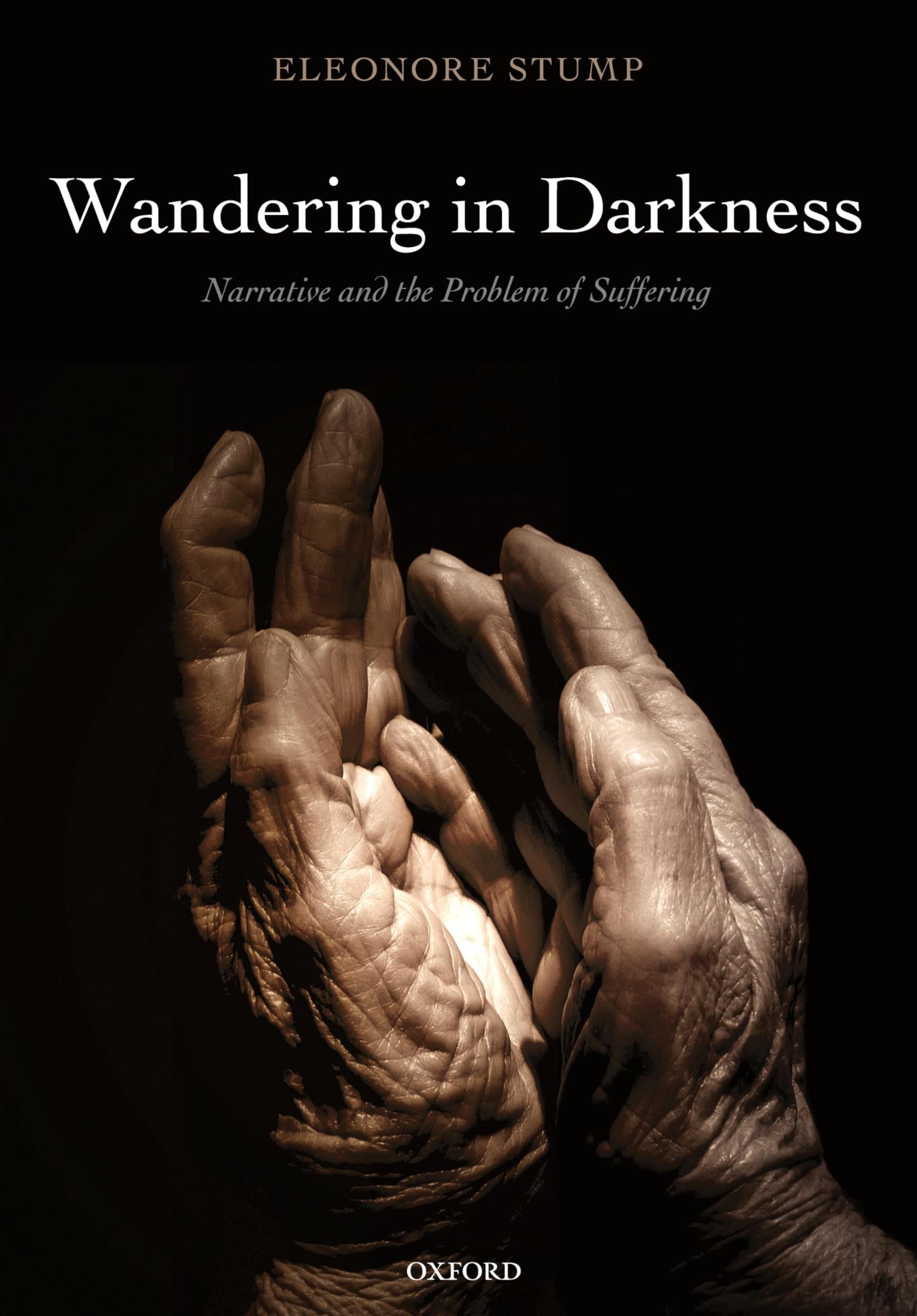
Only the most naive or tendentious among us would deny the extent and intensity of suffering in the world. Can one hold, consistently with the common view of suffering in the world, that there is an omniscient, omnipotent, perfectly good God? This book argues that one can.Wandering in Darkness first presents the moral psychology and value theory within which one typical traditional theodicy, namely, that of Thomas Aquinas, is embedded. It explicates Aquinas's account of the good for human beings, including the nature of love and union among persons. Eleonore Stump also makes use of developments in neurobiology and developmental psychology to illuminate the nature of such union.Stump then turns to an examination of narratives. In a methodological section focused on epistemological issues, the book uses recent research involving autism spectrum disorder to argue that some philosophical problems are best considered in the context of narratives. Using the methodology argued for, the book gives detailed, innovative exegeses of the stories of Job, Samson, Abraham and Isaac, and Mary of Bethany.In the context of these stories and against the backdrop of Aquinas's other views, Stump presents Aquinas's own theodicy, and shows that Aquinas's theodicy gives a powerful explanation for God's allowing suffering. She concludes by arguing that this explanation constitutes a consistent and cogent defense for the problem of suffering.
⚠️ WARNING (California Proposition 65):
This product may contain chemicals known to the State of California to cause cancer,
birth defects, or other reproductive harm.
For MAP (Minimum Advertised Price) violations and Intellectual Property (IP) or Trademark concerns, please contact:
support@ergodebooks.com
⚠️ California Proposition 65 Warning: Some products sold on this website may expose you to chemicals known to the State of California to cause cancer, birth defects, or other reproductive harm. For more information, visit www.P65Warnings.ca.gov.