
Title

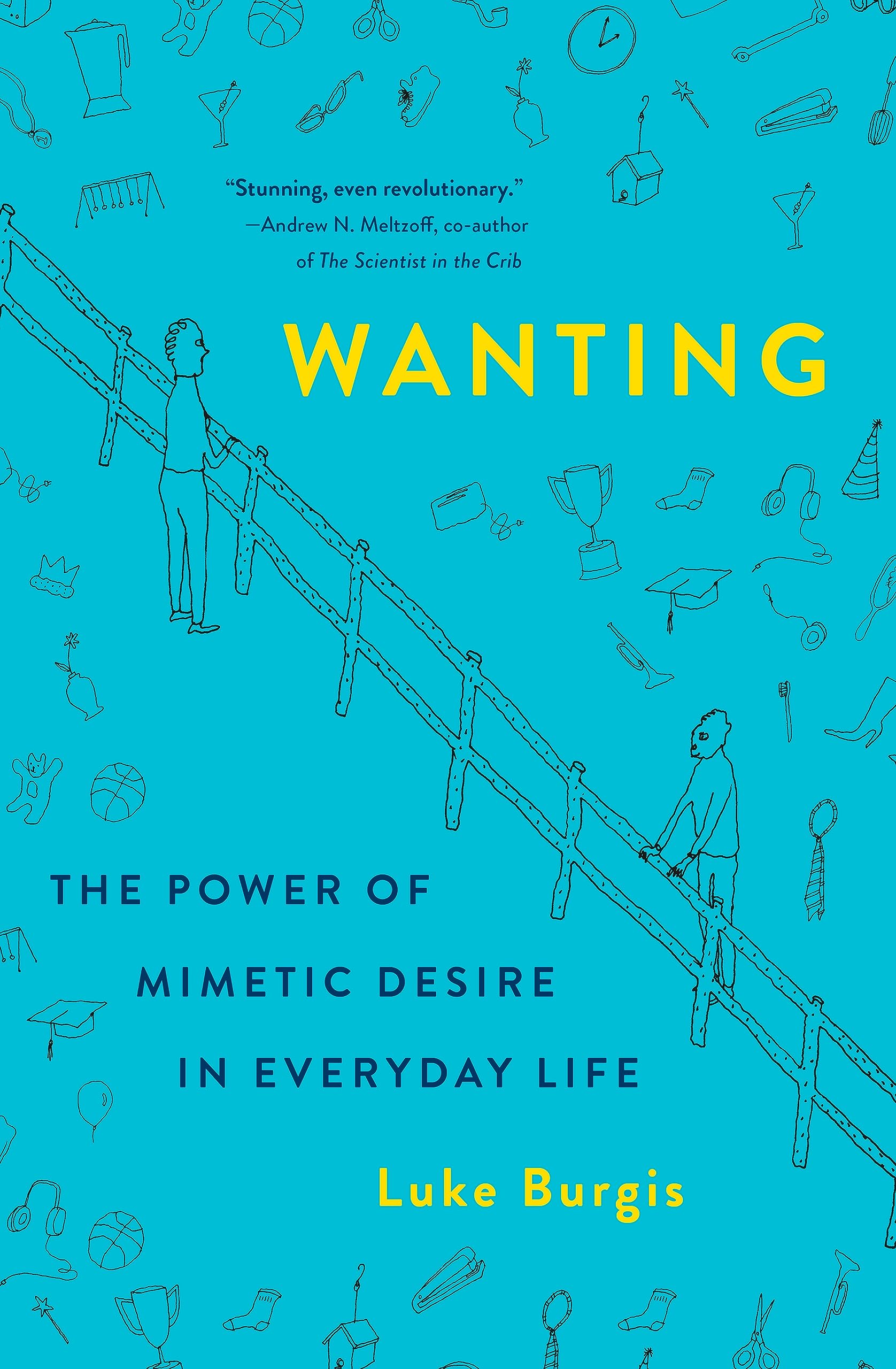
Wanting: The Power of Mimetic Desire in Everyday Life,New
Sold by Ergodebooks, an authorized reseller.
Returns accepted within 30 days | support@ergodebooks.com
Shipping Information
- Free Standard Shipping — United States only
- Processing Time: 3–5 business days
- Estimated Delivery: 6–10 business days after dispatch
- Double-boxed, fully insured & discreetly packaged
- Tracking number sent via email once dispatched
Returns & Refund
Returns accepted within 30 days of delivery.
Damaged or Defective Item
Free return shipping + replacement or full refund
Wrong Item Received
Free return shipping + replacement or full refund
Change of Mind
Return shipping at customer's expense · 25% restocking fee applies
Payment Option

* Financial Times Business Book of the Month * Next Big Idea Club Nominee * One of Bloomberg's '52 New Books That Top Business Leaders Are Recommending' * Aleo Review of Books 2022 Book of the Year *A groundbreaking exploration of why we want what we want, and a toolkit for freeing ourselves from chasing unfulfilling desires.Gravity affects every aspect of our physical being, but there?s a psychological force just as powerfulyet almost nobody has heard of it. It?s responsible for bringing groups of people together and pulling them apart, making certain goals attractive to some and not to others, and fueling cycles of anxiety and conflict. In Wanting, Luke Burgis draws on the work of French polymath Ren? Girard to bring this hidden force to light and reveals how it shapes our lives and societies.According to Girard, humans don?t desire anything independently. Human desire is mimeticwe imitate what other people want. This affects the way we choose partners, friends, careers, clothes, and vacation destinations. Mimetic desire is responsible for the formation of our very identities. It explains the enduring relevancy of Shakespeare?s plays, why Peter Thiel decided to be the first investor in Facebook, and why our world is growing more divided as it becomes more connected.Wanting also shows that conflict does not arise because of our differencesit comes from our sameness. Because we learn to want what other people want, we often end up competing for the same things. Ignoring our large similarities, we cling to our perceived differences.Drawing on his experience as an entrepreneur, teacher, and student of classical philosophy and theology, Burgis shares tactics that help turn blind wanting into intentional wantingnot by trying to rid ourselves of desire, but by desiring differently. It?s possible to be more in control of the things we want, to achieve more independence from trends and bubbles, and to find more meaning in our work and lives.The future will be shaped by our desires. Wanting shows us how to desire a better one.
⚠️ WARNING (California Proposition 65):
This product may contain chemicals known to the State of California to cause cancer, birth defects, or other reproductive harm.
For more information, please visit www.P65Warnings.ca.gov.
- Q: What is the main theme of 'Wanting: The Power of Mimetic Desire in Everyday Life'? A: 'Wanting' explores the concept of mimetic desire, illustrating how our wants are influenced by the desires of others. The book discusses how this psychological force shapes human behavior and societal dynamics.
- Q: Who is the author of this book? A: The author of 'Wanting' is Luke Burgis, who draws on the work of French philosopher René Girard to present his insights on desire.
- Q: What is the publication date of 'Wanting'? A: 'Wanting' was published on June 1, 2021.
- Q: Is 'Wanting' available in different formats? A: 'Wanting' is available in hardcover format, which includes 304 pages of content.
- Q: What type of audience would benefit from reading this book? A: 'Wanting' is suitable for readers interested in psychology, personal development, and consumer behavior, particularly those looking to understand the underlying motivations behind their desires.
- Q: Does 'Wanting' offer practical advice? A: Yes, the book provides actionable strategies for transforming blind wanting into intentional wanting, helping readers gain control over their desires.
- Q: What is the significance of mimetic desire according to the book? A: Mimetic desire is significant as it explains that our desires are not independent but influenced by others, leading to competition and conflict over similar goals.
- Q: What accolades has 'Wanting' received? A: 'Wanting' has been recognized as the Financial Times Business Book of the Month, and it is a Next Big Idea Club Nominee, among other accolades.
- Q: How does 'Wanting' relate to personal and professional life? A: 'Wanting' connects personal and professional life by showing how understanding our desires can lead to more meaningful choices in relationships, careers, and personal fulfillment.
- Q: Is there any philosophical background in 'Wanting'? A: Yes, the book incorporates elements of classical philosophy, particularly through the lens of René Girard's theories on desire and imitation.