
Title
War: A Genealogy of Western Ideas and Practices,Used
Sold by Ergodebooks, an authorized reseller.
Returns accepted within 30 days | support@ergodebooks.com
Shipping Information
- Free Standard Shipping — United States only
- Processing Time: 3–5 business days
- Estimated Delivery: 6–10 business days after dispatch
- Double-boxed, fully insured & discreetly packaged
- Tracking number sent via email once dispatched
Returns & Refund
Returns accepted within 30 days of delivery.
Damaged or Defective Item
Free return shipping + replacement or full refund
Wrong Item Received
Free return shipping + replacement or full refund
Change of Mind
Return shipping at customer's expense · 25% restocking fee applies
Payment Option

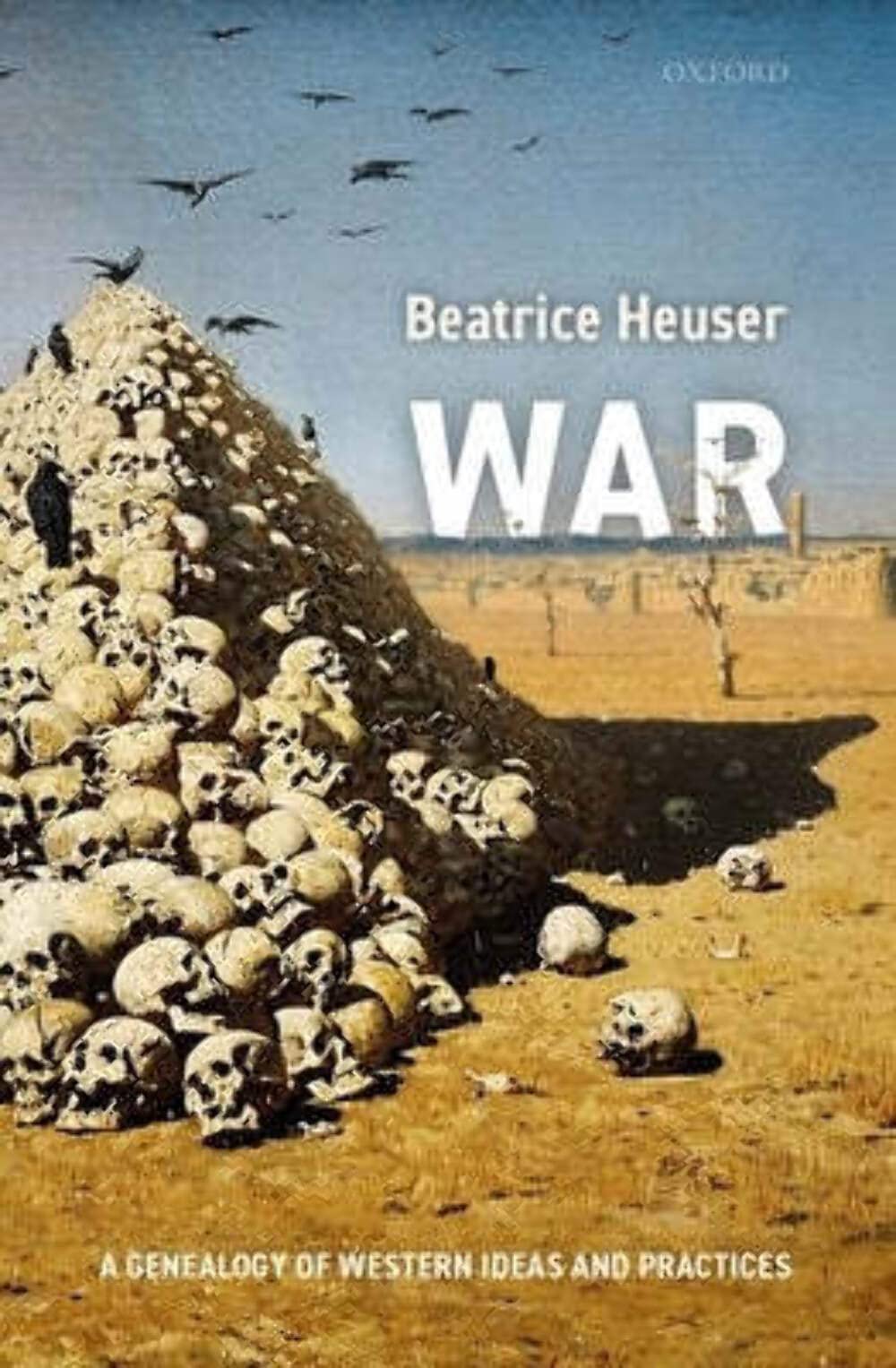
War has been conceptualised from a military perspective, but also from ethical, legal, and philosophical viewpoints. These different analytical perspectives are all necessary to understand the many dimensions war, the continua on which war is situated from smallscale to largescale, from limited in time or long, from less to extremely destructive, with varying aims, and degrees of involvement of populations.Western civilisations have conceptualised war in binary ways denying the variety of manifestations of war along these continua. While binary definitions are necessary to capture different conditions legally, they hamper analysis. The binaries include interState and intestine war, just war and unjust war (the latter including insurgencies), citizensoldiers and professionals, civilians and combatants. Yet realities have mostly straddled such demarcations. Even citizenarmies have usually included professionals, civilians have been treated as enemies and sometimes even formally defined as enemies, and rules have not conformed with binary distinctions, if they were respected at all. While customary rules governing the conduct of war have been turned into International Law, this is the only aspect of war that has developed in a fairly linear way, while the rise, disappearance, and renaissance of the just war tradition has been anything but linear. This nonlinearity also applies to the brutality with which war has been fought, especially towards civilians, who for long stretches of European history must have been the main victims of war, notwithstanding increasing protection they were afforded in theory by customary law. To understand war, we must shed some of these binaries.
⚠️ WARNING (California Proposition 65):
This product may contain chemicals known to the State of California to cause cancer, birth defects, or other reproductive harm.
For more information, please visit www.P65Warnings.ca.gov.
- Q: What is the page count of this book? A: This book contains four hundred forty-six pages. It offers an in-depth analysis of war from various perspectives.
- Q: What are the dimensions of this book? A: The dimensions of this book are nine point four five inches in length, six point four two inches in height, and one point two two inches in width.
- Q: What type of binding does this book have? A: This book is bound in hardcover. Hardcover bindings are known for their durability and longevity.
- Q: Who is the author of this book? A: The author of this book is Beatrice Heuser. She provides a comprehensive examination of war in Western thought.
- Q: What genre does this book belong to? A: This book belongs to the Engineering genre. It explores war through military, ethical, legal, and philosophical lenses.
- Q: What is the main focus of this book? A: The main focus of this book is the genealogy of Western ideas and practices regarding war. It challenges binary definitions of war.
- Q: Is this book suitable for academic study? A: Yes, this book is suitable for academic study. It provides a detailed exploration of complex issues related to war.
- Q: What perspectives does this book analyze regarding war? A: This book analyzes war from military, ethical, legal, and philosophical perspectives. It aims to provide a multifaceted understanding of war.
- Q: What historical contexts does this book cover? A: This book covers various historical contexts of war, including small-scale and large-scale conflicts. It examines the evolution of war concepts over time.
- Q: How does this book approach the concept of just war? A: This book explores the just war tradition, noting its non-linear development throughout history. It critically examines the implications of just and unjust war.
- Q: Does this book discuss the impact of war on civilians? A: Yes, this book discusses the impact of war on civilians. It highlights their roles and the brutality faced during conflicts in European history.
- Q: How does this book contribute to understanding war? A: This book contributes to understanding war by shedding light on the binaries that define it. It encourages a broader analysis of war's complexities.
- Q: Is this book appropriate for casual readers? A: Yes, this book can be appropriate for casual readers. However, it may be more beneficial for those interested in military and philosophical discussions.
- Q: What is the publisher of this book? A: The publisher of this book is Oxford University Press. They are known for their academic and scholarly publications.
- Q: Can this book be used for research purposes? A: Yes, this book can be used for research purposes. It provides valuable insights and references for deeper investigations into war.
- Q: What themes are explored in this book? A: This book explores themes of war, ethics, legality, and philosophical interpretations. It examines the complexities of war's nature.