
Title
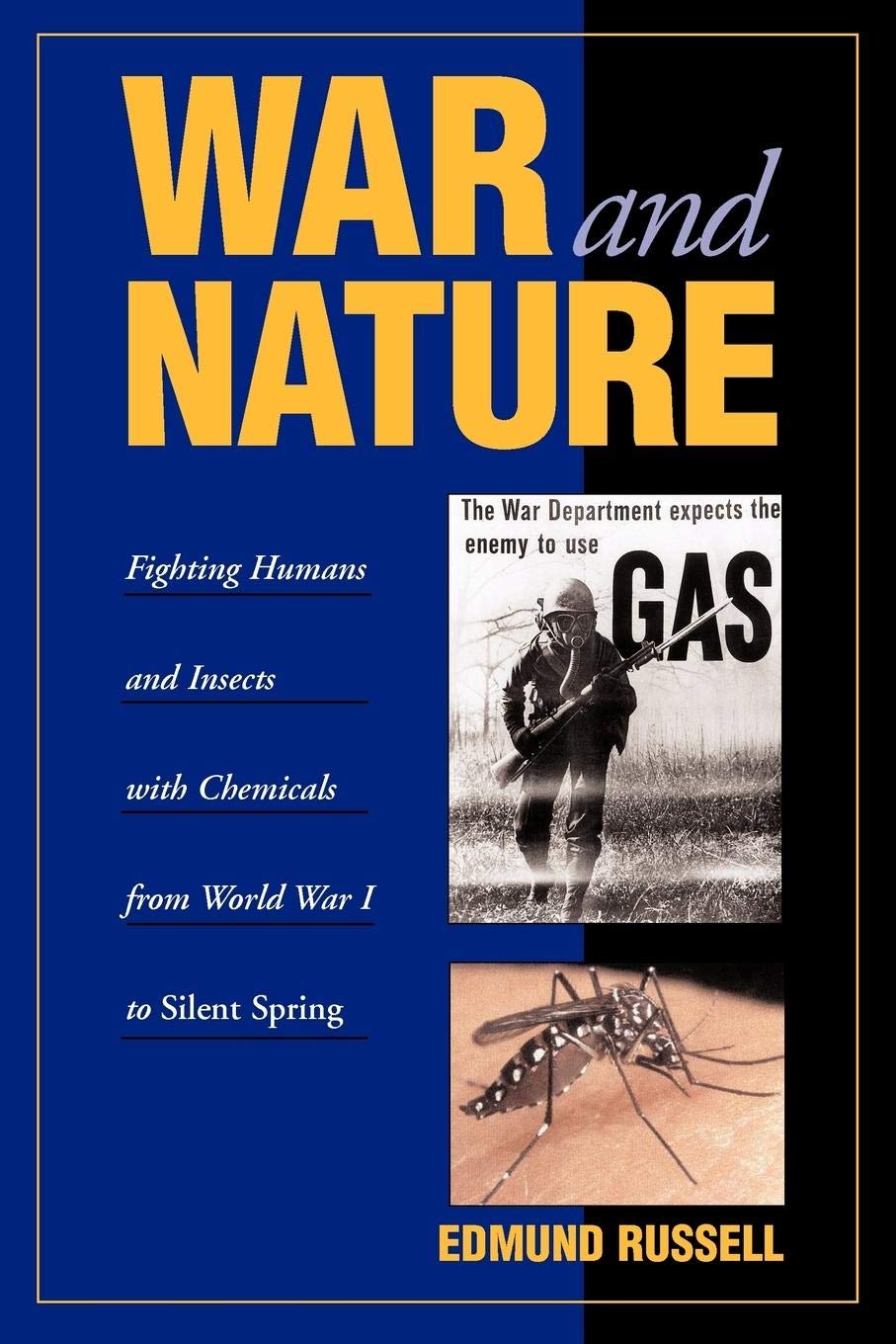
War And Nature: Fighting Humans And Insects With Chemicals From World War I To Silent Spring (Studies In Environment And History,New
Sold by Ergodebooks, an authorized reseller.
Returns accepted within 30 days | support@ergodebooks.com
Shipping Information
- Free Standard Shipping — United States only
- Processing Time: 3–5 business days
- Estimated Delivery: 6–10 business days after dispatch
- Double-boxed, fully insured & discreetly packaged
- Tracking number sent via email once dispatched
Returns & Refund
Returns accepted within 30 days of delivery.
Damaged or Defective Item
Free return shipping + replacement or full refund
Wrong Item Received
Free return shipping + replacement or full refund
Change of Mind
Return shipping at customer's expense · 25% restocking fee applies
Payment Option

While Cultural And Scholarly Traditions Have Led Us To Believe That War And Control Of Nature Are Separate, There Are Many More Similarities Than Most People Might Suspect. Tracing The History Of Chemical Warfare And Pest Control, Edmund Russell Shows How War And Control Of Nature Coevolved. Ideologically, Institutionally, And Technologically, The Paths Of Chemical Warfare And Pest Control Intersected Repeatedly In The Twentieth Century. War And Nature Helps Us To Understand The Impact Of War On Nature And Vice Versa, As Well As The Development Of Total War, And The Rise Of The Modern Environmental Movement. Edmund Russell Is An Assistant Professor In The Division Of Technology, Culture, And Communication In The School Of Engineering And Applied Science At The University Of Virginia. This Is His First Book.
⚠️ WARNING (California Proposition 65):
This product may contain chemicals known to the State of California to cause cancer, birth defects, or other reproductive harm.
For more information, please visit www.P65Warnings.ca.gov.
- Q: How many pages does this book have? A: This book has three hundred thirty-four pages. It provides an in-depth exploration of the intersections between war and environmental control.
- Q: What is the binding type of the book? A: The book is available in paperback binding. This makes it lightweight and convenient for reading or carrying.
- Q: What are the dimensions of the book? A: The book measures six inches in length, nine inches in height, and three-fourths of an inch in width. These dimensions make it easy to handle.
- Q: Who is the author of this book? A: The author is Edmund Russell. He is an assistant professor specializing in technology, culture, and communication.
- Q: What is the main topic of this book? A: The book discusses the historical relationship between chemical warfare and pest control. It examines how these fields evolved and influenced each other.
- Q: Is this book suitable for environmental studies? A: Yes, this book is suitable for students and scholars in environmental studies. It offers significant insights into the modern environmental movement.
- Q: How should I store this book? A: Store the book in a cool, dry place to prevent damage. Keeping it upright on a shelf can help maintain its shape.
- Q: Can I read this book if I am new to the subject? A: Yes, beginners can read this book. It provides a comprehensive overview that is accessible to those unfamiliar with the topic.
- Q: How do I clean this book if it gets dirty? A: To clean the book, gently wipe the cover with a soft, dry cloth. Avoid using liquids that could damage the pages.
- Q: Is this book appropriate for academic research? A: Yes, this book is appropriate for academic research. It contains references and discussions relevant to environmental history.
- Q: What should I do if the book arrives damaged? A: If the book arrives damaged, you should contact the seller for a return or exchange. Most sellers have a return policy in place.
- Q: Are there illustrations in the book? A: Yes, the book contains fifteen black-and-white illustrations. These visuals enhance the reader's understanding of the text.
- Q: What makes this book unique? A: This book is unique because it explores the coevolution of war and environmental control, a topic often overlooked in traditional studies.
- Q: Is this book available in digital format? A: Availability may vary, but many publishers offer digital formats. Check with the publisher for specific options.
- Q: Does the book include a bibliography? A: Yes, the book includes a bibliography. This allows readers to explore further reading on related subjects.
- Q: Can this book be used as a textbook? A: Yes, this book can be used as a textbook for courses in environmental studies or history. It provides valuable insights for students.