
Title
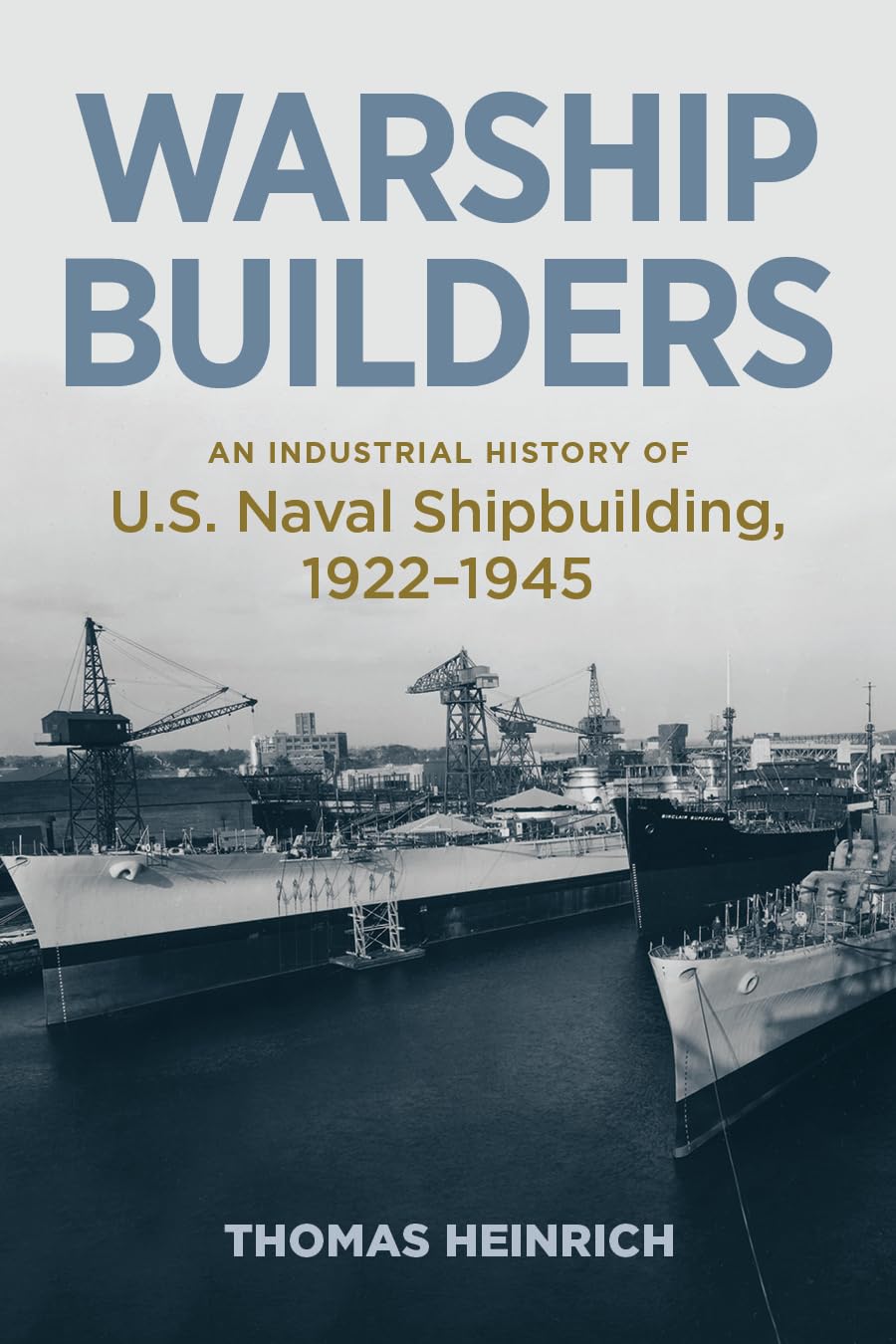
Warship Builders: An Industrial History of U.S. Naval Shipbuilding, 19221945 (Studies in Naval History and Sea Power),Used
Sold by Ergodebooks, an authorized reseller.
Returns accepted within 30 days | support@ergodebooks.com
Shipping Information
- Free Standard Shipping — United States only
- Processing Time: 3–5 business days
- Estimated Delivery: 6–10 business days after dispatch
- Double-boxed, fully insured & discreetly packaged
- Tracking number sent via email once dispatched
Returns & Refund
Returns accepted within 30 days of delivery.
Damaged or Defective Item
Free return shipping + replacement or full refund
Wrong Item Received
Free return shipping + replacement or full refund
Change of Mind
Return shipping at customer's expense · 25% restocking fee applies
Payment Option

Warship Builders is the first scholarly study of the U.S. naval shipbuilding industry from the early 1920s to the end of World War II, when American shipyards produced the world's largest fleet that helped defeat the Axis powers in all corners of the globe. A colossal endeavor that absorbed billions and employed virtual armies of skilled workers, naval construction mobilized the nation's leading industrial enterprises in the shipbuilding, engineering, and steel industries to deliver warships whose technical complexity dwarfed that of any other weapons platform. Based on systematic comparisons with British, Japanese, and German naval construction, Thomas Heinrich pinpoints the distinct features of American shipbuilding methods, technology development, and management practices that enabled U.S. yards to vastly outproduce their foreign counterparts.Throughout the book, comparative analyses reveal differences and similarities in American, British, Japanese, and German naval construction. Heinrich shows that U.S. and German shipyards introduced electric arc welding and prefabrication methods to a far greater extent than their British and Japanese counterparts between the wars, laying the groundwork for their impressive production records in World War II. While the American and Japanese navies relied heavily on governmentowned navy yards, the British and German navies had most of their combatants built in corporatelyowned yards, contradicting the widespread notion that only U.S. industrial mobilization depended on private enterprise. Lastly, the U.S. government's investments into shipbuilding facilities in both private and governmentowned shipyards dwarfed the sums British, Japanese, and German counterparts expended. This enabled American builders to deliver a vast fleet that played a pivotal role in global naval combat.
⚠️ WARNING (California Proposition 65):
This product may contain chemicals known to the State of California to cause cancer, birth defects, or other reproductive harm.
For more information, please visit www.P65Warnings.ca.gov.