
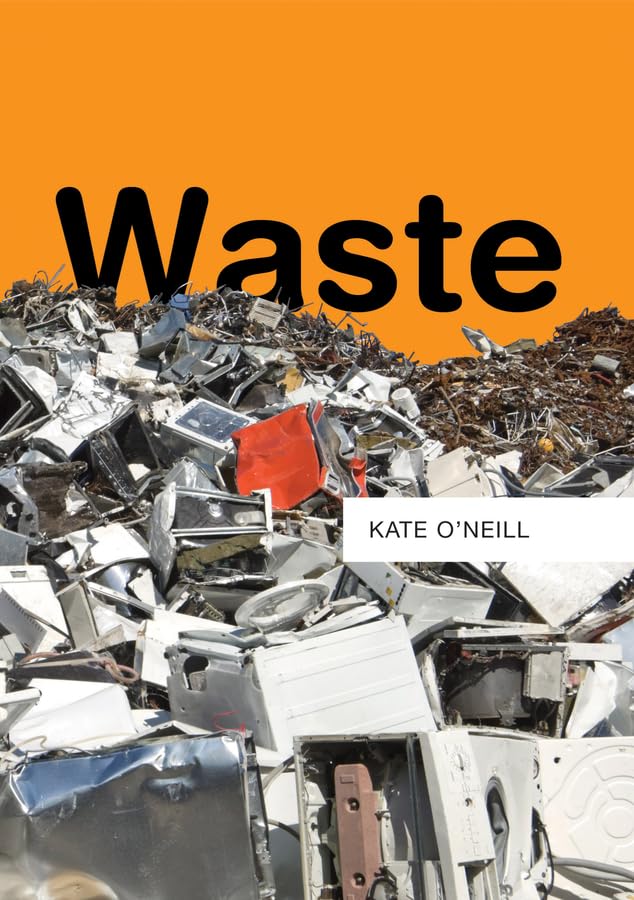
Title
Waste (Resources)
Sold by Ergodebooks, an authorized reseller.
Returns accepted within 30 days | support@ergodebooks.com
Shipping Information
- Free Standard Shipping — United States only
- Processing Time: 3–5 business days
- Estimated Delivery: 6–10 business days after dispatch
- Double-boxed, fully insured & discreetly packaged
- Tracking number sent via email once dispatched
Returns & Refund
Returns accepted within 30 days of delivery.
Damaged or Defective Item
Free return shipping + replacement or full refund
Wrong Item Received
Free return shipping + replacement or full refund
Change of Mind
Return shipping at customer's expense · 25% restocking fee applies
Payment Option

Waste Is One Of The Planets Last Great Resource Frontiers. From Furniture Made From Upcycled Wood To Gold Extracted From Computer Circuit Boards, Artisans And Multinational Corporations Alike Are Finding Ways To Profit From Waste While Diverting Materials From Overcrowded Landfills. Yet Beyond These Benefits, This New Resource Still Poses Serious Risks To Human Health And The Environment.In This Unique Book, Kate Oneill Traces The Emergence Of The Global Political Economy Of Wastes Over The Past Two Decades. She Explains How The Emergence Of Waste Governance Initiatives And Mechanisms Can Help Us Deal With Both The Risks And The Opportunities Associated With The Hundreds Of Millions Possibly Billions Of Tons Of Waste We Generate Each Year. Drawing On A Range Of Fascinating Case Studies To Develop Her Arguments, Including Chinas Role As The Primary Recipient Of Recyclable Plastics And Scrap Paper From The Western World, Zerowaste Initiatives, The Emergence Of Transnational Wastepickers Alliances, And Alternatives For Managing Growing Volumes Of Electronic And Food Wastes, Oneill Shows How Waste Can Be A Risk, A Resource, And Even A Livelihood, With Implications For Governance At Local, National, And Global Levels.
⚠️ WARNING (California Proposition 65):
This product may contain chemicals known to the State of California to cause cancer, birth defects, or other reproductive harm.
For more information, please visit www.P65Warnings.ca.gov.
- Q: What is the total page count of the book? A: The book has two hundred forty pages. This provides a comprehensive overview of waste management and its implications.
- Q: What are the dimensions of the book? A: The book measures five point six inches in length, zero point seventy-one inches in width, and eight point thirty-one inches in height. These dimensions make it portable and easy to handle.
- Q: What type of binding does this book have? A: The book is available in paperback binding. This style is lightweight and convenient for reading.
- Q: How can I apply the concepts from this book? A: You can apply its concepts by implementing waste reduction practices in your daily life or business. The book offers insights into governance and sustainable practices.
- Q: Is this book suitable for beginners in environmental studies? A: Yes, this book is suitable for beginners. It introduces key concepts in environmental economics and waste management in an accessible manner.
- Q: What age group is this book appropriate for? A: This book is appropriate for adults and older teens. It contains complex themes about waste governance and economics.
- Q: How should I store this book to keep it in good condition? A: Store the book in a cool, dry place away from direct sunlight. This will prevent fading and damage to the pages.
- Q: Can this book be cleaned if it gets dirty? A: Yes, the cover can be wiped gently with a damp cloth. Avoid using harsh chemicals to preserve the print quality.
- Q: What should I do if my book arrives damaged? A: If your book arrives damaged, you should contact the seller for a return or exchange. Most sellers have a customer service policy for such issues.
- Q: Does this book feature case studies? A: Yes, the book features various case studies. These include examples of waste management from different countries, enhancing understanding of global practices.
- Q: Is there a glossary or index in the book for quick reference? A: Yes, the book includes an index. This helps readers quickly locate specific topics or case studies related to waste management.
- Q: Are there any illustrations or graphs included in the book? A: Yes, the book includes illustrations and graphs. These visual aids help clarify complex concepts discussed in the text.
- Q: Who is the author of the book? A: The author of the book is Kate O’Neill. She is recognized for her work in environmental economics and waste management.
- Q: What is the primary theme of this book? A: The primary theme of the book is the dual nature of waste as both a risk and a resource. It explores governance and economic opportunities.
- Q: Can I find this book in libraries or educational institutions? A: Yes, this book is likely available in libraries and educational institutions. Its relevance to environmental studies makes it a valuable resource.