If you have any questions, you are always welcome to contact us. We'll get back to you as soon as possible, withing 24 hours on weekdays.
Customer service
All questions about your order, return and delivery must be sent to our customer service team by e-mail at yourstore@yourdomain.com
Sale & Press
If you are interested in selling our products, need more information about our brand or wish to make a collaboration, please contact us at press@yourdomain.com
Help
If you have any questions, you are always welcome to contact us. We'll get back to you as soon as possible, withing 24 hours on weekdays.
Customer service
All questions about your order, return and delivery must be sent to our customer service team by e-mail at yourstore@yourdomain.com
Sale & Press
If you are interested in selling our products, need more information about our brand or wish to make a collaboration, please contact us at press@yourdomain.com
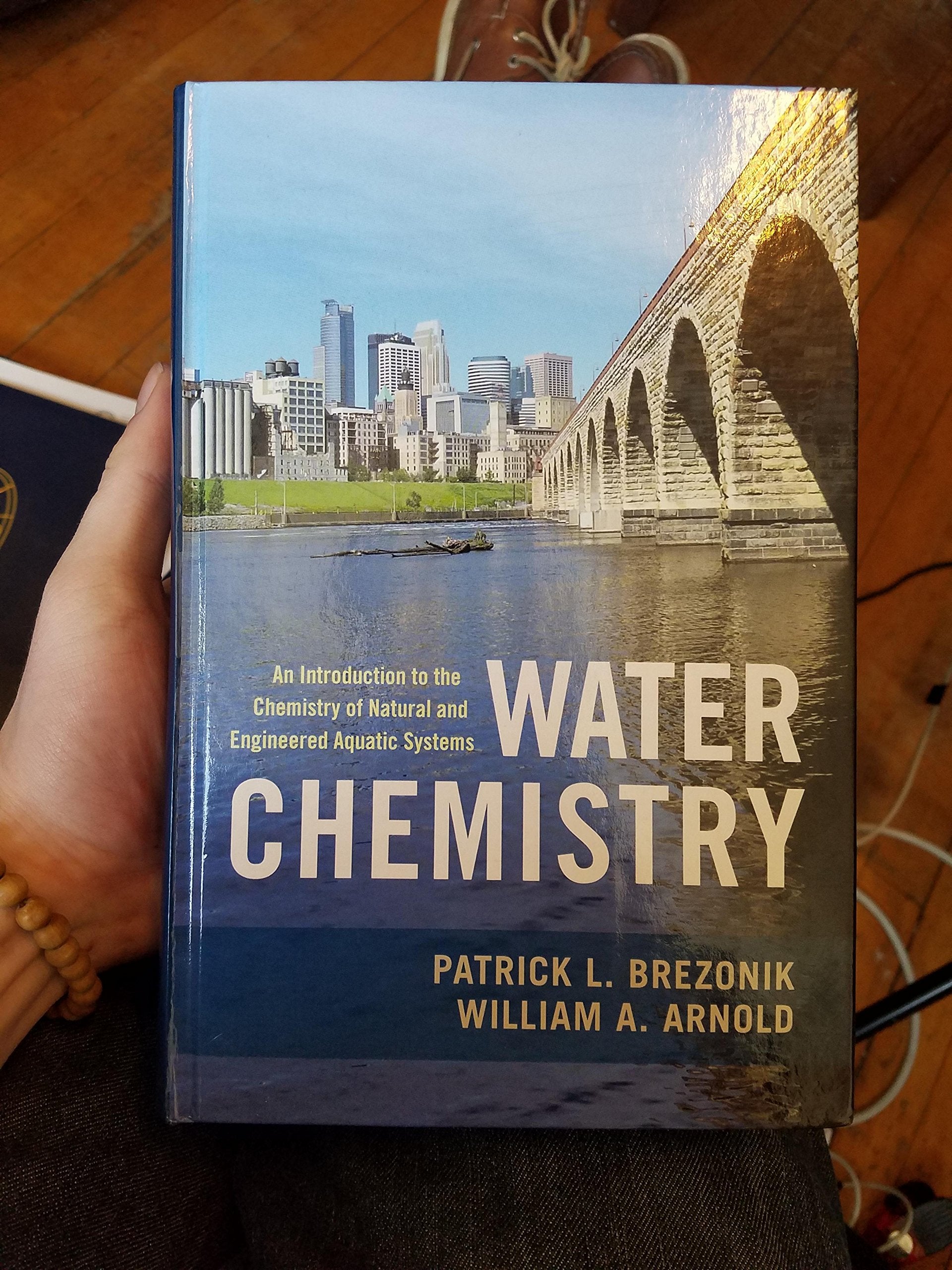
Water Chemistry provides students with the tools necessary to understand the processes that control the chemical species present in waters of both natural and engineered systems. After providing basic information about water itself and the chemical composition of water in environmental systems, the text covers the necessary theory (thermodynamics, activity, and kinetics) and background material to solve problems. It emphasizes that both equilibrium and kinetic processes are important in aquatic systems. The book does not merely focus on inorganic constituents, but also on the fate and reactions of organic chemicals.The solving of quantitative equilibrium and kinetic problems using mathematical, graphical, and computational tools is emphasized throughout presentations on acidbase chemistry, complexation of metal ions, solubility of minerals, and oxidationreduction reactions. The use of these problemsolving tools is then extended in the presentation of topics relevant to natural systems, including dissolved oxygen, nutrient chemistry, geochemical controls on chemical composition, photochemistry, and natural organic matter. The kinetics and equilibria relevant to engineered systems (e.g., chlorination and disinfection chemistry, sorption and surface chemistry) and organic contaminant chemistry are also discussed. Numerous inchapter examples that show the application of theory and demonstrate how problems are solved using algebraic, graphical, and computerbased techniques are included. Examples are relevant to both natural waters and engineered systems.
⚠️ WARNING (California Proposition 65):
This product may contain chemicals known to the State of California to cause cancer,
birth defects, or other reproductive harm.
For MAP (Minimum Advertised Price) violations and Intellectual Property (IP) or Trademark concerns, please contact:
support@ergodebooks.com
⚠️ California Proposition 65 Warning: Some products sold on this website may expose you to chemicals known to the State of California to cause cancer, birth defects, or other reproductive harm. For more information, visit www.P65Warnings.ca.gov.