If you have any questions, you are always welcome to contact us. We'll get back to you as soon as possible, withing 24 hours on weekdays.
Customer service
All questions about your order, return and delivery must be sent to our customer service team by e-mail at yourstore@yourdomain.com
Sale & Press
If you are interested in selling our products, need more information about our brand or wish to make a collaboration, please contact us at press@yourdomain.com
Help
If you have any questions, you are always welcome to contact us. We'll get back to you as soon as possible, withing 24 hours on weekdays.
Customer service
All questions about your order, return and delivery must be sent to our customer service team by e-mail at yourstore@yourdomain.com
Sale & Press
If you are interested in selling our products, need more information about our brand or wish to make a collaboration, please contact us at press@yourdomain.com
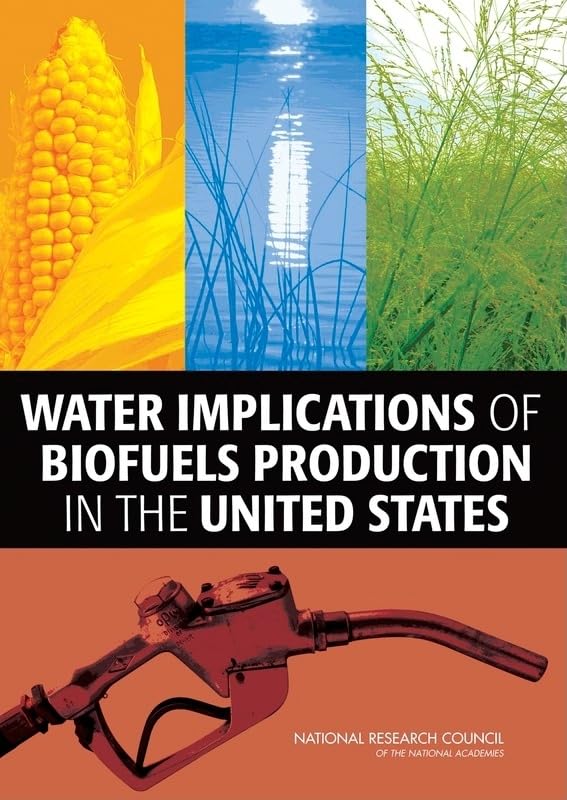
National interests in greater energy independence, concurrent with favorable market forces, have driven increased production of cornbased ethanol in the United States and research into the next generation of biofuels. The trend is changing the national agricultural landscape and has raised concerns about potential impacts on the nation's water resources. To help illuminate these issues, the National Research Council held a colloquium on July 12, 2007 in Washington, DC. Water Implications of Biofuels Production in the United States, based in part on discussions at the colloquium, concludes that if projected future increases in use of corn for ethanol production do occur, the increase in harm to water quality could be considerable from the increases in fertilizer use, pesticide use, and soil erosion associated with growing crops such as corn. Water supply problems could also develop, both from the water needed to grow biofuels crops and water used at ethanol processing plants, especially in regions where water supplies are already overdrawn. The production of 'cellulosic ethanol,' derived from fibrous material such as wheat straw, native grasses, and forest trimmings is expected to have less water quality impact but cannot yet be produced on a commerical scale. To move toward a goal of reducing water impacts of biofuels, a policy bridge will likely be needed to encourage growth of new technologies, best agricultural practies, and the development of traditional and cellulosic crops that require less water and fertilizer and are optimized for fuel production.
⚠️ WARNING (California Proposition 65):
This product may contain chemicals known to the State of California to cause cancer,
birth defects, or other reproductive harm.
For MAP (Minimum Advertised Price) violations and Intellectual Property (IP) or Trademark concerns, please contact:
support@ergodebooks.com
⚠️ California Proposition 65 Warning: Some products sold on this website may expose you to chemicals known to the State of California to cause cancer, birth defects, or other reproductive harm. For more information, visit www.P65Warnings.ca.gov.