
Title
Ways Of Writing: The Practice And Politics Of Textmaking In Seventeenthcentury New England (Material Texts),New
Sold by Ergodebooks, an authorized reseller.
Returns accepted within 30 days | support@ergodebooks.com
Shipping Information
- Free Standard Shipping — United States only
- Processing Time: 3–5 business days
- Estimated Delivery: 6–10 business days after dispatch
- Double-boxed, fully insured & discreetly packaged
- Tracking number sent via email once dispatched
Returns & Refund
Returns accepted within 30 days of delivery.
Damaged or Defective Item
Free return shipping + replacement or full refund
Wrong Item Received
Free return shipping + replacement or full refund
Change of Mind
Return shipping at customer's expense · 25% restocking fee applies
Payment Option

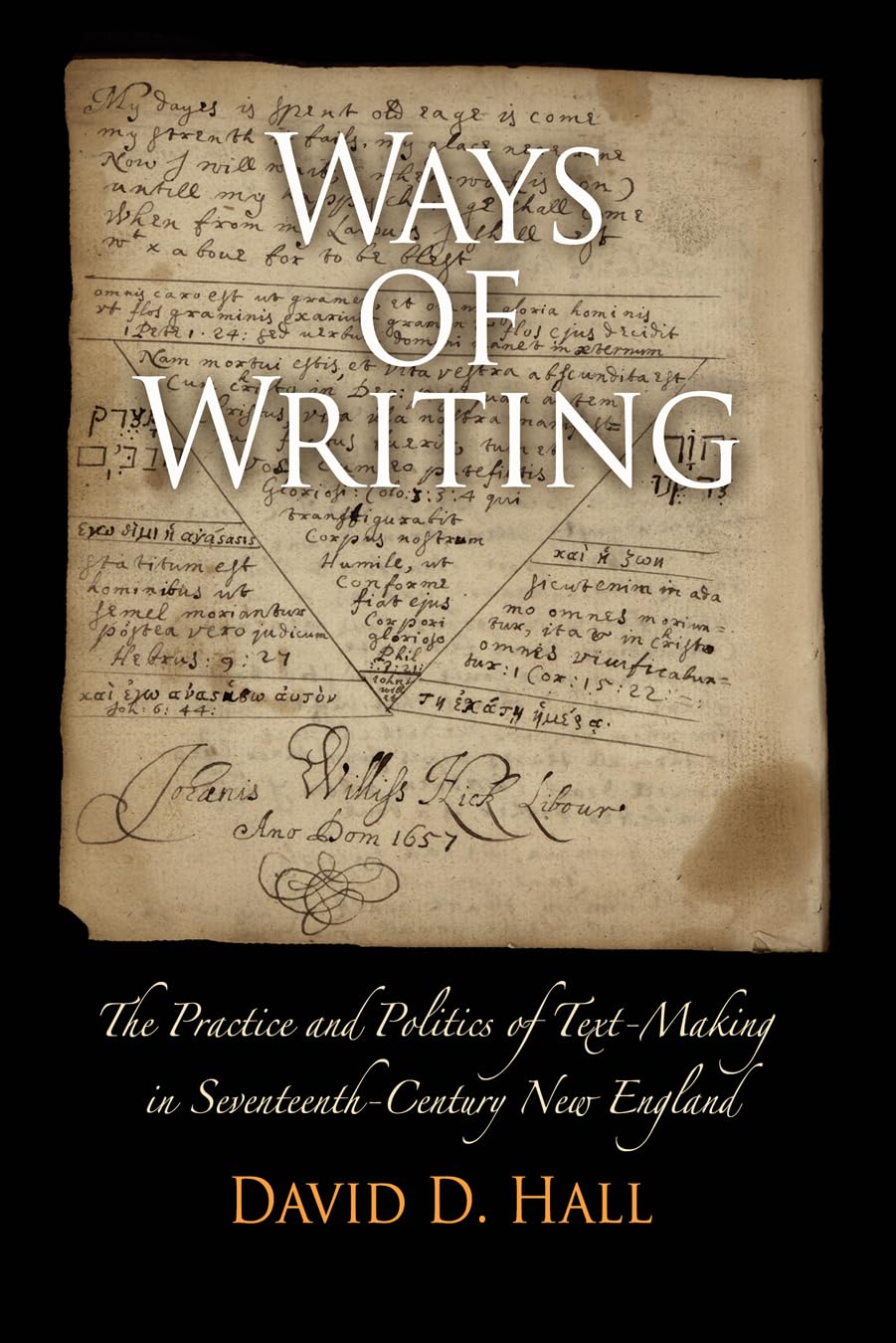
Writers abounded in seventeenthcentury New England. From the moment of colonization and constantly thereafter, hundreds of people set pen to paper in the course of their lives, some to write letters that others recopied, some to compose sermons as part of their life work as ministers, dozens to attempt verse, and many more to narrate a remarkable experience, provide written testimony to a civil court, participate in a controversy, or keep some sort of recordsand of these everyday forms of writing there was no limit.Every colonial writer knew of two different modes of publication, each with its distinctive benefits and limitations. One was to entrust a manuscript to a printer who would set type and impose it on sheets of paper that were bound up into a book. The other was to make handwritten copies or have others make copies, possibly unauthorized. Among the colonists, the terms 'publishing' and 'book' referred to both of these technologies. Ways of Writing is about the making of texts in the seventeenth century, whether they were fashioned into printed books or circulated in handwritten form. The latter mode of publishing was remarkably common, yet it is much less understood or acknowledged than transmission in print. Indeed, certain writers, including famous ones such as John Winthrop and William Bradford, employed scribal publication almost exclusively; the Antimonian controversy of 163638 was carried out by this means until manuscripts relating to the struggle began to be printed in England.Examining printed texts as well as those that were handwritten, David D. Hall explores the practices associated with anonymity, dedications, prefaces, errata, and the like. He also surveys the meaning of authority and authenticity, demonstrating how so many texts were prepared by intermediaries, not by authors, thus contributing to the history of 'social' or collaborative authorship. Finally, he considers the political contexts that affected the transmission and publication of many texts, revealing that a space for dissent and criticism was already present in the colonies by the 1640s, a space exploited mainly by scribally published texts.
⚠️ WARNING (California Proposition 65):
This product may contain chemicals known to the State of California to cause cancer, birth defects, or other reproductive harm.
For more information, please visit www.P65Warnings.ca.gov.