
Title
We Are Not You: First Nations and Canadian Modernity (Terra Incognita (Peterborough, Ont.).),Used
Sold by Ergodebooks, an authorized reseller.
Returns accepted within 30 days | support@ergodebooks.com
Shipping Information
- Free Standard Shipping — United States only
- Processing Time: 3–5 business days
- Estimated Delivery: 6–10 business days after dispatch
- Double-boxed, fully insured & discreetly packaged
- Tracking number sent via email once dispatched
Returns & Refund
Returns accepted within 30 days of delivery.
Damaged or Defective Item
Free return shipping + replacement or full refund
Wrong Item Received
Free return shipping + replacement or full refund
Change of Mind
Return shipping at customer's expense · 25% restocking fee applies
Payment Option

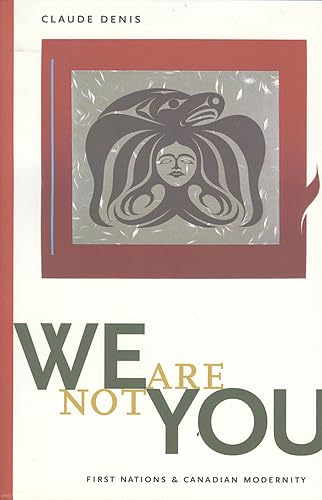
We are not You starts with a 1992 court case, Peters v. Campbell, in which Joseph Peters sued fellow members of his Coast Salish people who, at his wife's instigation, forced him to undergo traditional ceremonies in order to resolve various marital difficulties. In the hands of Claude Denis, the case becomes a focal point of interpretations of difference set against the political landscape of Canada's highly charged conflicts of nationalisms.Observing the ruling and reasoning of the court (which found in favour of Peters), and the way in which that ruling was reported through the national media, this book is an exploration of the language of power and authority, of individual and collective rights, and of the politics of difference.What guidelines should we follow when the laws of the modern state and the laws of Aboriginal peoples collide? What do such cases reveal about the underlying spiritual and material orientations of aboriginal and dominant societies? What do they have to say about the corrosive issue of relativism? The author tackles all these questions with insight and perceptionexplores as well the dimension of gender, which sheds light both on this case and on the more general issues from a different angle.Denis starts from a single fascinating case study, but in the end his aim is to put modernity itself into question. There is something to be learned from a case like this, from the aboriginal side, about modernity's own limitations and shortcomings. But more fundamentally, the book interrogates modernity's claim that society's political self making can and will bring about human emancipation.
⚠️ WARNING (California Proposition 65):
This product may contain chemicals known to the State of California to cause cancer, birth defects, or other reproductive harm.
For more information, please visit www.P65Warnings.ca.gov.