
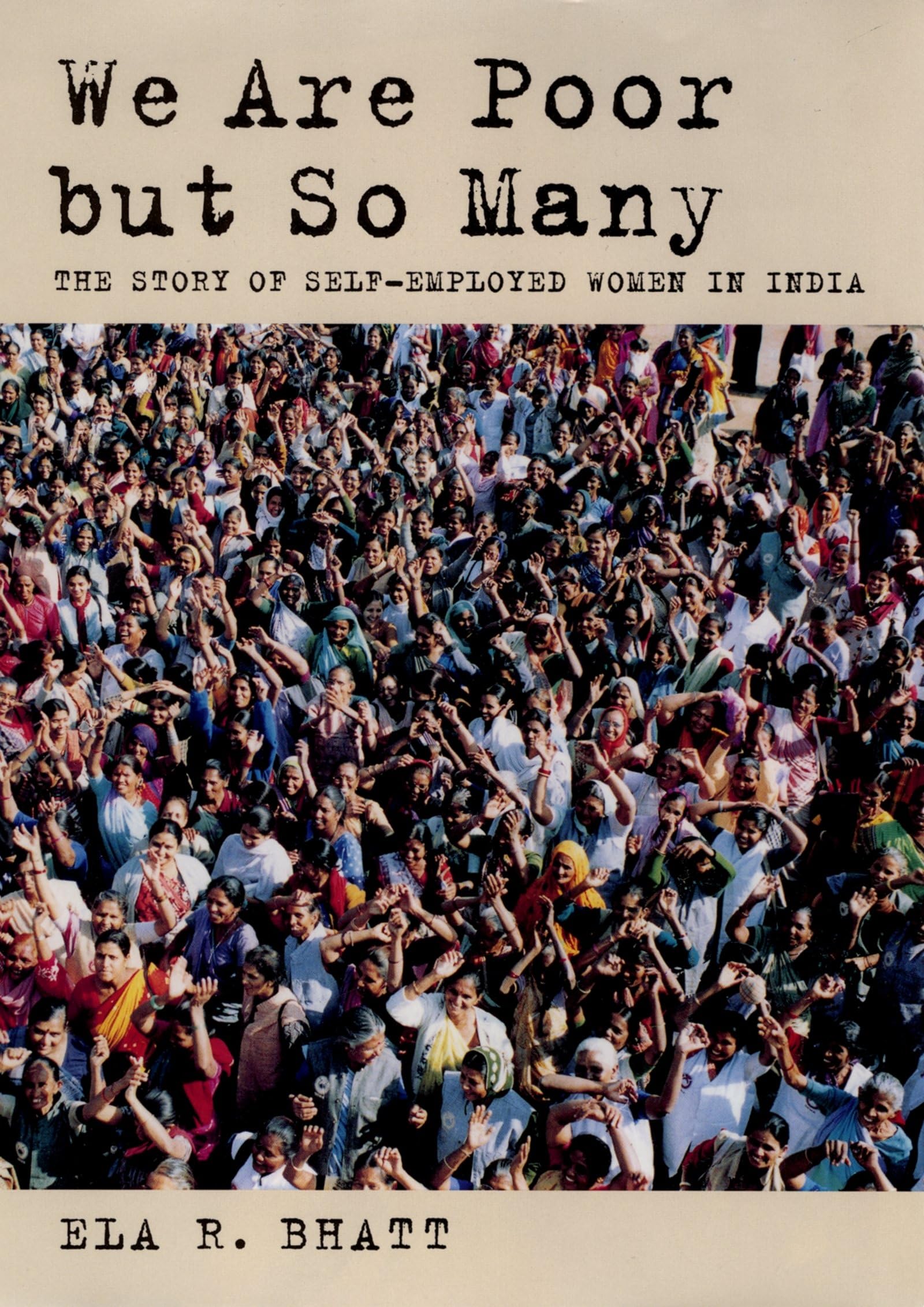
Title
We Are Poor but So Many: The Story of SelfEmployed Women in India (South Asia Series),Used
Sold by Ergodebooks, an authorized reseller.
Returns accepted within 30 days | support@ergodebooks.com
Shipping Information
- Free Standard Shipping — United States only
- Processing Time: 3–5 business days
- Estimated Delivery: 6–10 business days after dispatch
- Double-boxed, fully insured & discreetly packaged
- Tracking number sent via email once dispatched
Returns & Refund
Returns accepted within 30 days of delivery.
Damaged or Defective Item
Free return shipping + replacement or full refund
Wrong Item Received
Free return shipping + replacement or full refund
Change of Mind
Return shipping at customer's expense · 25% restocking fee applies
Payment Option

Ela Bhatt is widely recognized as one of the world's most remarkable pioneers and entrepreneurial forces in grassroots development. Known as the 'gentle revolutionary,' she has dedicated her life to improving the lives of India's poorest and most oppressed citizens. In India, where 93 percent of the labor force are selfemployed, 94 percent of this sector are women. Yet selfemployed women have historically enjoyed few legal protections or worker's rights. In fact, most are illiterate and subject to exploitation and harassment by moneylenders, employers, and officials. Witnessing the terrible conditions faced by women working as weavers, stitchers, cigarette rollers, and waste collectors, Ela Bhatt began helping these women to organize themselves. In 1972, Ela Bhatt founded the SelfEmployed Women's Association (SEWA) to bring poor women together and give them ways to fight for their rights and earn better livings. Three years after SEWA was founded, it had 7,000 members. Today it has a total membership of 700,000 women, making it the largest single primary trade union in India. Bhatt lead SEWA to form a cooperative bank in 1974 with a share capital of $30,000 that offered microcredit loans to help women save and become financially independent. Today the SEWA Cooperative Bank has $1.5 million in working capital and more than 30,000 depositors with a loan return rate of 94 percent. Through years of organization and strategic action, Ela Bhatt developed SEWA from a small, often ignored group into a powerful trade union and bank with allies around the world. During the last three decades, SEWA's efforts to increase the bargaining power, economic opportunities, health security, legal representation, and organizational abilities of Indian women have brought dramatic improvements to hundreds of thousands of lives and influenced similar initiatives around the globe. We Are Poor but So Many is a firsthand account of the vision, rise, and success of SEWA, in India as well as internationally. The book begins with a history of the early days of SEWA and an exploration of the Ghandian philosophy that helped shape SEWA's formation and vision. It follows with an account of the struggles and challenges that SEWA faced in its journey and describes how these were addressed and overcome. It then explores the freedom that SEWA has facilitated for women working in the informal economy by presenting several inspirational stories of individual SEWA members. The final chapter describes the international extension of SEWA's work, the challenges that women face in the informal economy worldwide, and how SEWA can be effectively replicated in other parts of the world. This volume is unique in that it will elaborate the specific experience and knowledge of Ela Bhatt in her and SEWA's journey and provide insights and knowledge that no outside researcher would ever be in a position to replicate.
⚠️ WARNING (California Proposition 65):
This product may contain chemicals known to the State of California to cause cancer, birth defects, or other reproductive harm.
For more information, please visit www.P65Warnings.ca.gov.
- Q: What are the dimensions of this book? A: The book measures nine point five inches in length, six point thirty-eight inches in width, and zero point eighty-four inches in height.
- Q: How many pages does the book have? A: This book has a total of two hundred forty-eight pages.
- Q: What type of binding does this book have? A: The book features hardcover binding.
- Q: Who is the author of this book? A: The author of the book is Ela R. Bhatt.
- Q: What is the genre of 'We Are Poor but So Many'? A: The book belongs to the Development & Growth genre.
- Q: What is the main topic of this book? A: The book discusses the story of self-employed women in India and the efforts of the Self-Employed Women’s Association.
- Q: Is this book suitable for all ages? A: Yes, the content is informational and educational, making it suitable for a wide range of ages.
- Q: How can I use the insights from this book? A: Readers can use the insights to understand grassroots development and women's rights movements, especially in informal economies.
- Q: Is there a specific audience for this book? A: This book is ideal for readers interested in social entrepreneurship, women's rights, and development studies.
- Q: How do I care for this hardcover book? A: To keep the book in good condition, store it in a dry place and avoid exposing it to direct sunlight.
- Q: Can I clean the book if it gets dirty? A: Yes, gently wipe the cover with a soft, dry cloth to remove any dust or stains.
- Q: Is this book safe for children? A: Yes, the book is safe for children as it does not contain any inappropriate content.
- Q: What should I do if my book arrives damaged? A: If your book arrives damaged, contact the seller for return or replacement options.
- Q: Where can I find more information about the author? A: More information about Ela R. Bhatt can be found in biographies and on educational websites focused on women's rights.
- Q: What makes this book unique? A: The book provides unique firsthand accounts and insights from Ela Bhatt, detailing the struggles and successes of self-employed women in India.