
Title
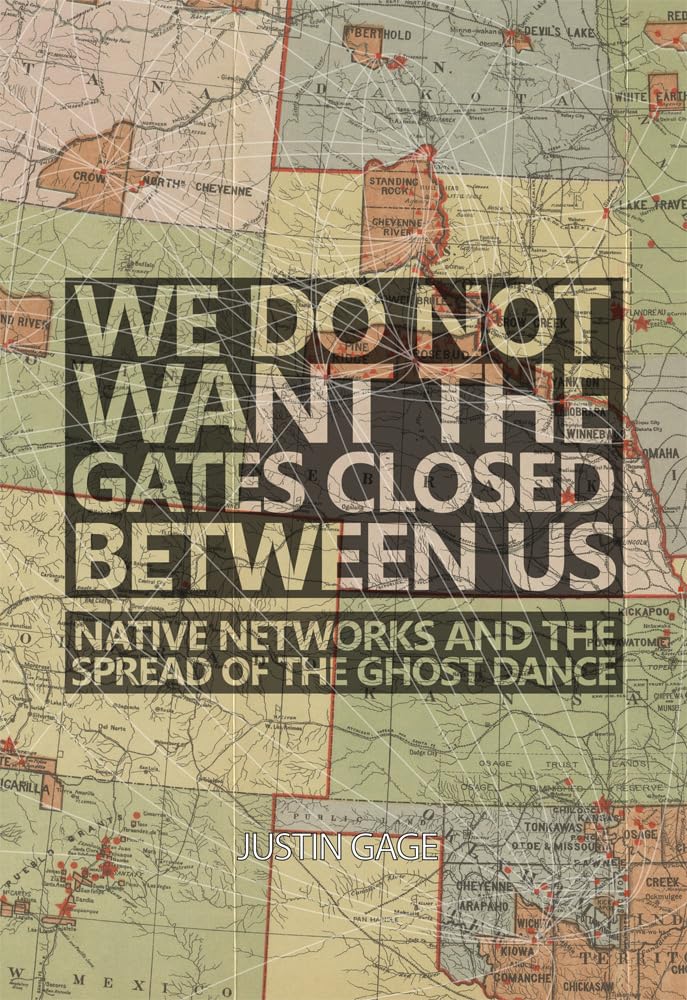
We Do Not Want The Gates Closed Between Us: Native Networks And The Spread Of The Ghost Dance,Used
Sold by Ergodebooks, an authorized reseller.
Returns accepted within 30 days | support@ergodebooks.com
Shipping Information
- Free Standard Shipping — United States only
- Processing Time: 3–5 business days
- Estimated Delivery: 6–10 business days after dispatch
- Double-boxed, fully insured & discreetly packaged
- Tracking number sent via email once dispatched
Returns & Refund
Returns accepted within 30 days of delivery.
Damaged or Defective Item
Free return shipping + replacement or full refund
Wrong Item Received
Free return shipping + replacement or full refund
Change of Mind
Return shipping at customer's expense · 25% restocking fee applies
Payment Option

In the 1860s and 1870s, the United States government forced most western Native Americans to settle on reservations. These evershrinking pieces of land were meant to relocate, contain, and separate these Native peoples, isolating them from one another and from the white populations coursing through the plains. We Do Not Want the Gates Closed Between Us tells the story of how Native Americans resisted this effort by building vast intertribal networks of communication, threaded together by letter writing and offreservation visiting.Faced with the consequences of U.S. colonialismthe constraints, population loss, and destitutionNative Americans, far from passively accepting their fate, mobilized to control their own sources of information, spread and reinforce ideas, and collectively discuss and mount resistance against onerous government policies. Justin Gage traces these efforts, drawing on extensive new evidence, including more than one hundred letters written by nineteenthcentury Native Americans. His work shows how Lakotas, Cheyennes, Utes, Shoshones, Kiowas, and dozens of other western tribal nations shrewdly used the U.S. governments repressive education system and mechanisms of American settler colonialism, notably the railroads and the Postal Service, to achieve their own ends. Thus Natives used literacy, a primary tool of assimilation for U.S. policymakers, to decolonize their lives much earlier than historians have noted.Whereas previous histories have assumed that the Ghost Dance itself was responsible for the creation of brandnew networks among western tribes, this book suggests that the intertribal networks formed in the 1870s and 1880s actually facilitated the rapid dissemination of the Ghost Dance in 1889 and 1890. Documenting the evolution and operation of intertribal networking, Gage demonstrates its effectivenessand recognizes for the first time how, through Native activism, longdistance, intercultural communication persisted in the colonized American West.
⚠️ WARNING (California Proposition 65):
This product may contain chemicals known to the State of California to cause cancer, birth defects, or other reproductive harm.
For more information, please visit www.P65Warnings.ca.gov.