
Title
Weakly supervised methods for learning actions and objects: Reducing human intervention in learning visual concepts for Artifici,Used
Sold by Ergodebooks, an authorized reseller.
Returns accepted within 30 days | support@ergodebooks.com
Shipping Information
- Free Standard Shipping — United States only
- Processing Time: 3–5 business days
- Estimated Delivery: 6–10 business days after dispatch
- Double-boxed, fully insured & discreetly packaged
- Tracking number sent via email once dispatched
Returns & Refund
Returns accepted within 30 days of delivery.
Damaged or Defective Item
Free return shipping + replacement or full refund
Wrong Item Received
Free return shipping + replacement or full refund
Change of Mind
Return shipping at customer's expense · 25% restocking fee applies
Payment Option

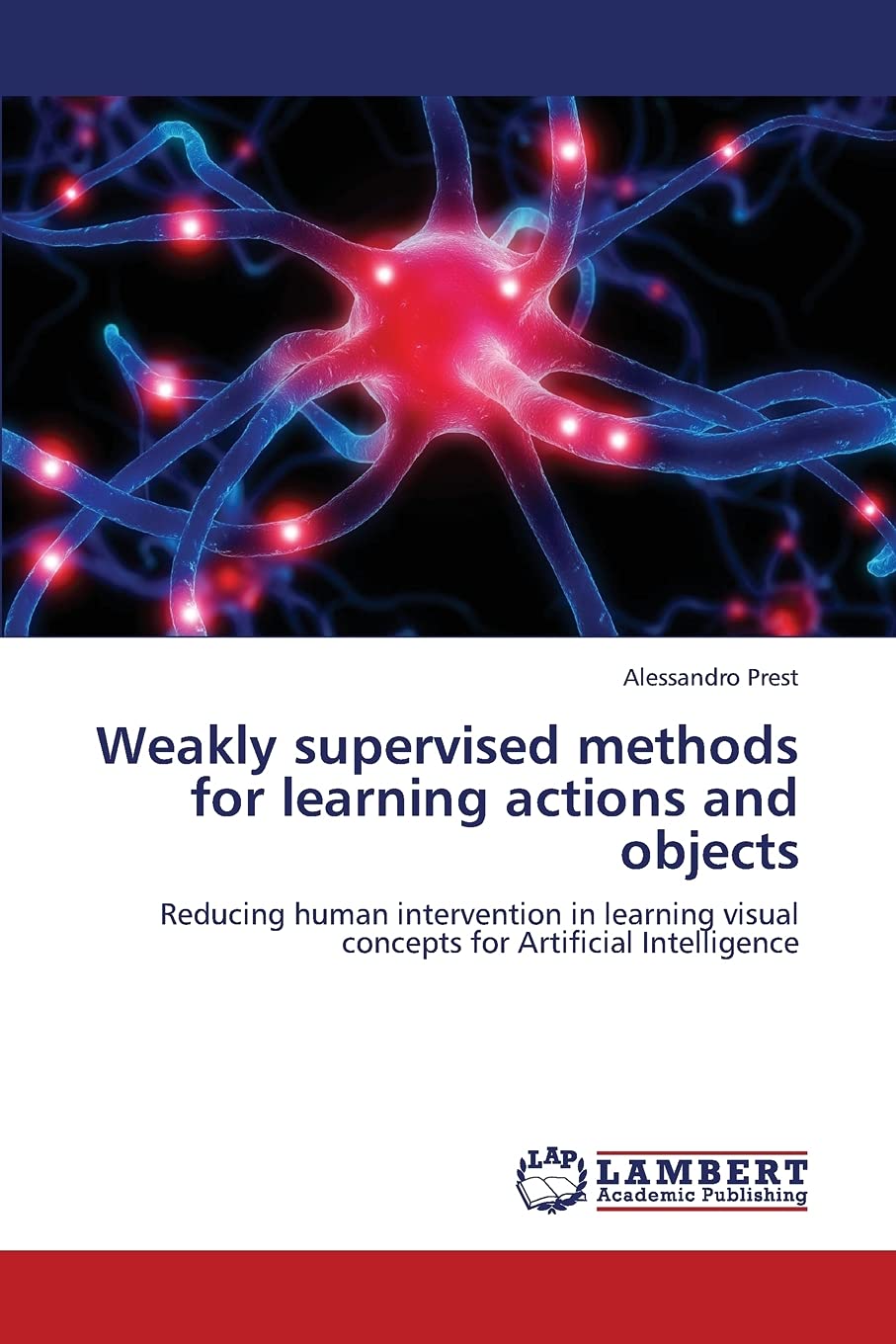
The past decade will be remembered as one of maturity for Artificial Intelligence (AI). Successful applications such as Google Goggles, Siri, IBM Watson have positively impacted peoples everyday life. These systems are able to interpret in realtime highly complex natural signals, in the form of text, audio or video data: a task thought the exclusive domain of human intelligence before the twothousands. This book discusses methods of computer vision, a branch of AI where the input for the system is represented by images and videos depicting visual scenes. Most computer vision tasks have the objective of recognizing visual concepts such as the presence of a particular object or the occurrence of a specific event in the input data. These systems learn visual concepts through examples (i.e. images) which have been manually annotated by humans. While this paradigm allowed the field to tremendously progress in the last decade, it has now become one of its major bottlenecks. This work tap into the wealth of visual data available on the net and presents methods able to exploit this information to learn visual concepts without the need of major human annotation effort.
⚠️ WARNING (California Proposition 65):
This product may contain chemicals known to the State of California to cause cancer, birth defects, or other reproductive harm.
For more information, please visit www.P65Warnings.ca.gov.