
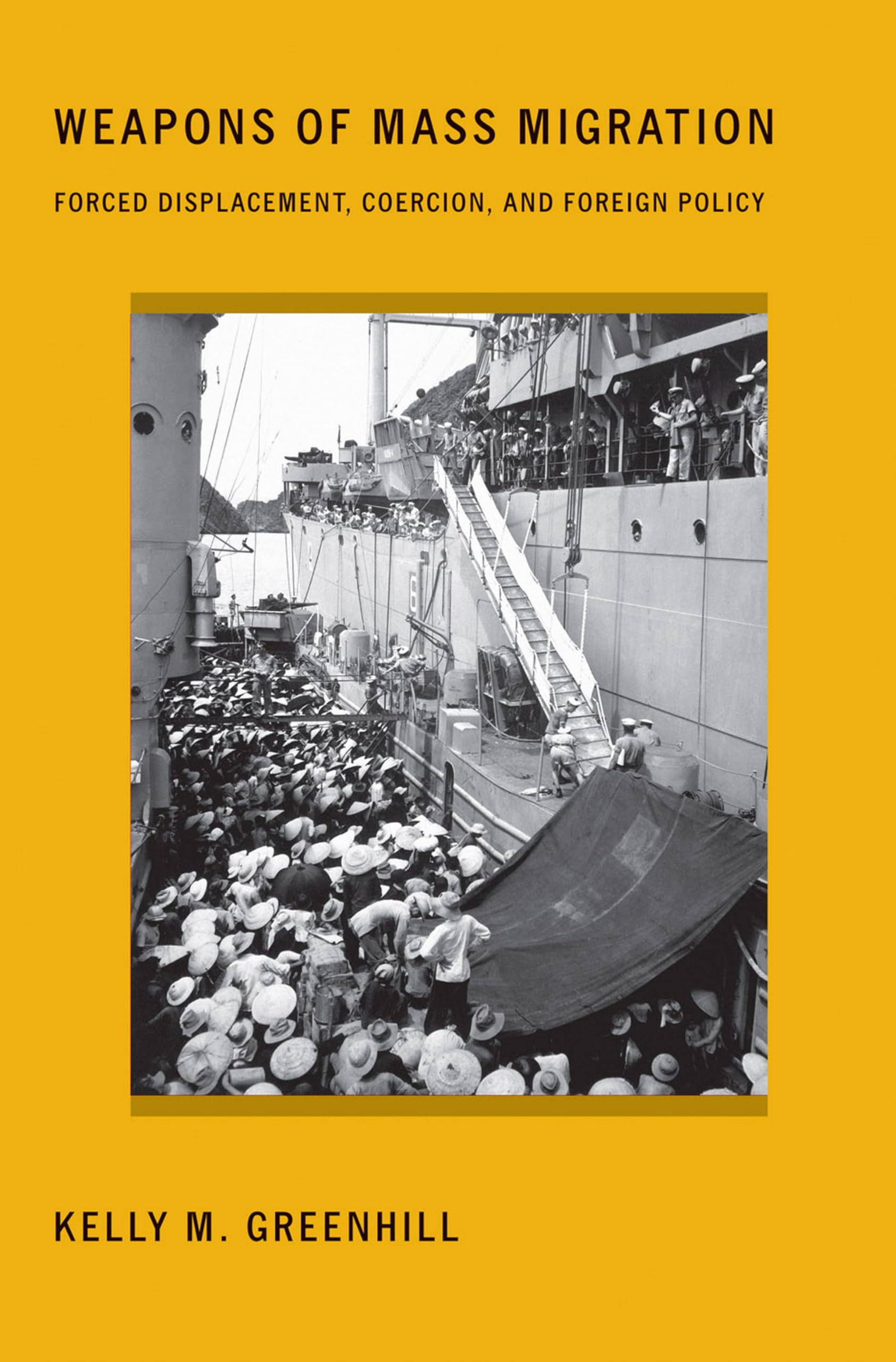
Title
Weapons Of Mass Migration: Forced Displacement, Coercion, And Foreign Policy (Cornell Studies In Security Affairs)
Sold by Ergodebooks, an authorized reseller.
Returns accepted within 30 days | support@ergodebooks.com
Shipping Information
- Free Standard Shipping — United States only
- Processing Time: 3–5 business days
- Estimated Delivery: 6–10 business days after dispatch
- Double-boxed, fully insured & discreetly packaged
- Tracking number sent via email once dispatched
Returns & Refund
Returns accepted within 30 days of delivery.
Damaged or Defective Item
Free return shipping + replacement or full refund
Wrong Item Received
Free return shipping + replacement or full refund
Change of Mind
Return shipping at customer's expense · 25% restocking fee applies
Payment Option

Ir Theorists, Foreign Policy Analysts And Migration, Security Studies, And Human Rights Scholars Will All Find This Book A Valuable Addition To Their Scholarship. Political Studies Reviewat First Glance, The U.S. Decision To Escalate The War In Vietnam In The Mid1960S, China'S Position On North Korea'S Nuclear Program In The Late 1990S And Early 2000S, And The Eu Resolution To Lift What Remained Of The Arms Embargo Against Libya In The Mid2000S Would Appear To Share Little In Common. Yet Each Of These Seemingly Unconnected And Farreaching Foreign Policy Decisions Resulted At Least In Part From The Exercise Of A Unique Kind Of Coercion, One Predicated On The Intentional Creation, Manipulation, And Exploitation Of Real Or Threatened Mass Population Movements. In Weapons Of Mass Migration, Kelly M. Greenhill Offers The First Systematic Examination Of This Widely Deployed But Largely Unrecognized Instrument Of State Influence. She Shows Both How Often This Unorthodox Brand Of Coercion Has Been Attempted (More Than Fifty Times In The Last Half Century) And How Successful It Has Been (Well Over Half The Time). She Also Tackles The Questions Of Who Employs This Policy Tool, To What Ends, And How And Why It Ever Works.Coercers Aim To Affect Target States' Behavior By Exploiting The Existence Of Competing Political Interests And Groups, Greenhill Argues, And By Manipulating The Costs Or Risks Imposed On Target State Populations. This Coercion By Punishment Strategy Can Be Effected In Two Ways: The First Relies On Straightforward Threats To Overwhelm A Target'S Capacity To Accommodate A Refugee Or Migrant Influx; The Second, On A Kind Of Normsenhanced Political Blackmail That Exploits The Existence Of Legal And Normative Commitments To Those Fleeing Violence, Persecution, Or Privation. The Theory Is Further Illustrated And Tested In A Variety Of Case Studies From Europe, East Asia, And North America.To Help Potential Targets Better Respond Toand Protect Themselves Againstthis Kind Of Unconventional Predation, Weapons Of Mass Migration Also Offers Practicable Policy Recommendations For Scholars, Government Officials, And Anyone Concerned About The True Victims Of This Kind Of Coercionthe Displaced Themselves.
⚠️ WARNING (California Proposition 65):
This product may contain chemicals known to the State of California to cause cancer, birth defects, or other reproductive harm.
For more information, please visit www.P65Warnings.ca.gov.
- Q: How many pages does this book have? A: This book has three hundred sixty pages. It provides an in-depth analysis and numerous case studies related to migration and foreign policy.
- Q: What are the dimensions of this book? A: The book measures six point twelve inches in length, one point nineteen inches in width, and nine point twenty-five inches in height. These dimensions make it a standard-sized hardcover.
- Q: What type of binding does this book have? A: This book is bound in hardcover. Hardcover bindings are known for their durability and longevity.
- Q: Who is the author of this book? A: The author of this book is Kelly M. Greenhill. She is recognized for her work in international relations and security studies.
- Q: What is the main topic of this book? A: The main topic of this book is the relationship between forced displacement and foreign policy. It explores coercion through mass migration.
- Q: Is this book suitable for scholars in international relations? A: Yes, this book is suitable for scholars in international relations. It offers valuable insights for those studying migration and security.
- Q: What kind of policy recommendations does this book provide? A: The book provides practical policy recommendations for government officials and scholars. These recommendations focus on responding to coercion through migration.
- Q: Who would benefit from reading this book? A: IR theorists, foreign policy analysts, and human rights scholars would benefit from reading this book. It addresses critical issues related to displacement.
- Q: What case studies are included in this book? A: The book includes case studies from Europe, East Asia, and North America. These studies illustrate the complex dynamics of coercion and migration.
- Q: What is the publication date of this book? A: The publication date is not specified in the given details. However, it is part of the Cornell Studies in Security Affairs series.
- Q: Is this book considered a good condition used book? A: Yes, this book is classified as a used book in good condition. It is suitable for readers who appreciate second-hand copies.
- Q: Does this book address human rights issues? A: Yes, the book addresses human rights issues related to forced displacement. It highlights the plight of those affected by coercive policies.
- Q: What is the publisher of this book? A: The publisher of this book is Cornell University Press. They are known for their academic and scholarly publications.
- Q: Can this book be used for policy-making purposes? A: Yes, this book can be used for policy-making purposes. It offers insights and recommendations for addressing coercion through migration.
- Q: Does this book have any illustrations or graphs? A: The details provided do not mention illustrations or graphs. It primarily focuses on textual analysis and case studies.