
Title
Weaving Sacred Stories: French Choir Tapestries and the Performance of Clerical Identity (Conjunctions of Religion and Power in ,Used
Sold by Ergodebooks, an authorized reseller.
Returns accepted within 30 days | support@ergodebooks.com
Shipping Information
- Free Standard Shipping — United States only
- Processing Time: 3–5 business days
- Estimated Delivery: 6–10 business days after dispatch
- Double-boxed, fully insured & discreetly packaged
- Tracking number sent via email once dispatched
Returns & Refund
Returns accepted within 30 days of delivery.
Damaged or Defective Item
Free return shipping + replacement or full refund
Wrong Item Received
Free return shipping + replacement or full refund
Change of Mind
Return shipping at customer's expense · 25% restocking fee applies
Payment Option

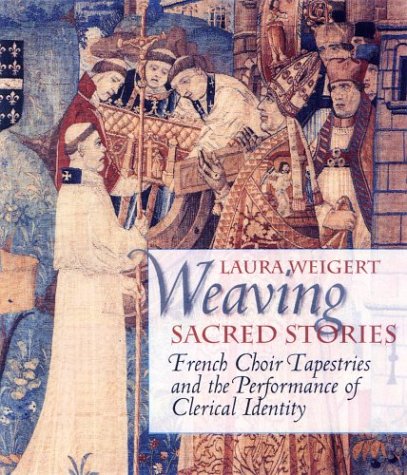
Spanning the backs of choir stalls above the heads of the canons and their officials, largescale tapestries of saints' lives functioned as both architectural elements and pictorial narratives in the late Middle Ages. In an extensively illustrated book that features sixteen color plates, Laura Weigert examines the role of these tapestries in ritual performances. She situates individual tapestries within their architectural and ceremonial settings, arguing that the tapestries contributed to a process of storytelling in which the clerical elite of late medieval cities legitimated and defended their position in the social sphere.Weigert focuses on three of the most spectacular and littlestudied tapestry series preserved from the fifteenth and early sixteenth centuries: Lives of Saints Piat and Eleutherius (NotreDame, Tournai), Life of Saint Steven (SaintSteven, Auxerre [now Muse du Moyen Age, Paris]), and Life of Saints Gervasius and Protasius (SaintJulien, Le Mans). Each of these tapestries, measuring over forty meters in length, included elements that have traditionally been defined as either lay or clerical. On the prescribed days when the tapestries were displayed, the liturgical performance for which they were the setting sought to merge the history and patron saint of the local community with the universal history of the Christian church. Weigert combines a detailed analysis of the narrative structure of individual images with a discussion of the particular social circumstances in which they were produced and perceived. Weaving Sacred Stories is thereby significant not only to the history of medieval art but also to art history and cultural studies in general.
⚠️ WARNING (California Proposition 65):
This product may contain chemicals known to the State of California to cause cancer, birth defects, or other reproductive harm.
For more information, please visit www.P65Warnings.ca.gov.