
Title
Weed Seeds of the Great Plains: A Handbook for Indentification,Used
Sold by Ergodebooks, an authorized reseller.
Returns accepted within 30 days | support@ergodebooks.com
Shipping Information
- Free Standard Shipping — United States only
- Processing Time: 3–5 business days
- Estimated Delivery: 6–10 business days after dispatch
- Double-boxed, fully insured & discreetly packaged
- Tracking number sent via email once dispatched
Returns & Refund
Returns accepted within 30 days of delivery.
Damaged or Defective Item
Free return shipping + replacement or full refund
Wrong Item Received
Free return shipping + replacement or full refund
Change of Mind
Return shipping at customer's expense · 25% restocking fee applies
Payment Option

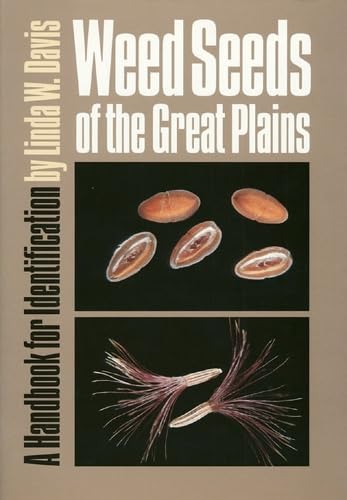
Seeds, as small and unobtrusive as they seem, are an essential part of the life cycle of plants. In addition, they are useful for indentification of plants and, in fact, are often superior for that purpose that other parts of a plant. Thant's because seedds have distinctive characteristics, tend to outlast all other plant parts, and vary little within a speciesunlike other parts such as leaves. Since weeds interfere with the growth, harvesting, and quality of crops, Linda Dvais says, the ability to identify weed seeds before they are indavertently planted affords an economic advantage. Other weedcontrol measuresherbicides and mechanical removal of unwanted plantsare enormously costly in comparison. Lavishly illustrated with more than 600 photographs and drawings, this handbook provides information about the seeds of 280 species of weedy plants of the Great Plains, including ones commonly found in crops, rangeland, lawns, and along roadsides. This is the only book available that covers a large number of Great Plains plants. For each species it provides a highquality color photograph showing minute details, a blackandwhite lifesize silhouette (against which actual seeds can be compared), and a full description. An easytouse set of finding lists facilitates identification of unknown seeds. Both scientific and common names are used throughout, and an illustrated glossary clarifies technical terms.
⚠️ WARNING (California Proposition 65):
This product may contain chemicals known to the State of California to cause cancer, birth defects, or other reproductive harm.
For more information, please visit www.P65Warnings.ca.gov.
- Q: What are the dimensions of this book? A: The book measures seven point twenty-five inches in length, one inch in width, and ten point twenty-five inches in height.
- Q: How many pages does this handbook contain? A: This handbook contains one hundred forty-five pages, providing extensive information on weed seed identification.
- Q: What type of binding does this book have? A: This book is bound in hardcover, ensuring durability for repeated use.
- Q: Who is the author of this handbook? A: The author of this handbook is Linda W. Davis, an expert on plant identification.
- Q: What is the primary subject of this book? A: The book focuses on identifying weed seeds of the Great Plains, covering two hundred eighty species.
- Q: How do I use this handbook for identifying weeds? A: Use the high-quality photographs and silhouettes provided in the book to compare unknown seeds you encounter.
- Q: Is this handbook suitable for beginners in plant identification? A: Yes, this handbook is user-friendly, making it suitable for both beginners and experienced plant enthusiasts.
- Q: What kind of illustrations can I find in this book? A: The book includes more than six hundred photographs and drawings to aid in seed identification.
- Q: Can this book help me identify seeds commonly found in crops? A: Yes, it covers weed seeds commonly found in crops, rangeland, and lawns, making it a valuable resource.
- Q: How should I store this handbook to keep it in good condition? A: Store the handbook in a dry place, away from direct sunlight, to preserve its condition.
- Q: Is there a glossary included in the book? A: Yes, an illustrated glossary is provided to clarify technical terms used throughout the book.
- Q: Are there safety precautions I should take when using this book? A: No specific safety precautions are necessary, but handle the book with care to avoid damage.
- Q: What if I encounter a damaged book upon delivery? A: If the book arrives damaged, contact the seller for a return or replacement as per their policy.
- Q: Does this book cover invasive weed species? A: Yes, the book includes information on various invasive weed species prevalent in the Great Plains.
- Q: Is this book suitable for educational purposes? A: Yes, it's an excellent resource for educational purposes, especially in botany and agriculture classes.
- Q: Can I find common names for the plant species in this handbook? A: Yes, both scientific and common names are provided for each species covered in the book.