If you have any questions, you are always welcome to contact us. We'll get back to you as soon as possible, withing 24 hours on weekdays.
Customer service
All questions about your order, return and delivery must be sent to our customer service team by e-mail at yourstore@yourdomain.com
Sale & Press
If you are interested in selling our products, need more information about our brand or wish to make a collaboration, please contact us at press@yourdomain.com
Help
If you have any questions, you are always welcome to contact us. We'll get back to you as soon as possible, withing 24 hours on weekdays.
Customer service
All questions about your order, return and delivery must be sent to our customer service team by e-mail at yourstore@yourdomain.com
Sale & Press
If you are interested in selling our products, need more information about our brand or wish to make a collaboration, please contact us at press@yourdomain.com
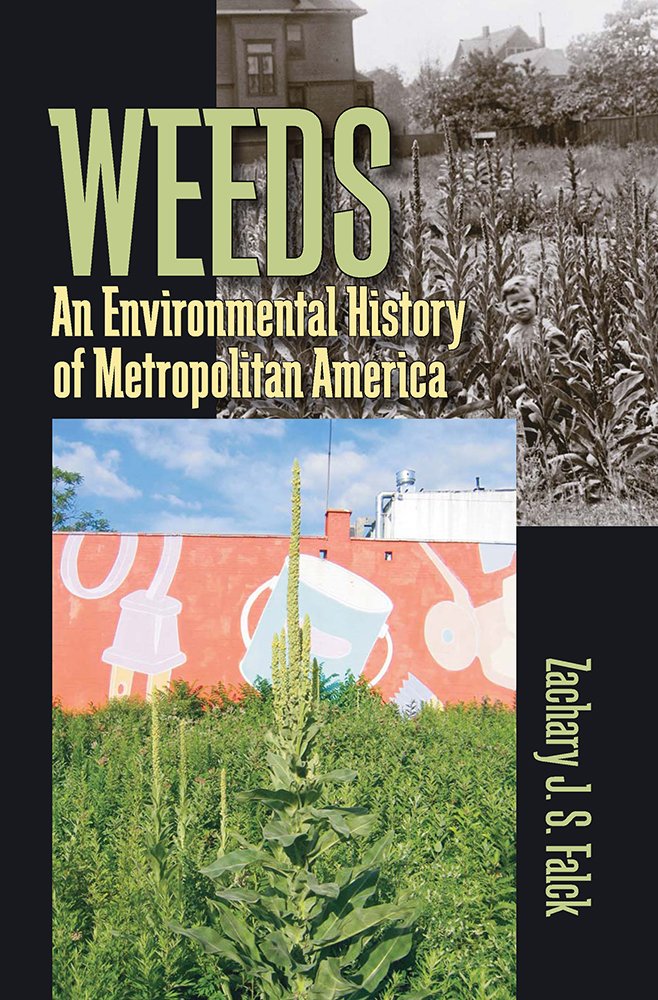
As long as humans have existed, theyve worked and competed with plants to shape their surroundings. As cities developed and expanded, their diverse spaces were covered with and colored by weeds. In Weeds, Zachary J. S. Falck presents a comprehensive history of happenstance plants in American urban environments. Beginning in the late nineteenth century and continuing to the present, he examines the proliferation, perception, and treatment of weeds in metropolitan centers from Boston to Los Angeles.In dynamic city ecosystems, population movements and economic cycles establish and transform habitats where vegetation continuously changes. Americans came to associate weeds with infectious diseases and allergies, illegal dumping, vagrants, drug dealers, and decreased property values. Local governments and citizens groups attempted to eliminate unwanted plants to better their urban environments and improve the health and safety of inhabitants. Over time, a growing understanding of the natural environment made happenstance plants more tolerable and even desirable.In the twentyfirst century, scientists have warned that the effects of global warming and the heattrapping properties of cities are producing more robust strains of weeds. Falck shows that nature continues to flourish where humans have struggled: in the aftermath of Hurricane Katrina, in the abandoned homes of the California housing bust, and alongside crumbling infrastructure. Weeds are here to stay.
⚠️ WARNING (California Proposition 65):
This product may contain chemicals known to the State of California to cause cancer,
birth defects, or other reproductive harm.
For MAP (Minimum Advertised Price) violations and Intellectual Property (IP) or Trademark concerns, please contact:
support@ergodebooks.com
⚠️ California Proposition 65 Warning: Some products sold on this website may expose you to chemicals known to the State of California to cause cancer, birth defects, or other reproductive harm. For more information, visit www.P65Warnings.ca.gov.